
How to Understand the Hunger Index and Fight Hunger in India
Every year, a report captures the world’s attention. It tells us where progress is being made and where the fight against hunger is lagging. This report is the Global Hunger Index (GHI). For India, the latest findings present both a challenge and a call to action.
Understanding the Hunger Index is the first step toward making a difference. This guide will help you decode what the numbers mean and, more importantly, show you how your support can help turn the tide against hunger.
What is the Global Hunger Index?
The Global Hunger Index is a peer-reviewed report published annually by the German aid agency Welthungerhilfe and the Irish humanitarian organization Concern Worldwide . It is a tool designed to comprehensively measure and track hunger at global, regional, and national levels . The index is based on a four-point formula that captures the multidimensional nature of hunger .
The 2025 GHI report ranks 123 countries. A country’s score is calculated using the following four component indicators :
- Undernourishment: The share of the population with insufficient caloric intake.
- Child Stunting: The share of children under five who have low height for their age, reflecting chronic undernutrition.
- Child Wasting: The share of children under five who have low weight for their height, reflecting acute undernutrition.
- Child Mortality: The share of children who die before their fifth birthday, reflecting the fatal mix of inadequate nutrition and unhealthy environments.
Based on the values of these four indicators, the GHI score is plotted on a 100-point scale where 0 is the best score (no hunger) and 100 is the worst . The severity of hunger is then classified into categories ranging from “low” to “extremely alarming”.
India’s 2025 Ranking: A Serious Concern
India has been placed in the “serious” category on the 2025 Global Hunger Index, ranking 102nd out of 123 countries with a score of 25.8 .
While this is a notable improvement from its 2000 score of 38.1, which was classified as “alarming,” the current score indicates that significant challenges remain . The country’s component indicator values help explain this ranking :
- Undernourishment: 12.0% of the population
- Child Stunting: 32.9% of children under five
- Child Wasting: 18.7% of children under five
- Child Mortality: 2.8% of children die before their fifth birthday
India’s child wasting rate of 18.7% is the second highest in the report, a critical indicator of acute malnutrition . Furthermore, India has the 21st-highest child stunting rate, meaning one in three children faces chronic undernutrition .
What India’s GHI Numbers Mean
The statistics from the Global Hunger Index are more than just numbers; they represent the lived reality of millions. The 2025 GHI report sheds light on the nature of India’s hunger challenge.
- The Paradox of Plenty: India is one of the world’s largest agricultural producers, yet widespread hunger persists . This paradox is driven by a complex interplay of factors, including ineffective food distribution, economic inequality, and policy gaps . The Public Distribution System (PDS), meant to ensure food access, still suffers from issues like corruption and exclusion .
- A Crisis of Child Nutrition: India’s high rates of child wasting and stunting are particularly alarming. Child undernutrition goes hand in hand with the poor nutritional status of mothers. The child wasting rate is highest at birth and then consistently declines, suggesting an intergenerational pattern of undernutrition. This underscores the need for better maternal health, nutrition, and infant feeding practices .
- Dietary Diversity: India’s food policy has historically focused on caloric sufficiency, leading to a “rice-wheat lock-in” in public food programs . As a result, the Indian diet is imbalanced. Of the 13 food groups recommended for a balanced diet, Indians under-consume nine, including pulses, fruits, vegetables, and dairy . This lack of dietary diversity contributes to persistent undernutrition and “hidden hunger” (micronutrient deficiencies like anaemia) . Even at home, Indians over-consume cereals (rice and wheat), fats, oils, salt, and sugar . The challenge is not just about quantity of food but the quality and diversity of the diet.
- The Role of Poverty: The link between poverty and malnutrition is direct and undeniable. A study published in BMC Public Health found that child undernutrition in India is overwhelmingly concentrated in districts with high multidimensional poverty . States like Madhya Pradesh, Uttar Pradesh, Jharkhand, Chhattisgarh, Rajasthan, Bihar, Odisha, and West Bengal form critical hotspots of overlapping deprivation and nutritional vulnerability . Without addressing these structural deficits, improvements in nutrition indicators will remain slow .
How You Can Fight Hunger: A Guide for Conscious Donors
Understanding the problem is the first step. The next is taking action. You can play a crucial role in the fight against hunger through informed and strategic giving. Supporting organizations that work on the ground to address these systemic challenges is one of the most effective ways to make a difference.
1. Support Direct Hunger Relief Programs
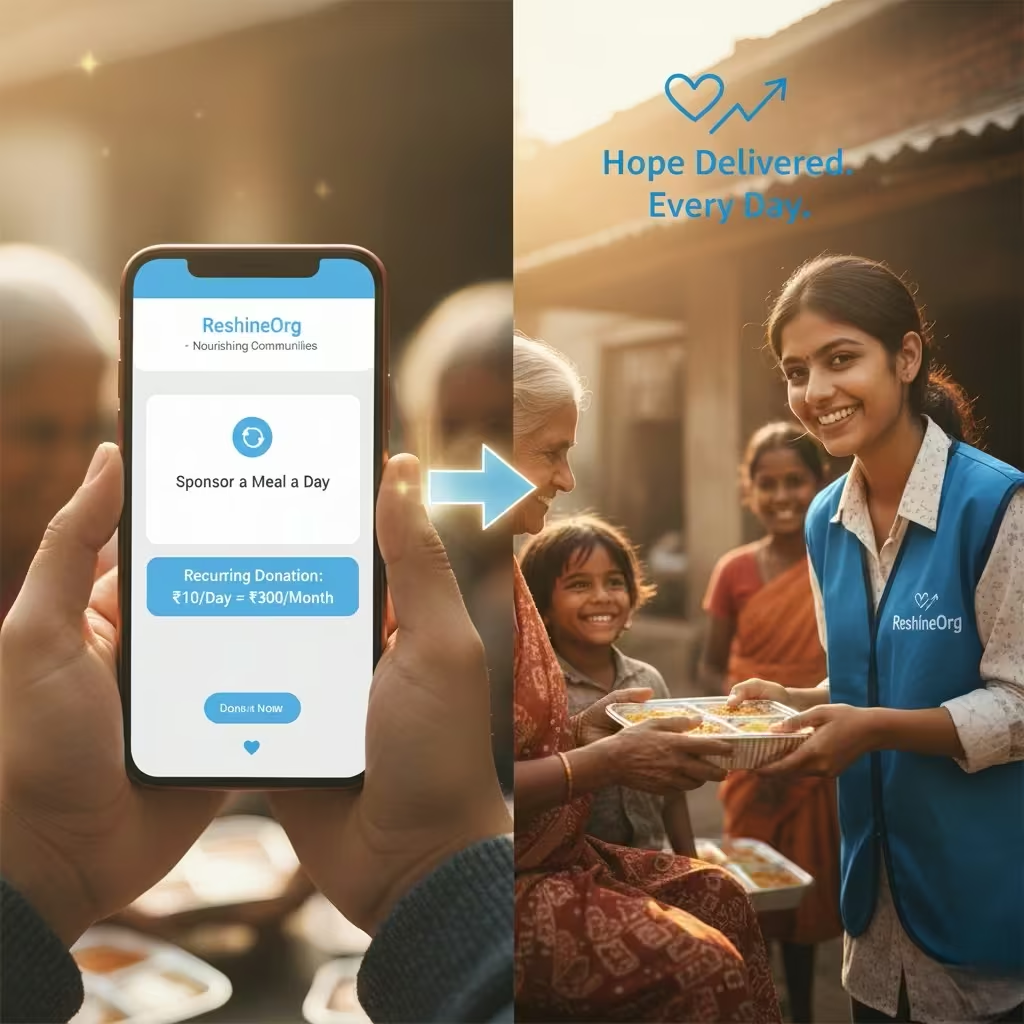
Organizations like Reshine Org operate on the front lines, providing immediate, life-saving support to the most vulnerable. Our Hunger Alleviation Program is a direct intervention that tackles both hunger and food waste .
- The Annadasoha Initiative: Since 2017, this program has provided daily meals—300 in the morning and 300 in the evening—to patients and their families at the BRIMS Government Hospital in Bidar . For low-income families, a hospital stay is a financial catastrophe. By providing meals, we save each family approximately Rs 100 per day, allowing them to focus on recovery rather than worrying about their next meal . To date, our program has served over 660,000 meals, lifting a financial burden of over ₹6.6 Crore from these families .
- The Parivartan Initiative: This program focuses on providing food support to families living in slum areas, helping them save money on food and improve their overall health .
Your donation to such programs provides immediate, tangible relief to families facing acute hunger. The need is urgent, and the impact is measurable.
2. Fund Programs that Focus on Nutrition
The GHI data clearly shows that India’s challenge is not just about filling stomachs but about providing nutritious food. This is where the focus needs to shift: from calorie sufficiency to nutritional adequacy . You can support initiatives that:
- Promote Dietary Diversity: Look for programs that move beyond basic grains to include pulses, vegetables, fruits, and protein-rich foods in their meal distribution. This is exactly what Reshine’s Hunger Alleviation Program aims to do by providing balanced, nutritious meals .
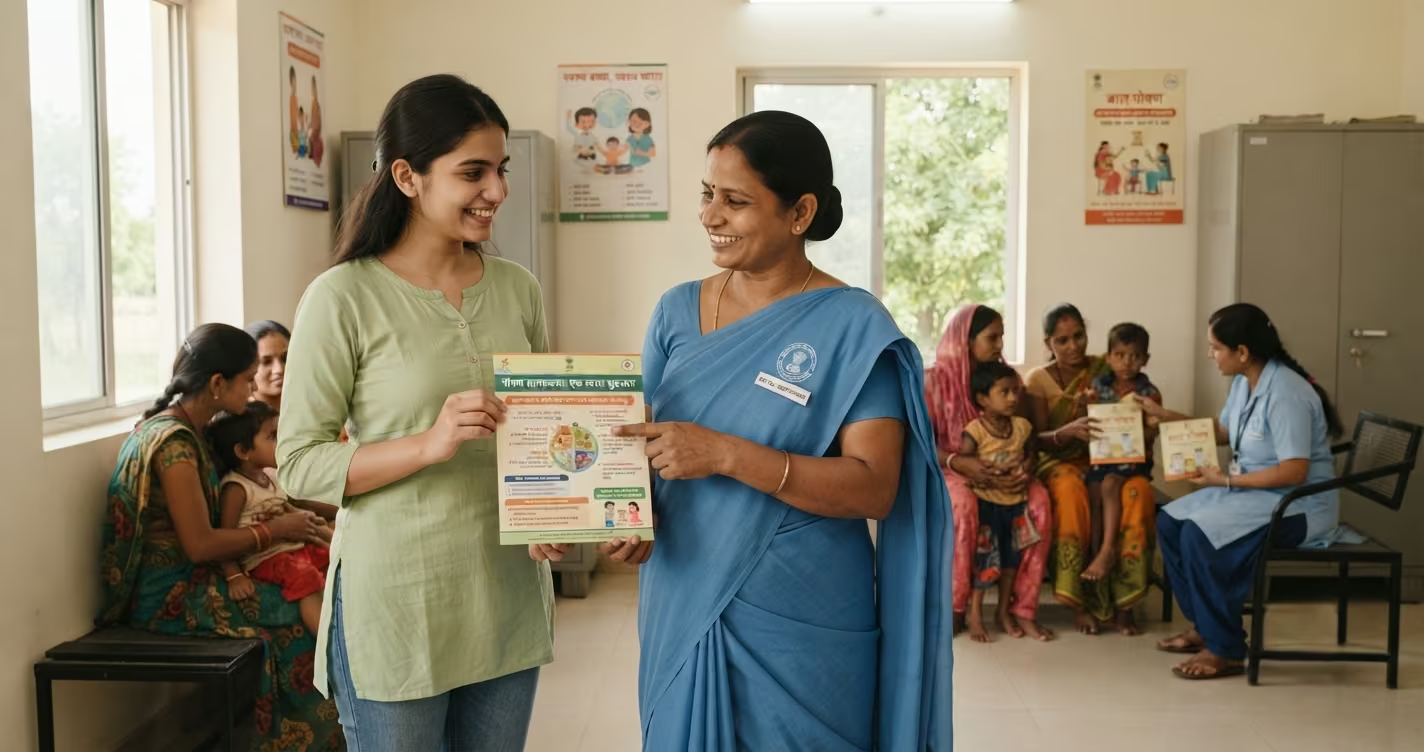
- Support the “First 1,000 Days”: This critical window from conception to a child’s second birthday is when the brain and body grow significantly. Interventions focused on improving maternal nutrition, infant and young child feeding (IYCF) practices, and access to healthcare for pregnant women and young children can break the intergenerational cycle of malnutrition .
- Strengthen the ICDS and PDS: The government’s Integrated Child Development Services (ICDS) and Public Distribution System (PDS) are massive platforms that can be leveraged to deliver better nutrition. Donations to organizations that work to improve the quality, reach, and efficiency of these schemes can have a systemic impact .
3. Invest in Sustainable Food Systems
The GHI report, and other expert analyses, point to the need for a holistic food systems approach . This means moving beyond simply producing more calories to producing the right kinds of food, sustainably. You can support initiatives that:
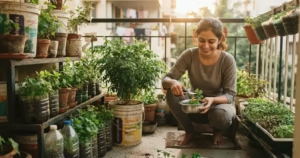
- Support Kitchen Gardens: In a country where access to fresh produce is a challenge, kitchen gardens are a powerful, low-cost solution. They improve dietary diversity, act as shock absorbers during crises (like the COVID-19 pandemic), and can be a source of empowerment for women . The Smile Foundation’s nutrition and health programmes support kitchen gardens as part of a holistic nutrition strategy, integrating them with nutrition counselling and maternal health support .
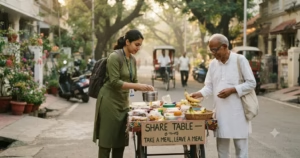
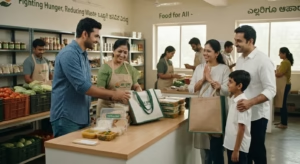
- Reduce Food Waste: Globally, one-third of all food produced is wasted . Organizations like Reshine directly address this by rescuing surplus food from businesses and events and redirecting it to those in need . Supporting food rescue initiatives ensures that food is used to feed people, not landfills.
- Promote Climate-Smart Agriculture: The IFAD report highlights projects in Madhya Pradesh, Odisha, and Maharashtra that are advancing inclusive, nutrition-sensitive agri-food systems . These projects support agricultural practices and value chains that prioritize diverse, safe, and nutritious foods. Supporting such work is an investment in the long-term health and resilience of communities.
Conclusion: Your Investment in a Hunger-Free India
Understanding the Global Hunger Index is more than an academic exercise. It is a call to action. India’s “serious” ranking and its high rates of child malnutrition are not just statistics. They represent the daily reality of millions of families who face hunger and hardship.
Your support for targeted, effective interventions can make a tangible difference. Whether it’s funding a daily meal at a government hospital, supporting a kitchen garden for a family in a slum, or investing in programs that promote dietary diversity, every effort counts. Together, we can help rewrite this story and build a future where every child in India has the chance to grow, learn, and thrive.
Your Next Step: Join the Fight Against Hunger
Ready to make a real difference? You can be part of the solution.
Support Reshine’s Hunger Alleviation Program. Your donation helps provide daily meals to families in need, reducing their burden and improving their health.
Share This Guide with friends and colleagues who are passionate about fighting hunger.
Give wisely. Fight hunger. Build a healthier future.