
How to Support the SDGs Through Daily Giving: A Practical Guide
The Sustainable Development Goals (SDGs) can feel abstract. Seventeen goals. One hundred sixty-nine targets. A deadline of 2030. For most people, these numbers are overwhelming. They seem like something for governments and global organizations to worry about—not something you can influence from your own home.
But here is the truth: the SDGs are built on daily actions. Every meal you share, every item you reuse, every rupee you donate to a cause you trust—these are not small gestures. They are the building blocks of a better world.
At Reshine Organisation, we see this connection every day. Our work fighting hunger and reducing food waste directly supports multiple SDGs. And we believe that ordinary people, through conscious daily giving, can be powerful agents of change.
This guide will show you how to support the SDGs through daily giving. No overwhelm. No guilt. Just practical, achievable steps that align with your values and your life.
What Are the SDGs and Why Do They Matter?
The Sustainable Development Goals are a universal call to action adopted by all United Nations Member States in 2015. They aim to end poverty, protect the planet, and ensure prosperity for all by 2030.
There are 17 goals, covering everything from hunger and health to education, equality, and climate action. Each goal has specific targets and indicators to measure progress.
India has made progress. The 2025 SDG Index report shows that India’s composite score rose to 69 from 66 in 2024, indicating steady advancement on the SDG framework. India is ranked 99th out of 167 countries. The country is on track or maintaining progress on 83% of the 169 SDG targets.
Yet, significant challenges remain. The United Nations’ latest report warns that progress towards the SDGs continues to fall short globally. In India, 190 million people go to bed hungry every night. Food waste remains a massive problem. Environmental degradation continues.
This is where daily giving comes in. The SDGs are not just for governments. They are for everyone. And the most powerful changes often start with small, consistent actions.
The SDGs Most Connected to Daily Giving
While all SDGs matter, certain goals are directly linked to the food rescue and hunger relief work that organizations like Reshine do. Understanding these connections can help you focus your giving.
SDG 1: No Poverty
Hunger and poverty are deeply intertwined. Families that struggle to afford food are often trapped in cycles of poverty. Food assistance frees up resources for healthcare, education, and income generation.
SDG 2: Zero Hunger
This is the most direct connection. Food rescue programs feed people who would otherwise go hungry. India’s food safety nets, including the Public Distribution System, are designed to eliminate hunger, with over 800 million beneficiaries. But supplementary support from NGOs fills critical gaps.
SDG 3: Good Health and Well-Being
Nutrition is the foundation of health. When children receive nutritious meals, they grow, learn, and thrive. When patients in hospitals have access to food, they recover faster. Food is medicine.
SDG 4: Quality Education
Children who are hungry cannot concentrate in school. Mid-day meal programs provide an incentive for families to send children to school. School meals are a proven strategy for improving attendance and learning outcomes.
SDG 5: Gender Equality
Women and girls are disproportionately affected by hunger. When food is scarce, they often eat last and least. Food assistance programs prioritize vulnerable women, reducing the burden on them and enabling them to pursue education and work.
SDG 12: Responsible Consumption and Production
Food waste is a major problem. Globally, one-third of all food produced is wasted. Rescue programs directly address this by redirecting surplus food for human consumption instead of letting it rot in landfills.
SDG 13: Climate Action
Food waste contributes to climate change. When food decomposes in landfills, it releases methane, a potent greenhouse gas. Reducing food waste is one of the most effective climate actions available.
SDGs Supported by Food Rescue
| SDG | Connection |
|---|---|
| 1. No Poverty | Frees income for other essentials |
| 2. Zero Hunger | Directly provides meals to the hungry |
| 3. Good Health | Improves nutrition and health outcomes |
| 4. Quality Education | Supports school attendance and learning |
| 5. Gender Equality | Prioritizes vulnerable women and girls |
| 12. Responsible Consumption | Reduces food waste |
| 13. Climate Action | Prevents methane emissions |
How to Support the SDGs Through Daily Giving
Now that you understand the connections, let us explore how you can support the SDGs through daily giving. These are practical, achievable actions that fit into any lifestyle.
1. Give Your Surplus Food
The simplest way to support SDG 2 (Zero Hunger) and SDG 12 (Responsible Consumption) is to share surplus food.
Daily Actions
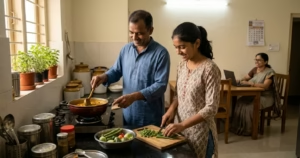
- Plan meals to avoid buying more than you need.
- Use leftovers creatively instead of throwing them away.
- Share surplus food with neighbours or community fridges.
- Donate packaged, unexpired food to local food banks.
Why It Works
Every kilogram of food rescued means one less kilogram in a landfill. It also means one more meal for someone in need. The environmental and social benefits are immediate and measurable.
2. Support Food Rescue Organisations
Food rescue organizations are on the front lines of the fight against hunger and waste. Supporting them amplifies your impact.
Daily Actions
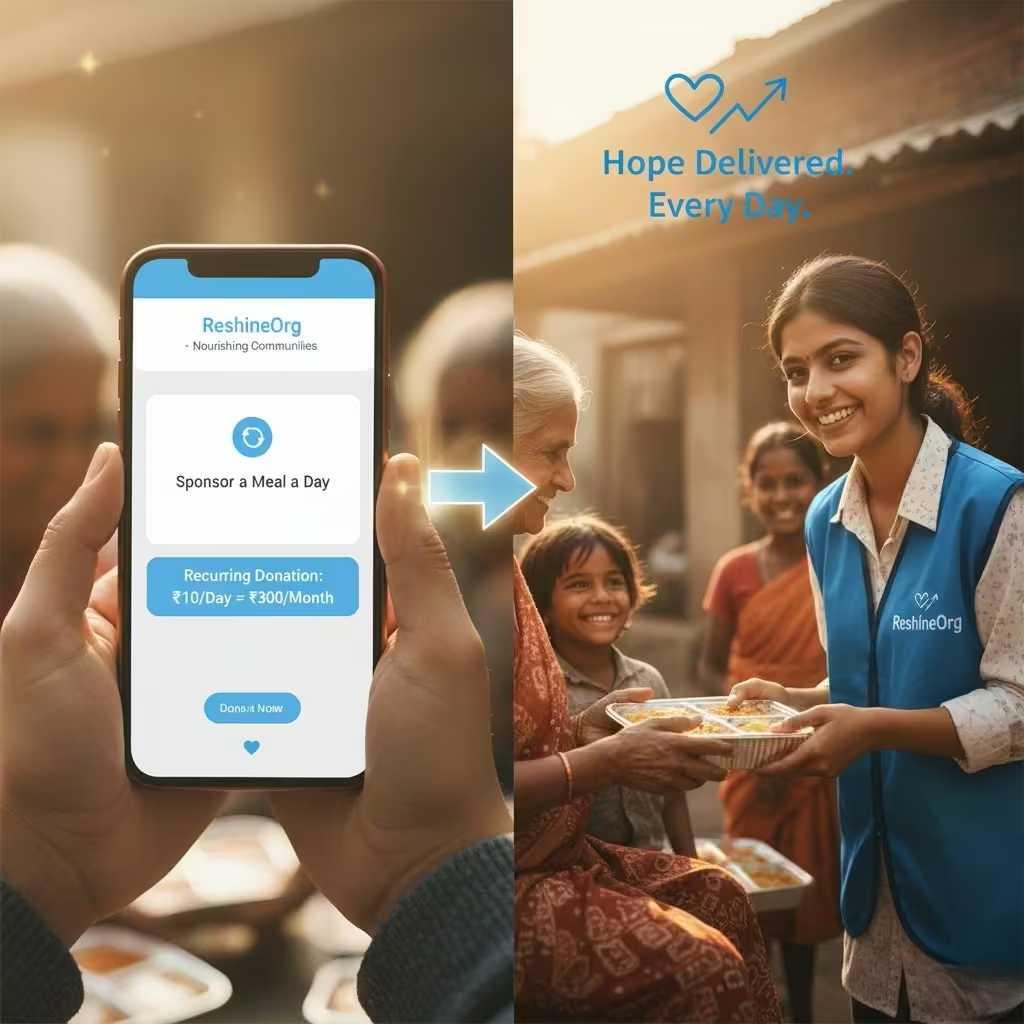
- Make a recurring donation to an organization like Reshine.
- Volunteer for food collection or distribution.
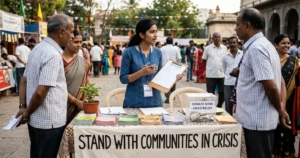
- Spread awareness about food waste and hunger.
- Attend events and share your experience.
Real Impact
At Reshine, our Annadasoha initiative provides 600 meals daily to patients and families at BRIMS Government Hospital in Bidar, Karnataka. Since 2017, we have served over 660,000 meals and saved families an estimated ₹6.6 crore in food expenses.
3. Choose Sustainable Food Practices
What you eat and how you eat it has a direct impact on multiple SDGs.
Daily Actions
- Eat more plant-based meals. They have a lower environmental footprint.
- Buy local and seasonal produce. This reduces food miles and supports local farmers.
- Use every part of the vegetable. Peels, stems, and leaves are often edible.
- Compost food scraps. This reduces methane emissions from landfills.
Why It Works
Sustainable eating reduces your carbon footprint, conserves water, and supports biodiversity. It also saves money and improves health.
4. Reduce, Reuse, and Recycle
SDG 12 (Responsible Consumption) is about using resources wisely. Small daily habits add up.
Daily Actions
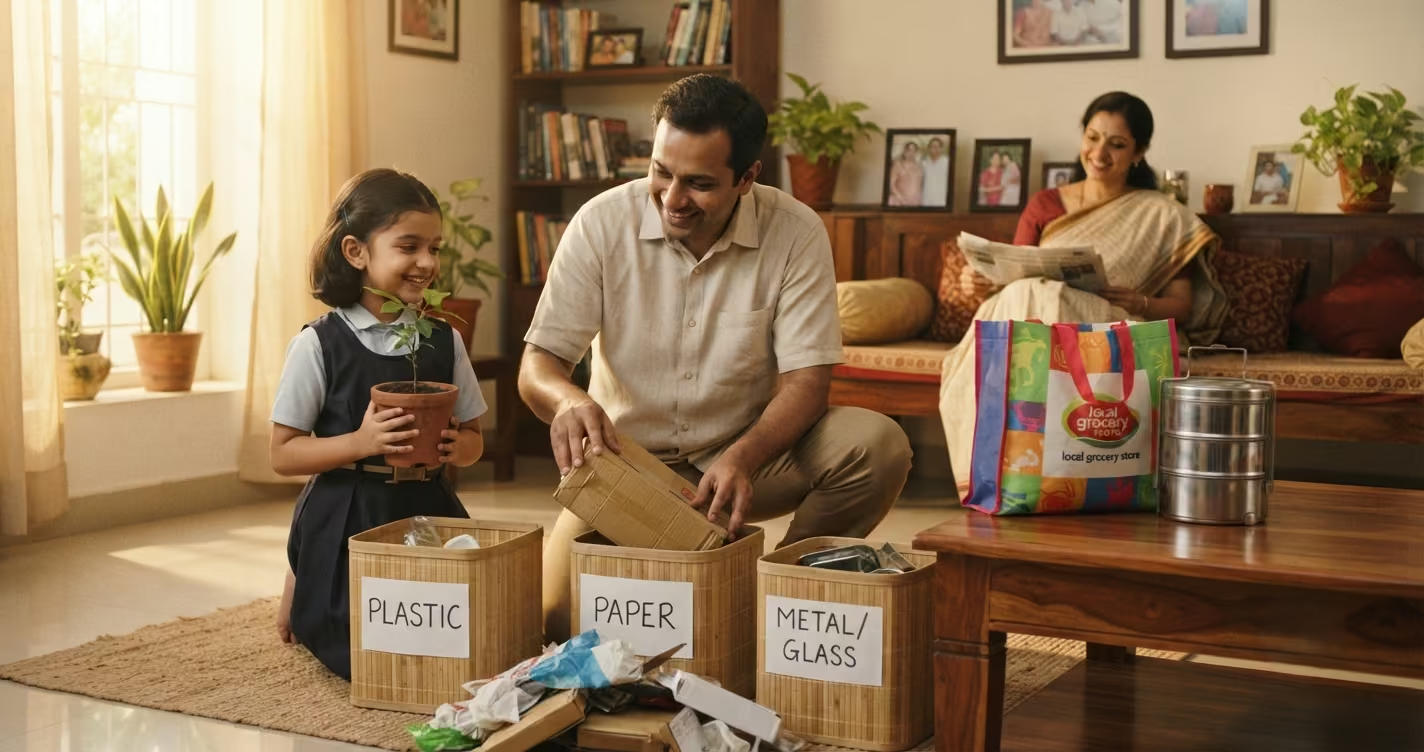
- Carry a reusable water bottle.
- Use cloth bags instead of plastic.
- Repair items instead of replacing them.
- Buy secondhand when possible.
- Recycle paper, plastic, glass, and metal.
The Ripple Effect
When you adopt sustainable habits, you inspire others. Friends, family, and colleagues notice. They may follow your example. This collective shift in behavior can influence industries and governments.
5. Support Education and Awareness
SDG 4 (Quality Education) is not just about schools. It is about learning everywhere, every day.
Daily Actions
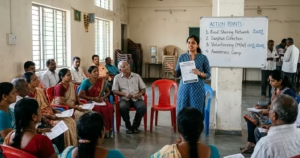
- Read about social issues. Understand the challenges facing your community.
- Share what you learn. Talk to friends, family, and colleagues.
- Attend workshops and webinars.
- Support organizations that provide education.
Why It Works
Awareness is the first step toward action. When people understand the issues, they are more likely to get involved.
6. Practice Kindness and Compassion
The SDGs are ultimately about people. Small acts of kindness can have a big impact.
Daily Actions
- Smile at a stranger.
- Help a neighbour in need.
- Listen to someone who is struggling.
- Offer your skills to a cause you care about.
The Human Connection
Kindness builds community. It creates trust. It reminds us that we are all in this together.
Real-World Examples: SDGs in Action
Reshine Organisation
Reshine’s work directly supports multiple SDGs. The organization rescues surplus food from businesses and events, providing meals to those in need. This supports SDG 2 (Zero Hunger), SDG 12 (Responsible Consumption), and SDG 13 (Climate Action).
No Food Waste
Founded in 2014 in Coimbatore, No Food Waste operates across Tamil Nadu, Andhra Pradesh, and Telangana with 26 chapters. The Chennai chapter alone feeds 40,000 people monthly. This is SDG 2 in action.
Pepper Cook Seva Foundation
In Mumbai, Pepper Cook Seva Foundation feeds 1,200 children daily. Their community kitchen sources most of its food for free—from farmers, farmers’ markets, and companies with excess stock. This demonstrates SDG 2 and SDG 12 working together.
Corporate Food Rescue in Goa
In June 2025, thirteen Goa-based companies were honored for donating surplus food from their canteens through Street Providence. This initiative saved 1 lakh kg of wet waste from landfills and prevented 10,000 kg of plastic from being discarded. This is SDG 12 and SDG 13 working together.
Frequently Asked Questions
What are the Sustainable Development Goals (SDGs)?
The SDGs are a set of 17 goals adopted by all United Nations Member States in 2015. They aim to end poverty, protect the planet, and ensure prosperity for all by 2030.
How can I support the SDGs through daily giving?
You can support the SDGs through daily giving by sharing surplus food, supporting food rescue organizations, choosing sustainable food practices, reducing waste, and spreading awareness about social issues.
Which SDGs are most connected to food rescue?
Food rescue most directly supports SDG 2 (Zero Hunger), SDG 12 (Responsible Consumption), and SDG 13 (Climate Action). It also indirectly supports SDG 1 (No Poverty), SDG 3 (Good Health), and SDG 4 (Quality Education).
Can small daily actions really make a difference for the SDGs?
Yes. Small daily actions add up. When millions of people make sustainable choices, the collective impact is enormous. Your actions also inspire others, creating a ripple effect.
What is India’s progress on the SDGs?
India’s composite SDG score rose to 69 in 2025 from 66 in 2024. The country is on track or maintaining progress on 83% of the 169 SDG targets, but significant challenges remain.
How can I get involved with Reshine’s work?
You can support Reshine by making a donation, volunteering, or spreading awareness. Your contribution helps us fight hunger and reduce food waste in India.
Conclusion
The SDGs are not just for governments and global organizations. They are for everyone. And the most powerful changes often start with small, consistent actions.
Daily giving is your opportunity to be part of something larger than yourself. Every meal shared, every item reused, every rupee donated—these are acts of hope. They contribute to a world where no one goes hungry, where the planet is protected, and where everyone has the opportunity to thrive.
At Reshine Organisation, we are proud to support the SDGs through our work. We invite you to join us. Together, we can make the SDGs a reality.
Let’s Talk About SDGs
Have questions about supporting the SDGs through daily giving? We would love to hear from you.
Connect with us on WhatsApp for a friendly conversation about how you can make a difference. Our team is here to help.