
- How to Start a Food Rescue Program in Your City
- Why Start a Food Rescue Program?
- Understanding India's Legal Framework
- Step 1: Assess Your Community's Need
- Step 2: Build Your Team and Governance Structure
- Step 3: Establish Your Operations
- Step 4: Build Partnerships with Donors
- Step 5: Distribution and Reaching Beneficiaries
- Real Indian Examples to Inspire You
- Funding and Sustainability
- Frequently Asked Questions
- Conclusion
How to Start a Food Rescue Program in Your City
You see it everywhere. Lavish weddings with mountains of leftover food. Corporate events with buffets that barely get touched. Meanwhile, people go hungry just a few kilometers away. The contrast is painful, but it also presents an opportunity. Starting a food rescue program in your city is one of the most direct ways to fight hunger and reduce waste. It connects surplus food with people who need it. The model is proven. The need is urgent. And the tools are available.
This guide will walk you through the practical steps. We will cover planning, legal requirements, logistics, building a team, and real Indian examples. No fluff. Just actionable advice.
Why Start a Food Rescue Program?
Food rescue addresses two problems at once. It fights hunger and protects the environment.
India generates enormous food waste. Restaurants, hotels, events, and households all contribute. At the same time, millions of people face food insecurity. Food rescue bridges this gap. It takes surplus food that would otherwise rot in landfills and redirects it to those who need it.
The environmental benefits are equally significant. When food decomposes in landfills, it releases methane, a potent greenhouse gas. Rescuing food prevents these emissions. It is one of the most effective climate actions available.
For communities, food rescue programs create a ripple effect. They strengthen social bonds. They encourage volunteerism. They raise awareness about waste and hunger. They also provide relief to nonprofits by freeing up their food costs for other services .
Understanding India’s Legal Framework
Before you start collecting food, understand the rules. India has a clear legal framework for food donation.
The FSSAI Surplus Food Regulations (2019)
The Food Safety and Standards Authority of India (FSSAI) enacted the Food Safety and Standards (Recovery and Distribution of Surplus Food) Regulations in 2019. These regulations provide a legitimate backup for food donation in India.
Key Definitions
- Surplus Food: Any leftover unused portions of safe food that have not been served to customers.
- Surplus Food Distribution Organisation: Any person or organization that collects surplus food from donors and distributes it for free, without profit.
Responsibilities of Food Donors
- You may donate surplus food to any distribution organization.
- You must maintain the food according to safety requirements specified in Schedule-I.
- You cannot donate unsafe food.
- You must hand over food in time so it can be consumed before spoiling.
Responsibilities of Distribution Organizations
- They need proper facilities for transport, storage, and reheating.
- They cannot distribute food after its expiry date.
- They must maintain records of all surplus food handled.
Labeling Requirements
For donated pre-packed food, the original label must remain intact. For prepared meals, labels must include:
- Name of the food
- Source of the food
- Date of preparation
- Last date of consumption
- Whether vegetarian or non-vegetarian
The Indian Food Sharing Alliance (IFSA)
FSSAI created the Indian Food Sharing Alliance (IFSA) to bridge the gap between food companies, surplus food distribution agencies, and beneficiaries . Food collection and recovery organizations can join this network. Membership provides access to regulatory support, food safety training, and capacity-building efforts.
Step 1: Assess Your Community’s Need
Before you launch, understand your landscape. Who needs food assistance? Where are they located? What resources already exist?
Map Hunger Spots
Identify locations where people face food insecurity. These often include:
- Government hospitals
- Slum communities
- Bus stations and railway platforms
- Shelters and rehabilitation homes
- Old-age homes
- Orphanages
No Food Waste, an organization operating in multiple Tamil Nadu cities, mapped 550 to 600 hunger spots in Hyderabad and Secunderabad alone. These include hospitals, bus stations, railway platforms, and old-age homes.
Identify Food Sources
Where is surplus food generated? Common sources include:
- Hotels and restaurants
- Corporate events and weddings
- Educational institutions
- Supermarkets and grocery stores
- Food manufacturers
- IT companies with large cafeterias
Understand Existing Networks
Check if other organizations are already doing similar work. Partnering with existing coalitions is more efficient than starting from scratch. Ask local NGOs, religious institutions, and community centers about their food distribution efforts.
Step 2: Build Your Team and Governance Structure
Your people are your most critical resource. A successful food rescue program needs dedicated leadership and reliable volunteers.
Build a Strategic Board
Identify board members with skills in:
- Fundraising
- Logistics and operations
- Community outreach
- Governance and legal compliance
Build a diverse, mission-aligned leadership team that reflects and supports your community . Board members bring credibility, connections, and strategic guidance.
Recruit Volunteers
Volunteers are the lifeblood of food rescue. “No Food Waste” operates with around 30 dedicated volunteers in Chennai alone, with additional support from colleges, schools, and corporates .
How to Recruit:
- Partner with educational institutions for student volunteers
- Reach out to corporate employees through CSR programs
- Use social media to attract community members
- Engage retirees who have time and skills
Training Essentials:
- Food safety and hygiene
- Safe food handling practices
- Vehicle operation and safety
- Communication with donors and recipients
- Emergency protocols
Create clear position descriptions that outline roles, responsibilities, and required skills . Ensure volunteers understand food safety regulations and have access to proper training materials.
Create Memorandums of Understanding (MOUs)
MOUs are agreements with key partners such as donors, volunteers, and recipient organizations. They establish clarity around everyone’s roles and responsibilities, minimizing risk and building productive partnerships . Your retailer partner donors will expect you to hold all the risk.
What MOUs Should Cover:
- Roles and responsibilities of each party
- Food safety expectations
- Liability and insurance arrangements
- Pickup schedules and procedures
- Record-keeping requirements
- Communication protocols
Step 3: Establish Your Operations
Food rescue requires careful logistics. You need vehicles, storage, systems, and safety protocols.
Vehicles and Transport
Vehicle Requirements:
- Use carriers dedicated to food use only
- Ensure all surfaces are clean before loading
- Maintain cold food temperatures at 5°C or below for cold items
- Maintain hot food temperatures at 65°C or above for hot items
Time and Temperature Rules:
- For food prepared nearby and served quickly: transport hot above 60°C and consume within 4 hours
- For food transported long distances: chill to below 4°C, transport, and reheat to at least 70°C before serving
- Reheating should be done only once
No Food Waste maintains a fleet of vehicles stationed in various parts of the city to facilitate quick and efficient collection and delivery.
Storage Facilities
Cold Storage:
- Store at below 5°C immediately after unloading
- Clean refrigerators at least once a week
- Do not mix old food with new food
Dry Storage:
- Store food off the floor and away from walls
- Keep storage areas clean and well-ventilated
- Implement pest control programs
Some organizations operate community kitchens. No Food Waste opened a community kitchen in Pallikaranai, Chennai, to prepare fresh meals for the homeless and impoverished communities . The kitchen prepares approximately 700-800 plates daily.
Food Safety Inspection
Every donation must be inspected before acceptance.
What to Check for Pre-Packed Food:
- No rips, tears, punctures, or holes
- No insect or rodent damage
- No spills or stains from unknown contaminants
- Valid labels with product name, ingredients, allergens, and expiry date
What to Check for Prepared Food:
- Appearance and smell
- Temperature
- Preparation time
- Signs of spoilage
When to Reject:
- Expired food
- Food with damaged packaging
- Food showing mold, odd smell, or discoloration
- Food with broken cold chain
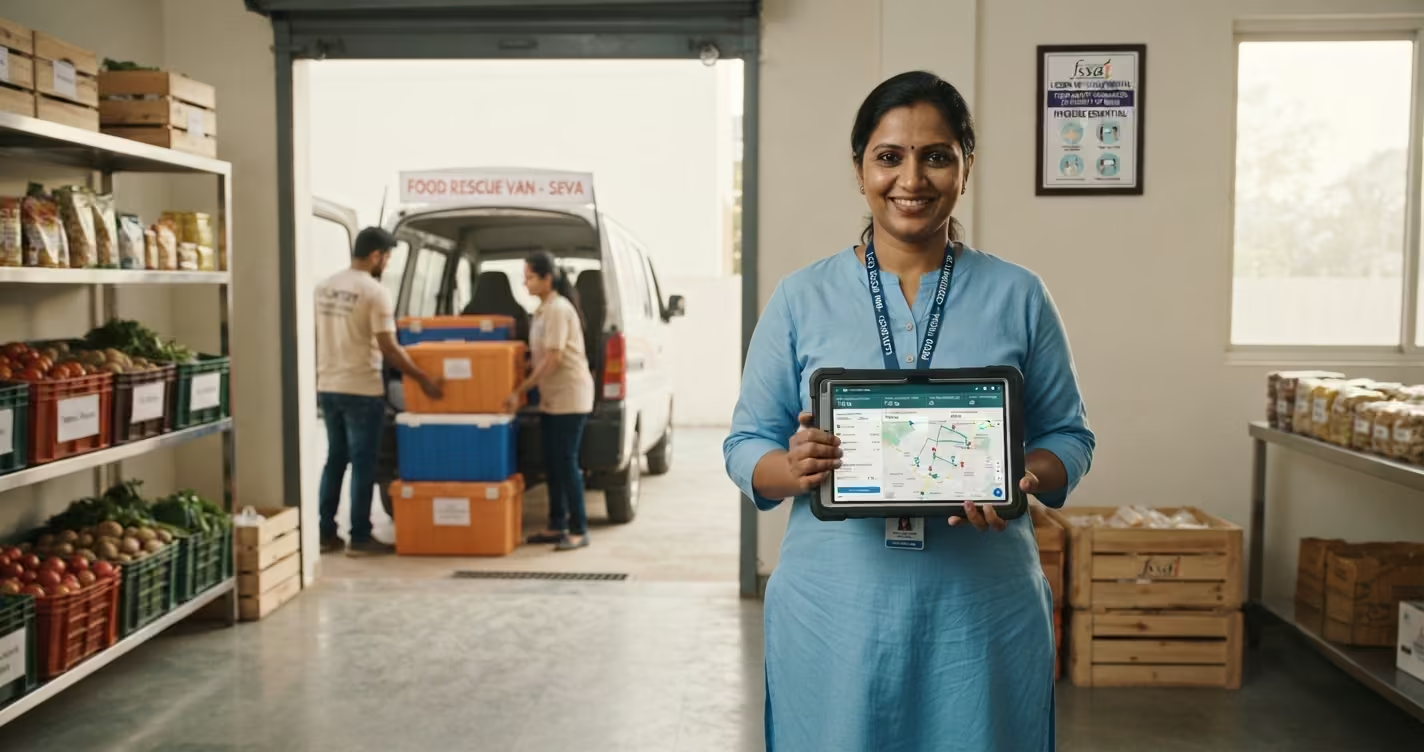
Technology and Systems
Technology helps you track donations and demonstrate impact . A good software system provides:
- Real-time inventory tracking
- Donor and recipient matching
- Food safety compliance records
- Impact reporting
- Carbon credit data
Cities need food donation data to demonstrate efficacy. Businesses need data for tax deductions. Nonprofits need data to apply for carbon credits.
Step 4: Build Partnerships with Donors
Your program depends on a steady supply of surplus food. Build strong relationships with food donors.
Types of Food Donors
Restaurants and Hotels
Approach restaurants near you. Many are willing to donate surplus food but lack the logistics to do so. Plenti, a Kerala-based startup, has onboarded close to 400 restaurants in Thiruvananthapuram and Kochi.
Corporate Events and Weddings
Large gatherings generate massive surplus. No Food Waste collects from corporate events, weddings, and even marathons.
Educational Institutions
Colleges and schools often have surplus food. Partner with their canteens and hostels.
Supermarkets and Grocery Stores
Stores discard items approaching expiry. These can often be safely consumed and donated.
How to Approach Donors
- Understand their needs. Some donors want tax benefits. Some want to reduce waste disposal costs. Some want CSR compliance.
- Offer a solution. Your program provides pickup, transport, and safe handling.
- Provide reassurance. Share your food safety protocols. Offer MOUs for liability protection.
- Start small. Begin with a few reliable donors. Expand once your systems are proven.
Helping Donors Comply
Train your donors on safe food handling . Provide clear guidelines on what you accept. At Reshine, our team inspects food at the donor’s site before accepting it.
Step 5: Distribution and Reaching Beneficiaries
How you distribute food determines your impact. Plan carefully.
Identify Reliable Recipient Organizations
Partner with:
- Shelters and orphanages
- Government hospitals
- Community kitchens
- Slum communities
- Old-age homes
No Food Waste works with shelter homes including Tower NGO, Regina Charitable Trust, and Integrated Women Development Institute .
Serve with Dignity
The stigma around receiving food donations is disappearing, but it remains important to think about how to make it a pleasant, dignified, and easy experience for people collecting food . Serve food in clean plates or sealed containers. Treat every recipient with respect.
Manage Inconsistent Supply
Food rescue has peaks and troughs. Sometimes you have too much; sometimes too little. Plan for both.
When You Have Too Much:
- Share with other food hubs
- Use excess for community kitchens
- Compost what cannot be redistributed
When You Have Too Little:
- Use community kitchen to prepare fresh meals
- Partner with more donors
- Communicate transparently with recipients
Real Indian Examples to Inspire You
No Food Waste: From Two Shopping Bags to 40,000 Meals Monthly
Founded in Coimbatore in 2014, No Food Waste started with two shopping bags and a single volunteer . The founders collected surplus food from local sources and delivered it to homeless people using public transport.
Today, the organization operates across Tamil Nadu, Andhra Pradesh, and Telangana with 26 chapters . The Chennai chapter alone feeds 40,000 people monthly . Major corporate partners include McKinsey, Freshworks, Zoho, and PayPal.
Plenti: India’s First Food Surplus Marketplace
Four Kerala youngsters launched Plenti, a “food rescue” platform connecting customers with restaurants, bakeries, and supermarkets . The app offers meals, baked goods, and groceries at one-third the original price.
Within five months, Plenti crossed 20,000 orders, built a user base of over 1.1 lakh people, and saved nearly 60 tonnes of food from going to waste . The platform works with close to 400 restaurants and bakeries.
Reshine Org: Fighting Hunger in Bidar
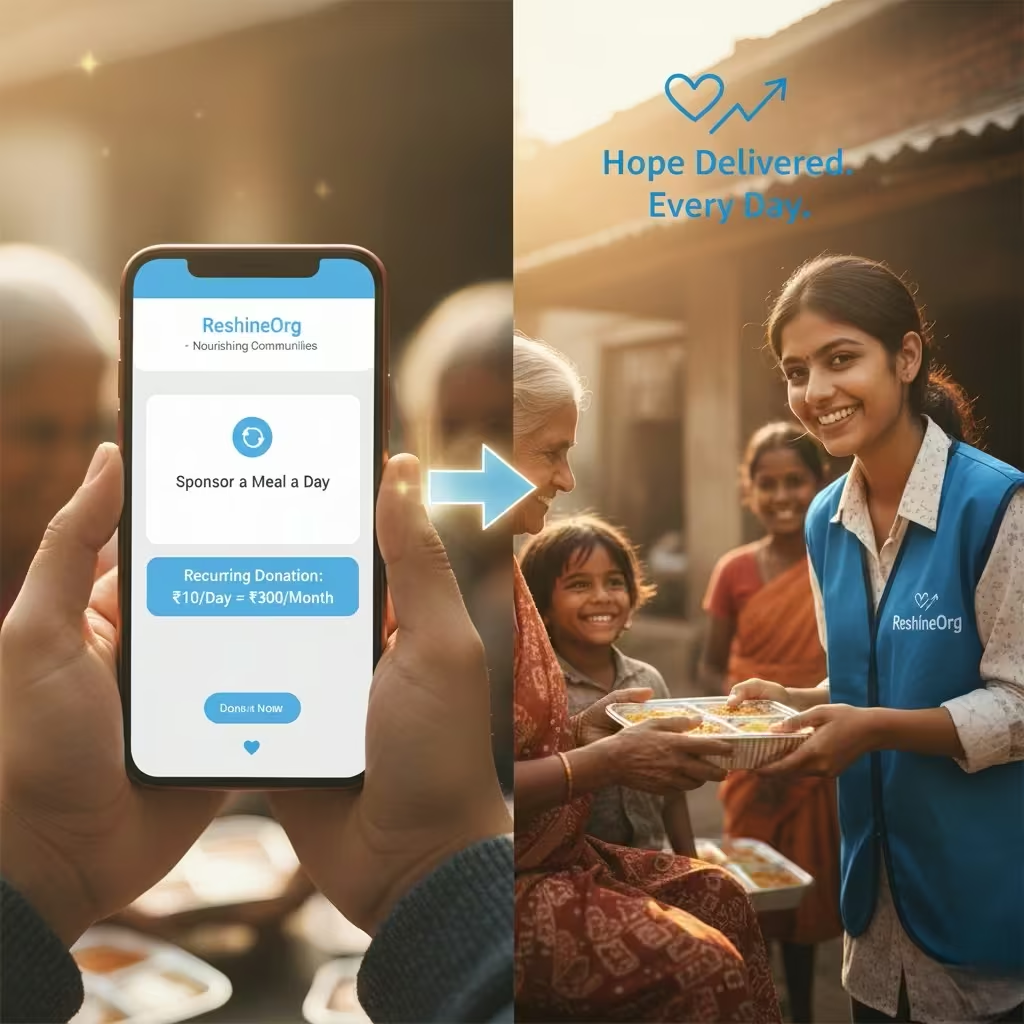
Reshine operates a food rescue and distribution program in Bidar, Karnataka. Our Annadasoha initiative provides daily meals to patients and families at the BRIMS Government Hospital. We serve 600 meals daily, saving families roughly ₹100 per day on food expenses.
Our process follows FSSAI safety standards. We inspect food at the donor’s site, maintain cold-chain logistics, and distribute food within one hour of pickup.
Funding and Sustainability
Most food rescue programs operate on thin margins. Careful administration of resources is essential .
Funding Sources
Grants: No Food Waste receives support from organizations like the World Bank and Flex . Look for grants focused on food security, waste reduction, and climate action.
Corporate Partnerships: CSR funding can support operations. However, in-kind food donations do not satisfy CSR requirements in India. Companies must contribute from their net profits.
Individual Donations: Regular donors provide stable funding.
Carbon Credits: Food rescue programs may qualify for carbon credits by reducing methane emissions .
Keeping Costs Low
- Use volunteers for operational work
- Seek in-kind donations of vehicles, storage space, and equipment
- Partner with other organizations to share resources
- Minimize administrative overhead
Frequently Asked Questions
Do I need legal registration to start a food rescue program?
Yes. Surplus food distribution organizations must be regulated under the Food Safety and Standards (Licensing and Registration of Food Business) Regulations, 2011 . You also need proper facilities for transport, storage, and reheating.
Can I be sued for food poisoning from donated food?
The FSSAI Surplus Food Regulations provide a framework for safe donation. Following food safety rules is essential for liability protection. India’s Good Samaritan laws for food donation are still developing, so it is important to maintain proper MOUs and insurance.
What food can I not donate?
Do not donate expired food, unsafe food, or food with broken packaging. Cash donations to NGOs must be non-cash above ₹2,000 to qualify for 80G benefits.
How do I keep food safe during transport?
Use dedicated vehicles. Maintain cold food below 5°C and hot food above 60°C. Minimize transport time. Conduct vehicle inspections before loading.
How do I find volunteers?
Partner with colleges, schools, and corporate CSR programs. Use social media to attract community members. Provide clear position descriptions and training.
Is it better to distribute cooked food or raw groceries?
Both work. Cooked food from events needs immediate redistribution. Raw groceries have longer shelf life and can be stored. Many organizations do both.
Conclusion
Starting a food rescue program is challenging but achievable. The model is proven. The legal framework exists. The need is urgent.
Begin by assessing your community’s needs and existing resources. Build a strong team of volunteers and board members. Establish proper operations with vehicles, storage, and safety protocols. Partner with food donors and recipient organizations. And always prioritize food safety.
Real-world examples from No Food Waste, Plenti, and Reshine show that grassroots efforts can scale into city-wide solutions. Your city could be next. The food is out there. The people are waiting. You have the power to connect them.
Let’s Talk Food Rescue
Have questions about starting a food rescue program? Want to share your own journey? We would love to hear from you.
Connect with us on WhatsApp for a friendly conversation about how you can start a food rescue program in your city. Our team is here to help.