
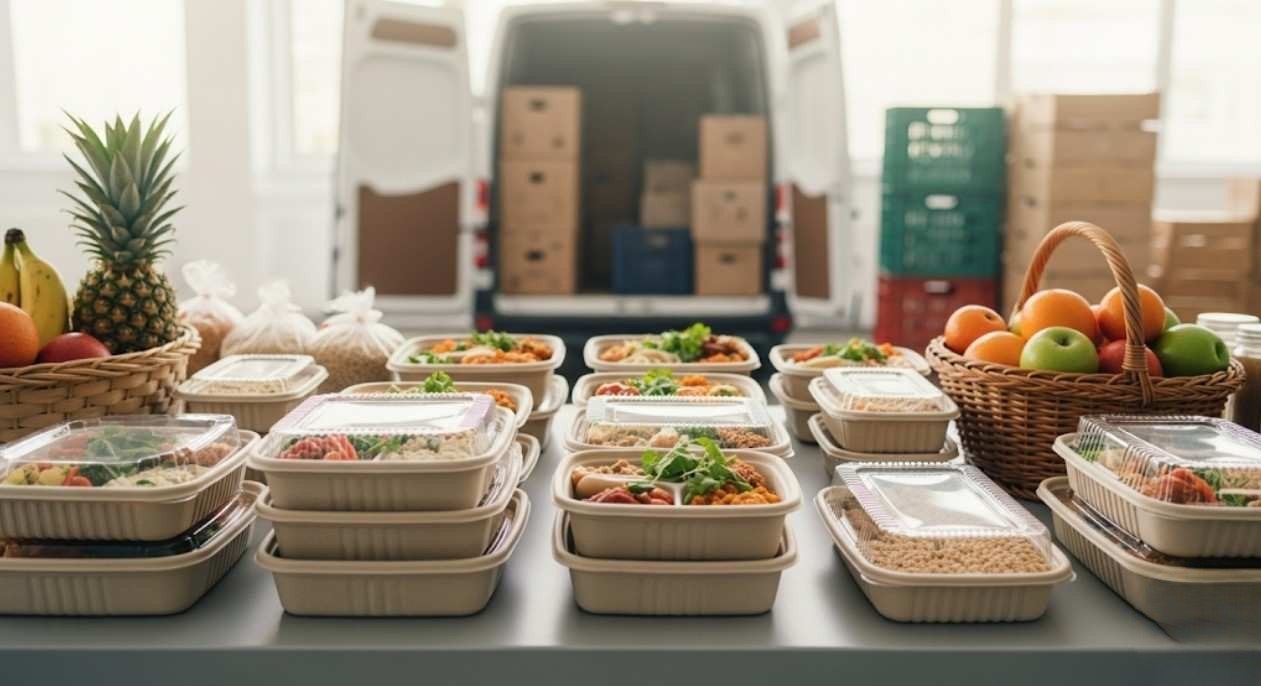

- How to Safely Donate Perishable Food and Fight Hunger
- Why Perishable Food Donation Matters
- FSSAI Regulations: What You Need to Know
- Step-by-Step Guide: How to Safely Donate Perishable Food
- What NOT to Donate
- Where to Donate: Organizations That Do It Right
- How Reshine Ensures Food Safety
- Legal Protection for Donors
- Conclusion: Your Donation Can Make a Difference
How to Safely Donate Perishable Food and Fight Hunger
You have surplus food. You want to help people in need. That is a noble intention. But donating food comes with responsibility. Especially when that food is perishable.
Perishable foods spoil quickly. They include dairy, meat, fish, fresh produce, and cooked meals. If handled improperly, they can cause foodborne illness. This defeats the purpose of charity.
But you should not let fear stop you. With the right knowledge, you can donate safely. This guide will show you exactly how to do it. We will cover food safety guidelines, proper handling, storage, and transport. You will also learn where to donate and what to avoid.
At Reshine Org, we rescue and distribute surplus food every day. We follow strict food safety protocols. Our experience has taught us what works. This guide shares those lessons with you.
Why Perishable Food Donation Matters
Food waste is a massive problem in India. Around 90 kg of food waste per capita per year occurs in the high-income group alone. This waste happens at every stage of the supply chain. Hotels, restaurants, supermarkets, and events all contribute .
At the same time, millions of people go hungry. The paradox is heartbreaking. Perishable food donation offers a solution. It rescues food that would otherwise rot in landfills. It feeds people who need it most. It also reduces greenhouse gas emissions.
But perishable food needs special care. Unlike canned goods, it cannot sit on a shelf indefinitely. Without proper refrigeration, it spoils within hours. This is why food safety standards for donation are critical.
FSSAI has stepped up to address this. In 2019, it enacted the Food Safety and Standards (Recovery and Distribution of Surplus Food) Regulations. These regulations provide a clear legal framework for safe food donation .
FSSAI Regulations: What You Need to Know
The FSSAI Surplus Food Regulations are India’s guiding framework. They outline responsibilities for both donors and distribution organizations .
Key Definitions to Understand
- Surplus Food: Any leftover, unused portions of safe food that have not been sold or served to customers .
- Surplus Food Distribution Organisation: Any person or organization that collects surplus food from donors and distributes it for free, without profit .
Important Rules for Donors
- You may donate surplus food to any distribution organization .
- You must maintain the food according to specified safety requirements .
- You cannot donate unsafe food .
- You must hand over food in time so it can be consumed before spoiling .
Important Rules for Distribution Organizations
- They need proper facilities for transport, storage, and reheating .
- They cannot distribute food after its expiry date .
- They must maintain records of all surplus food handled .
Labeling Requirements
If you donate packaged food, keep the original label intact. If you donate prepared meals, label them with:
- Name of the food
- Source of the food
- Date of preparation
- Last date of consumption
- Whether vegetarian or non-vegetarian
These regulations aim to end confusion. Previously, businesses worried that donating food might be illegal. Now the law explicitly permits it. This encourages more donations while protecting recipients .
Step-by-Step Guide: How to Safely Donate Perishable Food
Let us break down the process. Follow these steps for safe, responsible donations.
Step 1: Know Your Food Safety Basics
Food safety begins with cleanliness. Only donate food you would confidently serve to your family .
Temperature Rules for Perishable Food
- Hot food must stay at 60°C or above during transport .
- Cold food must stay at 5°C or below during transport .
- If food is prepared nearby and served quickly, it can be transported hot above 60°C and consumed within 4 hours .
- If food travels long distances, chill it below 4°C. Then reheat to at least 70°C before serving .
Time and Temperature Guidelines for Common Foods
| Food Item | Room Temperature (Hours) | Refrigerated (Days) |
|---|---|---|
| Pasteurized Milk | 5-6 hours | 5-6 days |
| Cooked Food | 4-6 hours | 12-24 hours |
| Meat and Poultry | 1-2 days | 5-6 days |
| Fish | 1-2 days | 4-5 days |
| Eggs | 7-10 days | 2-3 weeks |
| Cut Fruits/Vegetables | 24 hours | 1-2 days |
| Fresh Produce | 1-2 days | 3-4 days |
Use these guidelines to assess whether your food is still safe to donate. When in doubt, throw it out.
Step 2: Inspect the Food Before Donation
A thorough inspection prevents unsafe food from reaching recipients. This step is critical.
Visual Inspection
- Check for mold, discoloration, or unusual appearance.
- Look for signs of spoilage like sliminess on meat or fish.
- Ensure packaging is intact with no leaks or bulges .
Smell Test
- Fresh food has a pleasant or neutral odor.
- Sour, rancid, or ammonia-like smells indicate spoilage.
- Trust your nose. If it smells off, do not donate .
Texture Check
- Fruits and vegetables should be firm, not mushy.
- Meat should be firm, not sticky or slimy.
- Cooked food should have normal consistency .
At Reshine, our team performs these inspections at the donor’s site. If food fails the quality check, we respectfully decline it . This protects everyone.
Step 3: Use Clean, Food-Grade Containers
The containers you use matter greatly. They must be clean and designed for food.
Container Requirements
- Use food-grade stainless steel or plastic containers.
- Ensure containers are sanitized before use.
- Keep separate containers for vegetarian and non-vegetarian food .
Avoid
- Containers previously used for chemicals or cleaning products.
- Damaged, cracked, or dirty containers.
- Open or unsealed packaging .
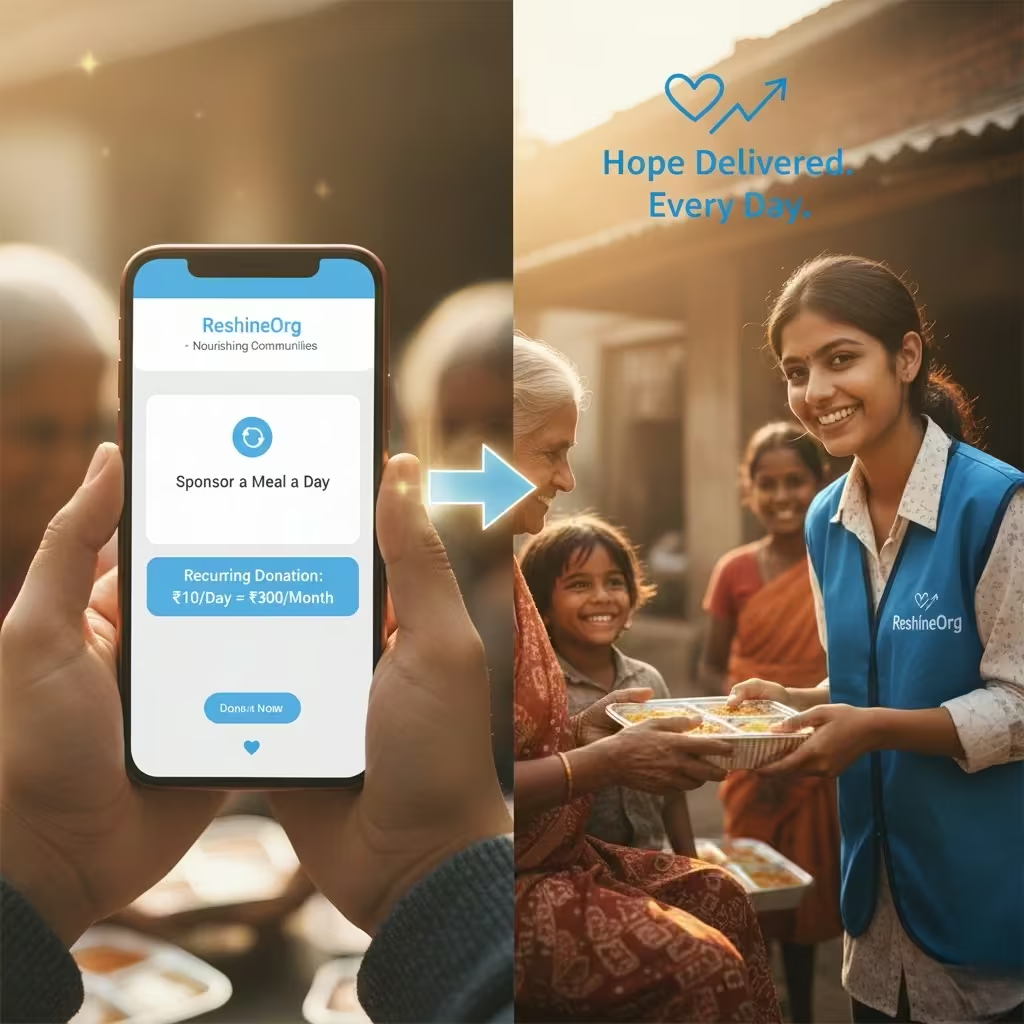
At Reshine, we transfer approved food into clean, food-grade stainless steel vessels. These are dedicated solely for food collection. They are sanitized after each use .
Step 4: Transport Safely and Quickly
Time is your enemy with perishable food. Minimize transport time.
Vehicle Rules
- Use vehicles dedicated to food transport only.
- Clean all surfaces of the vehicle before loading .
- Ensure vehicles maintain required temperatures.
- Check for signs of pests, chemicals, or garbage in the vehicle .
Loading Rules
- Separate raw and cooked foods.
- Keep vegetarian and non-vegetarian items apart.
- Place food in insulated boxes or coolers if needed.
The 1-Hour Rule
At Reshine, we follow a strict 1-hour rule. All collected food is distributed within one hour of pickup . This ensures freshness and safety. You should aim for similar speed.
Step 5: Store Properly at the Distribution Point
Once delivered, food must be stored correctly until served.
Refrigerated Storage
- Place food in a refrigerated room below 5°C immediately after unloading .
- Do not let cooked food sit at room temperature for long.
Frozen Storage
- Frozen food must stay at -18°C or below .
Reheating Rules
- Reheat food to at least 74°C for 15 seconds before serving.
- Reheat only once. Do not refrigerate after reheating .
- Use microwave ovens carefully. Rotate and cover food while heating .
What NOT to Donate
Avoid these items. They pose health risks.
Never Donate
- Expired food
- Opened or partially used items
- Food with torn, damaged, or unsealed packaging
- Food showing mold, odd smell, or discoloration
- Raw meat, fish, or highly perishable dairy (unless coordinating with a skilled organization)
- Home-canned foods (botulism risk)
- Leftovers from personal meals
- Homemade baked goods (can’t verify safety standards)
Cash Donations Over ₹2,000
For cash donations, remember: donations above ₹2,000 must be non-cash to qualify for 80G tax benefits. Use digital payments for larger gifts.
Where to Donate: Organizations That Do It Right
You do not have to do this alone. Partner with organizations that have the infrastructure.
Option 1: Food Rescue Organizations
These are your best bet. They handle logistics, safety, and distribution professionally.
Reshine Org
We specialize in this exact work. We rescue surplus food from businesses and events. Our team handles pickup, inspection, transport, and distribution. We maintain cold-chain logistics for perishables. We also provide documentation for businesses .
Option 2: Local NGOs and Community Kitchens
Many shelters and religious places accept food donations. Call ahead to confirm their needs.
Examples
- Shelters and orphanages
- Gurudwaras that serve langar
- Community kitchens
- Hunger spots identified by local organizations
How Reshine Ensures Food Safety
We take food safety seriously. Our process follows FSSAI guidelines and global best practices.
Our Food Safety Protocol
- On-Site Inspection: Our team inspects food at the donor’s site. We check preparation time, appearance, and freshness. We even taste it when appropriate .
- Rejection of Unsafe Food: We decline donations that do not meet our standards. Unsafe food is not charity. It is a risk .
- Clean Vessels: We use sanitized, food-grade stainless steel vessels. These are dedicated solely to food collection .
- Timely Distribution: We follow a strict 1-hour rule. Food is distributed within one hour of pickup .
- Hygienic Service: We serve food in clean plates or sealed foil covers. We treat every recipient with dignity .
- Trained Teams: Our staff is trained in FSSAI-recommended safety standards. This includes handwashing, clean uniforms, and proper waste disposal .
- Transparent Processes: We document every stage. Our logs include donor details, food type, collection time, distribution time, and volunteer team .
This comprehensive system ensures your donation does good, not harm.
Legal Protection for Donors
Businesses often worry about liability. The FSSAI regulations clarify this.
Liability Protection
Liability protection exists for donors who act in good faith. It applies when:
- Food is donated for a charitable purpose.
- Food is given for free.
- Food is safe when it leaves the donor’s control.
- The donor provides necessary information for ongoing safety .
Following food safety rules is essential for this protection. When you follow FSSAI guidelines, you are shielded from liability .
Conclusion: Your Donation Can Make a Difference
Perishable food donation saves lives and reduces waste. But it requires care. You must follow proper safety protocols. You must partner with organizations that have the infrastructure.
The FSSAI provides the framework. Organizations like Reshine provide the execution. Your role as a donor is to follow the guidelines and connect with the right partners.
When you donate safely, you turn surplus into sustenance. You fight hunger with dignity. You protect the planet. It is a powerful act of compassion.
Your Next Step: Donate Safely with Reshine
Ready to donate perishable food safely? Partner with Reshine Org, Donate Food Through Reshine
Share This Guide with businesses and event organizers who want to donate.
Donate wisely. Reduce waste. Feed families. Protect health.