
- How to Organize a Food Drive in Your Community: A Complete Guide
- Why Food Drives Matter in India
- Step 1: Build Your Team
- Step 2: Choose a Partner Organization
- Step 3: Set a Goal and Timeline
- Step 4: Identify What to Collect
- Step 5: Choose Collection Points and Timing
- Step 6: Promote Your Food Drive
- Step 7: Sort, Pack, and Deliver
- Step 8: Show Appreciation
- Real-World Inspiration: No Food Waste, Hyderabad
- A Creative Approach: Plastic for Food
- Frequently Asked Questions
- Conclusion
How to Organize a Food Drive in Your Community: A Complete Guide
You have seen the contrast. Lavish events with untouched food. Meanwhile, families just a few streets away struggle to find their next meal. The gap between feast and famine is painfully real.
Organizing a food drive is one of the most direct ways to bridge this gap. It mobilizes your community. It collects resources. It delivers hope. This guide will walk you through every step, from planning to delivery, with practical tips and real-world inspiration.
Why Food Drives Matter in India
Food drives are not just about collecting cans. They are about building community awareness around hunger and food waste. Every food drive is an opportunity to educate participants about food insecurity and sustainable food systems.
In India, the need is urgent. The Hyderabad chapter of No Food Waste, for instance, has mapped around 550 to 600 hunger spots in Hyderabad and Secunderabad alone—hospitals, bus stations, railway platforms, and old-age homes. Since its inception, the chapter has provided over 3.5 lakh meals.
Every food drive, no matter the size, contributes to this fight. No effort is too small to make an impact.
Step 1: Build Your Team
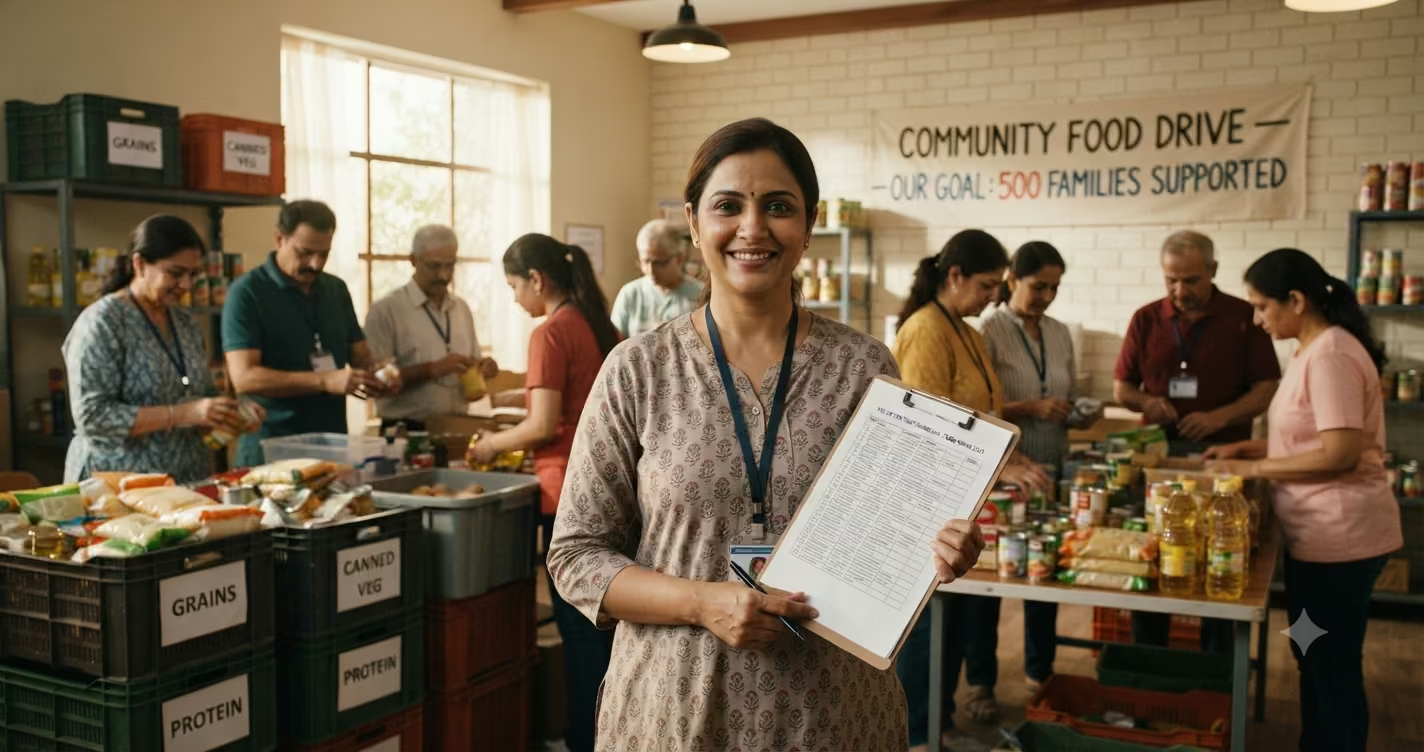
No one is as effective alone as they are with a supportive team . Start by assembling a small committee to plan and coordinate the food drive. Select a chairperson and delegate responsibilities.
Key Roles to Fill
- Planning Lead: Sets goals, timelines, and overall strategy.
- Collection Lead: Manages drop-off points, bins, and inventory.
- Communications Lead: Handles publicity, social media, and flyers.
- Logistics Lead: Arranges transportation and delivery to the partner organization.
Who can help? Consider coworkers, family, friends, and community organizations. If you have contacts in local businesses or places of worship, leverage them . For a school-based drive, involve students and staff.
Step 2: Choose a Partner Organization
Before collecting a single item, decide where your donations will go. Partner with a local food bank, shelter, or community kitchen. Contact them early to understand their specific needs.
Questions to Ask Your Partner
- What items are most needed right now? (Lists often include rice, dal, cooking oil, and fortified foods.)
- Do they accept non-food items like toiletries or diapers?
- What are their drop-off hours and procedures?
- Can they provide bins or promotional materials?
- Are there specific safety or expiry date guidelines?
Partnerships also allow you to align with local expertise. In Ahmedabad, the Meals of Hope initiative partnered with the Robin Hood Army to leverage its decentralized volunteer model for effective food distribution.
Step 3: Set a Goal and Timeline
Clear goals create momentum. Decide what success looks like for your drive. Will you measure success by weight of food collected, number of meals provided, or funds raised?
Examples of Measurable Goals
- “Collect 500 kg of non-perishable food.”
- “Provide 600 meals.” (Approximately 1.2 pounds of food equals one meal ).
- “Raise ₹50,000 for fresh produce purchases.”
Set a timeline. Most drives last one to four weeks to give people adequate time to participate . Use a visual tracker like a thermometer chart to mark progress and keep energy high.
Step 4: Identify What to Collect
Work with your partner to define a specific wish list. Providing a clear list prevents donors from bringing unusable items.
Commonly Requested Items
- Grains: Rice, wheat flour (atta), pasta, oats, fortified cereals.
- Proteins: Dried pulses (dal), canned beans, peanut butter.
- Canned Goods: Vegetables, fruits (in juice), and proteins like tuna or chicken.
- Cooking Essentials: Cooking oil, salt, sugar, spices.
- Non-Food Essentials: Toilet paper, soap, shampoo, toothpaste, menstrual hygiene products, diapers, and baby formula.
What to Avoid
- Expired or opened food.
- Rusty or bulging cans.
- Glass jars (risk of breakage).
Step 5: Choose Collection Points and Timing
Make donating as easy as possible. Secure visible, accessible locations for collection bins .
Ideal Collection Spots
- Office lobbies and break rooms.
- School entrances and libraries.
- Community centers and places of worship.
- Local supermarkets or retail stores (with permission).
Logistics Checklist
- Secure permission from relevant authorities (HR, building managers, school administrators) .
- Use sturdy boxes. Copy paper boxes work well and can be decorated. Some food banks also loan collection bins .
- Place bins in high-traffic areas.
- Clearly label bins with the drive dates and requested items.
Step 6: Promote Your Food Drive
If people don’t know about the drive, they can’t support it. Effective promotion is crucial to achieving your goals . Start marketing as soon as you set the date.
Promotion Strategies
- Internal Communications: Send emails, distribute flyers, or make announcements at meetings .
- Social Media: Use community and neighborhood pages. Post regular updates and photos. Share your goal progress and thank donors.
- Visual Materials: Create posters and flyers. Use a theme to generate excitement and make materials memorable.
Theme Ideas
- “Meat the Need”: Focus on collecting high-protein items.
- “Fall Bounty”: Emphasize sharing the harvest.
- “Read to Feed”: For schools, tie a reading competition to collecting cans.
Step 7: Sort, Pack, and Deliver
Once the drive ends, the work moves to sorting and delivery.
Sorting and Packing
- Check all items for expiration dates and damage. Ensure items meet safety standards.
- Sort by category (grains, proteins, non-food). This saves the partner organization time and effort.
- Place items in sturdy bags or boxes for transport.
Delivery
- Coordinate with your partner organization to schedule a drop-off time. Confirm their hours and check-in procedures.
- If your drive collects significant volume, ask if the partner can provide assistance unloading.
- Arrange transportation. Food bank fleets are often focused on distribution, so be prepared to deliver your donations.
Step 8: Show Appreciation
A successful food drive builds a stronger community. Take time to recognize everyone who contributed.
Ways to Say Thanks
- Announce the total results (weight, meals provided) to participants.
- Host a small appreciation event or send thank-you notes.
- Share a photo of the donations on social media.
- Maintain the relationship with your partner organization for future drives.
Real-World Inspiration: No Food Waste, Hyderabad
No Food Waste started in Coimbatore nearly nine years ago when two IT professionals began collecting excess food from functions . The Hyderabad chapter, led by Venkat Murali, now feeds between 1,500 and 1,800 people daily.
The organization has mapped around 550 to 600 hunger spots in Hyderabad and Secunderabad. Volunteers are divided into seven city zones, each led by a zonal head, ensuring rapid response to donation calls. The network uses four food collection vans operating across the city, picking up surplus food from hotels, marriage halls, and corporate cafeterias.
Their model demonstrates that strategic partnerships and volunteer mobilization can create scalable impact.
A Creative Approach: Plastic for Food
In Mumbai, Shakti Yadav has taken an innovative approach. His initiative, ‘Buy Food with Plastic’, provides hot, nutritious meals in exchange for plastic bottles. Residents receive a meal for 20 plastic bottles.
Since its inception, the initiative has delivered more than 42,000 meals, supported 4,500 people, and educated over 1,000 students on sustainability . This model demonstrates how food drives can integrate waste management with hunger relief to address multiple community issues simultaneously.
Frequently Asked Questions
How do I start a food drive?
Start by assembling a team, choosing a partner organization, and setting a goal. Then, determine collection points, promote the drive, collect donations, and deliver them to the partner organization.
What items should I collect?
Focus on shelf-stable items like rice, wheat flour, pulses, cooking oil, and canned proteins and vegetables. Also, consider non-food essentials like toiletries, diapers, and menstrual hygiene products.
Where can I hold a food drive?
Ideal locations include workplaces, schools, community centers, places of worship, and supermarkets (with permission). Ensure the location is visible and accessible.
How long should a food drive last?
Most food drives run for one to four weeks. This gives people enough time to participate while maintaining momentum.
What happens to the food after the drive?
Food is delivered to a local partner organization, such as a food bank, shelter, or community kitchen, which then distributes it to those in need.
How do I promote my food drive?
Use a combination of email, flyers, social media, and community boards. Start promoting early and provide clear information about what is needed and how to donate.
Conclusion
Organizing a food drive is a powerful way to fight hunger in your community. By bringing people together around a common cause, you not only collect essential resources but also build awareness and compassion.
Every effort counts. No Food Waste in Hyderabad started with a simple idea: collect surplus food and give it to those who need it. Today, it feeds thousands daily.
Your community has the resources. Your community has the need. A food drive is the bridge between them.
Let’s Talk About Organizing a Food Drive
Have questions about starting a food drive in your community? We would love to hear from you.
Connect with us on WhatsApp for a friendly conversation about how you can organize a food drive to fight hunger in your area. Our team is here to help.