
- How to Fight Hidden Hunger with the Right Nutrition: A Complete Guide
- What Is Hidden Hunger?
- Strategy 1: Embrace Biofortified Crops
- Strategy 2: Grow Kitchen Gardens for Nutrition Security
- Strategy 3: Support Food Fortification
- Strategy 4: Diversify Diets with Millets and Pulses
- Strategy 5: Support Community Nutrition Programs
- Frequently Asked Questions
- What is the difference between hidden hunger and visible hunger?
- What are the most common micronutrient deficiencies in India?
- How can I identify hidden hunger in my community?
- What are the most effective ways to fight hidden hunger?
- How do kitchen gardens help fight hidden hunger?
- Are biofortified crops available in India?
- Why is dietary diversity important for fighting hidden hunger?
- Conclusion
How to Fight Hidden Hunger with the Right Nutrition: A Complete Guide
You have probably seen it. A child who eats every meal but still lacks energy. A woman who looks healthy but struggles with fatigue. A family that has enough food yet suffers from frequent illnesses.
This is hidden hunger. It is not the absence of food, but the absence of essential nutrients. Unlike visible hunger, hidden hunger does not show itself through an empty stomach. Instead, it manifests as fatigue, weakened immunity, poor cognitive development, and increased disease risk. It affects millions in India, even among those who appear well-fed.
The good news is that hidden hunger is preventable. Solutions exist. This guide will show you how to fight hidden hunger through practical, proven strategies—from the food you eat to the support you provide.
What Is Hidden Hunger?
Hidden hunger is a form of malnutrition caused by a deficiency of essential vitamins and minerals such as iron, zinc, vitamin A, iodine, and vitamin B12 . Unlike the hunger we see, hidden hunger often goes unnoticed until it causes serious health problems.
The numbers are stark. In India, 67.1% of children aged 6-59 months and over 57% of women aged 15-49 years are anaemic . The country faces widespread “hidden hunger” caused by deficiencies of essential micronutrients such as iron and zinc . A study in rural Karnataka found notable levels of stunting, wasting, and underweight among children aged 3-5, along with high prevalence of Vitamin B12 deficiency, anaemia, zinc, and Vitamin A deficiency .
Why Hidden Hunger Is Dangerous
| Deficiency | Health Impact |
|---|---|
| Iron | Anaemia, fatigue, impaired cognitive development |
| Zinc | Weakened immunity, stunting, diarrhoea |
| Vitamin A | Poor vision, weakened immunity, increased infection risk |
| Vitamin B12 | Fatigue, neurological problems, anaemia |
| Iodine | Impaired cognitive function, thyroid problems |
What Causes Hidden Hunger?
Several factors contribute to hidden hunger in India:
- Cereal-centric food policies: India’s food security strategy focuses heavily on rice and wheat, neglecting pulses, vegetables, and millets critical for nutrition. This leads to dietary monotony and insufficient intake of proteins, vitamins, and minerals . Even flagship schemes reinforce this cereal bias—PMGKAY covers 81.35 crore people with 5 kg rice/wheat per month but lacks diet diversity .
- Soil degradation: Soil health directly affects the nutritional value of food. Less than 5% of Indian soils have high or sufficient nitrogen. Zinc-deficient soils correlate with stunting in children—a public health link now recognised .
- Food affordability: The FAO reports that 74.1% of Indians are unable to afford a healthy diet. Even with food grain security, access to fruits, pulses, and animal proteins is limited for poor households .
- Inadequate dietary diversity: Indians under-consume nine of the thirteen food groups recommended for a balanced diet—including pulses, fruits, vegetables, and dairy .
- Sanitation and hygiene: Poor WASH practices increase disease burden, reducing nutrient absorption. Fifty percent of malnutrition is linked to repeated diarrhoea from poor hygiene .
Strategy 1: Embrace Biofortified Crops
Biofortification is one of the most promising solutions to hidden hunger. It involves breeding crops to naturally increase their nutrient content—without requiring changes in food habits.
What Is Biofortification?
Unlike food fortification, which adds nutrients during processing, biofortification enhances the nutritional value of crops while they grow. India’s agricultural scientists have developed 203 biofortified crop varieties enriched with iron, zinc, protein, and vitamins between 2014 and 2025 .
Key Biofortified Crop Varieties in India
| Crop | Nutrient Enrichment |
|---|---|
| Iron-rich Rice | Higher iron content (>10 mg/kg) |
| Zinc-enriched Rice | Higher zinc content (>24 mg/kg) |
| Protein-rich Wheat | Enhanced protein content |
| Zinc-enriched Maize | Higher zinc levels |
| Fortified Millets | Multiple micronutrients |
| Biofortified Pulses | Iron, zinc, protein |
ICAR has developed 70 biofortified wheat varieties, 43 maize varieties, 18 pearl millet varieties, and 16 rice varieties, along with nutrient-rich pulses, oilseeds, vegetables, and fruits .
Real-World Success: Biofortified Rice in Uttar Pradesh
Through the “Seeds Without Borders” initiative, two high-zinc rice varieties from Bangladesh—BRRI Dhan 84 (Zn = 27.6 mg/kg) and BRRI Dhan 100 (Zn = 25.7 mg/kg)—were introduced in India as DRR Dhan 67 and DRR Dhan 69 .
Farmer Durgawati Devi from Mirzamurad village planted BRRI Dhan 84 on 1.5 acres and BRRI Dhan 100 on 1 acre. Compared to the varieties she previously grew, the biofortified rice performed just as well but offered a major advantage: better market value. While she used to sell rice at ₹22/kg with a profit margin of 22.2%, she now plans to sell biofortified rice seeds at ₹30/kg, increasing her profits to 36% .
For Durgawati, the impact goes beyond profits. She values the nutritional benefits for her grandchildren. “The work didn’t stop with seed distribution,” she says. “Training in varietal selection, seed production, best management practices, and marketing built local expertise and strengthened grassroots seed systems” .
Why Biofortification Works
The report from ICAR argues that biofortified crops offer a low-cost and sustainable alternative to supplements and food fortification programmes because nutrients are delivered through foods people consume daily . Dietary risks account for 54.6% of India’s disease burden, making the need for nutrition-sensitive agriculture urgent .
Strategy 2: Grow Kitchen Gardens for Nutrition Security
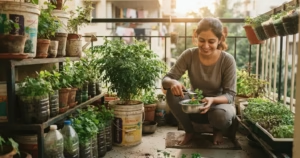
Kitchen gardens are one of the most direct ways to fight hidden hunger at the household level. They provide a sustainable source of fresh vegetables, fruits, and greens—rich in vitamins and minerals.
Real-World Evidence from Karnataka
In Dharwad district, Karnataka, the AME Foundation promoted kitchen gardens among 70 farming families. Each household received a kitchen garden kit containing 10-13 types of vegetable seeds. The gardens produced vegetables like brinjal, bhendi, tomato, gourds, cucumber, radish, and green vegetables .
Impact at a Glance
- Each household produced vegetables worth ₹2,500-3,500 in a season .
- In 2024, despite heavy rainfall damaging main crops, around 25 women farmers raised nutrition gardens. Each household produced vegetables worth ₹3,000-4,000 in a season .
- Kitchen gardens served as a “boon” to families facing food shortages due to crop loss .
Case Study: Sainaza’s Kitchen Garden
Smt. Sainaza M Shetasanadi lives in Channapur village with a family of four. She used to spend about ₹800-1,000 every month on vegetables. After training in kitchen gardening and receiving a seed kit, she now produces vegetables in her backyard. Through sustainable practices—raised beds, vertical gardening, organic fertilisers, and natural pesticides—she harvested ₹3,800 worth of vegetables .
Sainaza actively shares her gardening knowledge with neighbours, creating a ripple effect in her community .
Kitchen Gardens in Tribal Communities
In remote tribal hamlets within the Anamalai Tiger Reserve, many children and women were found to be malnourished. The ICAR–Sugarcane Breeding Institute conducted training programmes on growing kitchen gardens in tribal houses, aiming to add nutrition into their diets .
Tribespeople had been relying mostly on rice, sugar, edible oil, and other basic provisions supplied through the Public Distribution System. Most women were found to be suffering from acute anaemia . Through kitchen gardens, they can now access fresh vegetables cultivated without pesticides or chemical fertilisers in unpolluted environs on the hills .
How to Start a Kitchen Garden for Nutrition
| Step | Action |
|---|---|
| 1 | Identify a sunny spot in your backyard, balcony, or terrace |
| 2 | Use a variety of vegetables, leafy greens, and fruit trees |
| 3 | Include nutrient-dense crops like moringa, spinach, and amaranth |
| 4 | Use organic practices—compost, natural fertilisers, and pest control |
| 5 | Plan for year-round harvests using succession planting |

Strategy 3: Support Food Fortification
Food fortification adds essential micronutrients to commonly consumed foods during processing. It is a proven, cost-effective strategy to combat micronutrient deficiencies.
Types of Food Fortification in India
| Food Vehicle | Nutrients Added | Status |
|---|---|---|
| Salt | Iodine, Iron (Double Fortified Salt) | Widely available, DFS effective for anaemia |
| Rice | Iron, Folic Acid, Vitamin B12 | Universal supply extended to 2028 |
| Wheat Flour | Iron, Folic Acid, Vitamin B12 | Available in some states |
| Edible Oil | Vitamin A, Vitamin D | Promoted under Eat Right India |
| Milk | Vitamin A, Vitamin D | Launched by NDDB |
| Millets | Fortified with multiple nutrients | Used in Anganwadi meals |
Evidence for Fortification Effectiveness
A double-blind, randomized controlled trial in Uttar Pradesh’s Chandauli district tested Double Fortified Salt (DFS) among 602 adolescent girls with anaemia. One group received DFS along with nutrition education, while the other received iodized salt and nutrition education .
Results
- Haemoglobin levels among girls increased by 1.7 g% from baseline to end line (P < 0.001) .
- Serum iron levels rose by 8.4 µg/dL (P < 0.001) .
- After adjusting for covariates and confounders, DFS was positively associated with a greater increase in serum iron levels compared to iodized salt (P < 0.05) .
The researchers concluded that DFS is “an easy and economical solution to mitigate iron deficiency without causing side effects such as toxicity or stomach upset as with iron tablets” .
Multi-Nutrient Fortified Salt: A Breakthrough
A UCSF-led trial in Punjab tested salt fortified with five key nutrients—vitamin B12, folic acid, iron, zinc, and iodine—among nearly 1000 women .
Results
- After receiving the fortified salt for one year, the odds of vitamin B12 and folate (B9) insufficiency were more than 80% lower compared to women who received only iodized salt .
- The B12 response was highest among participants with poor status at the start of the study .
- The total cost of the premix for iron- and iodine-fortified salt in India is approximately $0.16 per person per year, with minimal incremental cost for adding vitamin B12 and folic acid .
The researchers concluded that salt is “a powerful vehicle for improving micronutrient status, particularly in settings where micronutrient deficiencies are prevalent and the consumption of other fortified foods is low” .
Government Commitment to Fortification
The Government of India has extended the universal supply of fortified rice until December 2028, with ₹17,082 crore in funding . Fortified rice contains iron, folic acid, and Vitamin B12, and is distributed under schemes like PDS, ICDS, and PM POSHAN .
Challenges in Fortification
Despite progress, challenges remain. A review of food fortification programs in 25 countries found that 18% to 97% (averaging around 45–50%) of fortified foods did not meet national standards . Issues include weak legal frameworks, low prioritization, industry challenges, and inadequate consumer protection . Strengthening regulatory enforcement is essential.
Strategy 4: Diversify Diets with Millets and Pulses
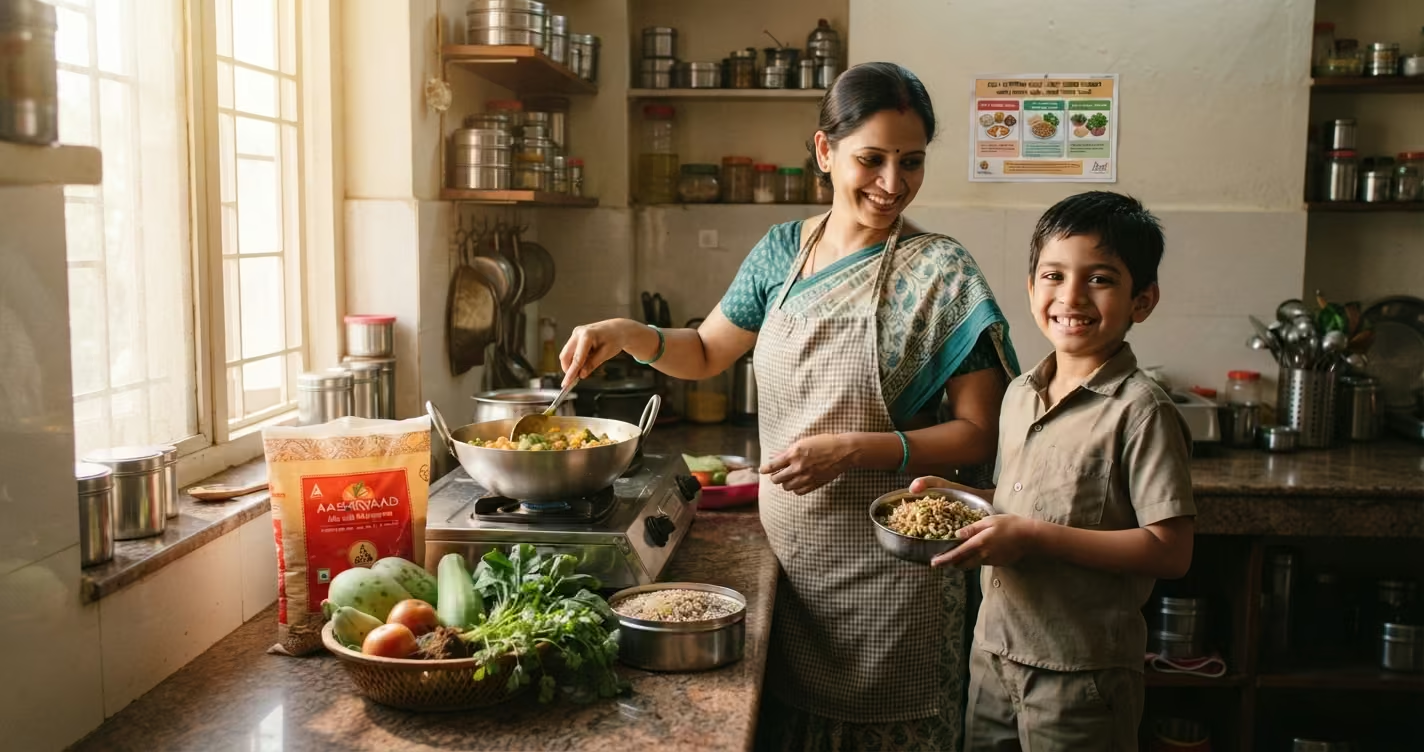
India’s food policy has historically focused on calorie security, leading to a “rice-wheat lock-in.” This has resulted in dietary monotony and insufficient intake of proteins, vitamins, and minerals . Diversifying diets toward millets, pulses, and vegetables is essential for fighting hidden hunger.
The Role of Pulses
In Madhya Pradesh’s drought-prone districts, the Caritas India SAFBIN programme is promoting pulse cultivation as a strategy for food and nutrition sovereignty. During World Pulses Day 2026, 130 farmers participated in awareness sessions—105 of them women .
Key Results
- More than 400 acres have been brought under pulse cultivation .
- Farmers report reduced market dependence for protein-rich foods .
- Improved dietary diversity and better resilience against climate variability .
- Integration of pulses into crop rotation and mixed cropping systems .
Pulses were promoted as “strategic assets for food security, soil health, and rural livelihoods” . They are “rich sources of plant protein, fibre and essential minerals that help address hidden hunger and reduce the risk of chronic diseases” .
The Millets Push
Greater emphasis is being laid on the use of millets at least once a week for preparation of Hot Cooked Meal and Take-Home Ration at Anganwadi centres under Mission Poshan 2.0 . Millets are rich in iron, zinc, and other essential micronutrients.
IFAD’s Nutrition-Sensitive Approach
The International Fund for Agricultural Development (IFAD) documents show a shift from calorie-focused agriculture to systems that prioritize diverse, safe, and locally acceptable nutritious foods in Madhya Pradesh, Odisha, and Maharashtra . This approach integrates value chains, local food knowledge, market access, and behaviour change .
Strategy 5: Support Community Nutrition Programs
India has a robust network of nutrition programs that can be strengthened through community engagement.
Mission Poshan 2.0
Mission Poshan 2.0 (formerly POSHAN Abhiyaan) is a flagship program improving nutrition for children, adolescents, pregnant women, and lactating mothers . Under this mission, supplementary nutrition is provided to children (6 months to 6 years), pregnant women, lactating mothers, and adolescent girls .
Key Features
- Revised nutrition norms (January 2023) are more comprehensive and balanced—based on diet diversity providing quality protein, healthy fats, and micronutrients .
- Extra supplementary nutrition is provided to Severely Acutely Malnourished (SAM) children .
- Fortified rice is supplied to Anganwadi centres to meet micronutrient requirements .
- Emphasis on millets at least once a week for Hot Cooked Meal and Take-Home Ration .
Community Management of Malnutrition (CMAM)
The CMAM protocol, launched in October 2023, empowers Anganwadi workers to detect, refer, and manage malnourished children in their communities . This structured approach turns every Anganwadi into a frontline nutrition clinic.
Andhra Pradesh Community Managed Natural Farming (APCNF)
APCNF integrates natural farming with nutrition-sensitive interventions to enhance dietary diversity, food security, and community health . Key results include:
- 87% of households report year-round food plate diversity .
- 98% have access to produce free from synthetic chemical inputs through Nutri-gardens .
- Nutrition education reaches 21,000 people annually .
- Over 60,000 people impacted across 14,000 households .
Frequently Asked Questions
What are the most common micronutrient deficiencies in India?
The most common deficiencies include iron, zinc, vitamin A, iodine, and vitamin B12. According to NFHS-5, over 57% of Indian women are anaemic, and 67% of children are anaemic.
Are biofortified crops available in India?
Yes. ICAR has developed 203 biofortified crop varieties enriched with iron, zinc, protein, and vitamins. These include 70 wheat varieties, 43 maize varieties, 18 pearl millet varieties, and 16 rice varieties . Biofortified rice is available through some FPOs and seed networks.
Conclusion
Hidden hunger is a silent crisis affecting millions of Indians. Unlike visible hunger, it does not show itself through an empty stomach. Instead, it manifests as fatigue, weakened immunity, poor cognitive development, and increased disease risk.
But hidden hunger is preventable. The solutions exist:
- Biofortified crops deliver nutrients through everyday food.
- Kitchen gardens provide sustainable access to fresh vegetables.
- Food fortification adds essential micronutrients to staples.
- Dietary diversification ensures intake of all essential nutrients.
- Community nutrition programs strengthen delivery at the grassroots.
Every effort counts. Whether you support biofortified rice cultivation, start a kitchen garden, advocate for fortified foods in local programs, or simply diversify your own diet, you contribute to a healthier India.
The fight against hidden hunger begins with awareness—and continues with action. Together, we can ensure that every Indian, child or adult, receives not just enough food, but the right nutrition.
Let’s Talk About Fighting Hidden Hunger
Have questions about hidden hunger or how you can contribute to fighting it? We would love to hear from you.
Connect with us on WhatsApp for a friendly conversation about how you can help fight hidden hunger through nutrition, biofortified crops, and kitchen gardens. Our team is here to help.