
How to Start Advocacy for Hunger Relief Today: A Step-by-Step Guide
You have seen the problem. Families skipping meals. Children going to school hungry. Long queues at food distribution centres. The need is urgent, and the solutions exist. Yet, progress remains slow. This is where advocacy comes in.
Advocacy is about using your voice to influence decisions, policies, and systems that affect hunger. It is about speaking up for those who cannot speak for themselves. And it is something you can start doing today.
This guide will show you how to start advocacy for hunger relief. You will learn what advocacy means, why it matters, and practical steps to get involved.
What is Advocacy for Hunger Relief?
Advocacy is the act of supporting a cause or proposal. In the context of hunger relief, advocacy means working to influence policies, programs, and practices that affect food security and nutrition.
Advocacy can take many forms. It includes:
- Educating policymakers about hunger issues
- Raising public awareness through media and social platforms
- Mobilizing communities to demand change
- Supporting campaigns that push for policy reforms
- Engaging with government programs to ensure they reach those in need
The goal is to create systemic change. Charity addresses immediate needs. Advocacy addresses the root causes of hunger.
Why Advocacy Matters for Hunger Relief
India has made remarkable progress in food security. The country reduced undernourishment for nearly 30 million people in just two years, according to the State of Food Security and Nutrition in the World 2025 report. Yet, significant challenges remain.
Malnutrition, micro-nutrient deficiencies, and the high cost of healthy diets continue to affect vulnerable communities. The Global Hunger Index 2025 places India in the “serious” category, ranking 102nd out of 123 countries.
The Limits of Direct Service
Organisations like Reshine Organisation do incredible work feeding people every day. Our Annadasoha initiative serves 600 meals daily at BRIMS Government Hospital in Bidar. But direct service alone cannot solve hunger.
The Power of Advocacy
Advocacy creates lasting change. When policies are improved, when budgets are allocated, when programs are strengthened—millions of people benefit. Advocacy multiplies impact.
How to Start Advocacy for Hunger Relief Today
You do not need to be a professional lobbyist or a seasoned activist to start advocating. You just need commitment and a willingness to learn. Here are practical steps to begin.
Step 1: Educate Yourself
Before you can advocate effectively, you need to understand the issue.
Learn the Facts
- Scale of hunger: India has nearly 195 million undernourished people. 190 million go to bed hungry every night.
- Food waste: India wastes 78.2 million tonnes of food annually. The estimated value is ₹92,000 crore.
- Government programs: Understand schemes like the Public Distribution System (PDS), PM POSHAN, and Mission Poshan 2.0.
- Key organisations: Know which NGOs and coalitions are working on hunger relief.
Resources to Explore
- Reports from the Food and Agriculture Organization (FAO)
- Global Hunger Index reports
- National Family Health Survey (NFHS) data
- Publications from NGOs like Reshine Organisation
Step 2: Identify Your Advocacy Focus
Hunger is a broad issue. You can be more effective by focusing on a specific aspect.
Possible Focus Areas
- Food waste reduction: Advocate for policies that make food donation easier.
- School meals: Support expansion of mid-day meal programs.
- Maternal and child nutrition: Focus on the first 1,000 days.
- Food fortification: Promote fortified rice and salt to address micro-nutrient deficiencies.
- Climate-resilient agriculture: Support millet cultivation and sustainable farming.
Choose the area that aligns with your passion and experience.
Step 3: Join or Support Existing Campaigns
You do not have to start from scratch. Many organizations are already advocating for hunger relief. Join them.
How to Get Involved
- Volunteer with advocacy organizations: Look for NGOs that work on policy and advocacy.
- Join coalitions: Many organizations work together in coalitions for greater impact.
- Support campaigns: Sign petitions, attend rallies, and participate in online campaigns.
- Follow organizations on social media: Stay informed about upcoming actions.
Indian Advocacy Organizations to Know
- Right to Food Campaign: A network of organizations working to ensure the right to food for all.
- National Campaign for People’s Right to Information (NCPRI): Works on transparency and accountability in government programs.
- Oxfam India: Works on food security and climate justice.
- ActionAid India: Focuses on hunger, poverty, and women’s rights.
Step 4: Engage with Policymakers
Policymakers need to hear from their constituents. You can play a role in educating them about hunger issues.
How to Engage
- Write letters or emails: Contact your local Member of Parliament (MP) or Member of Legislative Assembly (MLA). Share facts about hunger in your community.
- Request meetings: Schedule meetings with policymakers or their staff.
- Invite them to events: Invite policymakers to visit food distribution centers or community kitchens.
- Use social media: Tag policymakers in posts about hunger issues.
Tips for Effective Engagement
- Be respectful and constructive.
- Share personal stories and local data.
- Propose specific solutions, not just problems.
- Follow up after meetings.
Step 5: Use Your Voice on Social Media
Social media is a powerful tool for advocacy. It amplifies your message and builds momentum.
How to Use Social Media Effectively
- Share facts and stories: Post about hunger statistics and the impact of food waste.
- Use hashtags: Use hashtags like #ZeroHunger, #FoodSecurity, and #RightToFood.
- Tag policymakers and organisations: Engage them in conversations.
- Create a content calendar: Plan your posts around key dates like World Food Day (October 16) and Poshan Maah (September).
- Share calls to action: Encourage followers to sign petitions, donate, or volunteer.
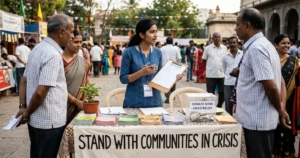
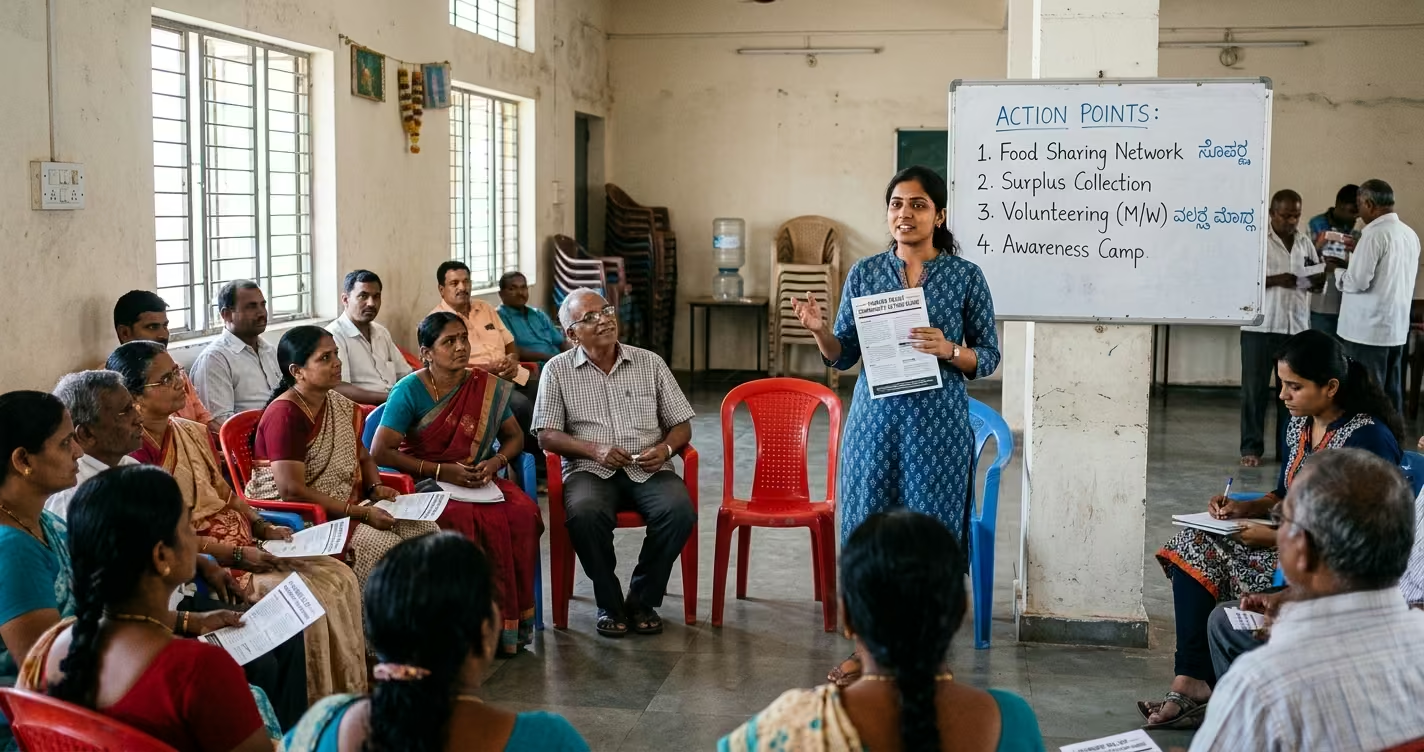
Step 6: Organise Community Awareness Events
Bringing people together around a cause builds awareness and mobilizes action.
Types of Events
- Screening of documentaries: Screen films about hunger and food waste, followed by discussions.
- Panel discussions: Invite experts to speak about hunger issues.
- Community meals: Organise meals where people can learn about hunger while eating together.
- School programs: Partner with schools to educate students about hunger and food waste.
- Volunteer drives: Organise food collection or distribution drives.
Step 7: Support Research and Data Collection
Advocacy is most effective when it is evidence-based. Support research that documents hunger and food waste.
How to Support Research
- Participate in surveys: Share your experiences if asked.
- Support research organisations: Donate to organisations that study hunger and food security.
- Collect local data: Track hunger in your community. This data can inform advocacy efforts.
Real-World Examples of Hunger Advocacy
Reshine Organisation’s Youth-Led Model
Reshine is a youth-led NGO that runs hunger alleviation programs in Bidar, Karnataka. Young volunteers manage food rescue operations, serving 600 meals daily to patients and families at BRIMS Government Hospital. The organization has been recognized as a “Public Hero” by Public TV for its work.
The Mid-Day Meal Scheme
India’s mid-day meal scheme is the largest meal programme of its kind in the world. Advocacy by civil society organizations has been crucial in expanding and strengthening the program. Today, it covers over 11.80 crore children across 11.20 lakh schools.
Tamil Nadu’s Amma Canteens
The success of Tamil Nadu’s Amma canteens demonstrates how advocacy for subsidized meals can become permanent urban infrastructure. The model has spread to Telangana, Odisha, Rajasthan, Karnataka, and Andhra Pradesh.
Frequently Asked Questions
What is advocacy for hunger relief?
Advocacy for hunger relief is the act of working to influence policies, programs, and practices that affect food security and nutrition. It includes educating policymakers, raising public awareness, mobilizing communities, and supporting campaigns that push for change.
Do I need special skills to start advocating?
No. You just need commitment and a willingness to learn. Start by educating yourself about hunger issues. Then, engage with existing campaigns, contact policymakers, and use your voice on social media.
How can I engage with policymakers?
You can write letters or emails, request meetings, invite policymakers to events, and use social media to tag them in posts about hunger issues. Be respectful, share personal stories, and propose specific solutions.
What are the most effective ways to advocate for hunger relief?
The most effective ways include educating yourself and others, joining existing campaigns, engaging with policymakers, using social media strategically, organizing community events, and supporting evidence-based research.
How does advocacy differ from direct service?
Direct service addresses immediate needs—providing meals to people who are hungry today. Advocacy addresses the root causes of hunger—working to change policies and systems so that fewer people go hungry in the future. Both are essential.
What organizations can I support to advocate for hunger relief?
You can support organizations like Reshine Organisation, the Right to Food Campaign, Oxfam India, and ActionAid India. These organizations work on policy and advocacy for food security.
Conclusion
Advocacy is a powerful tool for change. It transforms individual compassion into collective action. It shifts focus from symptoms to root causes.
You can start today. Educate yourself. Choose a focus. Join existing campaigns. Engage policymakers. Use social media. Organize events. Support research. Every action counts.
At Reshine Organisation, we believe that together, we can build a hunger-free India. Join us in this mission.
Let’s Talk About Advocacy
Have questions about advocating for hunger relief? We would love to hear from you.
Connect with us on WhatsApp for a friendly conversation about how you can make a difference. Our team is here to help.