
- How to Reduce Dietary Waste and Eat Smarter: A Complete Indian Guide
How to Reduce Dietary Waste and Eat Smarter: A Complete Indian Guide
You have probably done it. Bought vegetables with good intentions, only to find them wilted at the back of the fridge. Cooked a large meal, then watched leftovers get scraped into the bin. Ordered more than you could finish at a restaurant.
This is dietary waste. It is a problem that affects our wallets, our health, and our planet. Indian households generate a staggering 78.2 million tonnes of food waste each year, according to the Food Waste Index Report 2024 . This waste does not just disappear. It ends up in landfills, where it decomposes and releases methane—a greenhouse gas 80 times more potent than carbon dioxide .
The good news is that reducing dietary waste is possible. It starts with eating smarter—making conscious choices about what we buy, how we cook, and what we do with leftovers. This guide will show you how, with practical tips rooted in both modern science and traditional Indian wisdom.
Why Reducing Dietary Waste Matters
Dietary waste is more than just a nuisance. It has serious consequences for the environment, the economy, and food security.
Environmental Impact
When food waste ends up in landfills, it releases methane, contributing significantly to climate change . Reducing waste at the source can curb greenhouse gas emissions, conserve natural resources, and reduce the burden on waste management systems . The FAO estimates that food losses and waste account for 8% to 10% of annual global greenhouse gas emissions .
Economic Impact
Wasting food wastes money. Every kilogram of food thrown away represents the cost of purchasing, transporting, and preparing it. Reducing waste helps households save money and reduces the financial burden on cities for waste collection and disposal .
Food Security Impact
In a country where millions face food insecurity, wasting food is a moral and ethical issue. Reducing dietary waste helps ensure that more food reaches those who need it most. Organisations like No Food Waste in Hyderabad rescue surplus food and redistribute it to the hungry, demonstrating that every meal saved is a meal served .
The Food Recovery Hierarchy: A Framework for Action
The U.S. Environmental Protection Agency’s Food Recovery Hierarchy provides a clear framework for reducing food waste. It prioritises actions from most to least effective :
First Priority: Prevention
The most effective solution is the simplest—avoid generating food waste in the first place. This involves planning meals, buying only what is needed, and cooking mindfully .
Second Priority: Recovery
Surplus or extra food should be recovered while it is still fit for human consumption. This means donating to food banks, shelters, and community kitchens .
Third Priority: Feed Animals
Where human consumption is not possible, surplus food can be used as animal feed.
Fourth Priority: Composting and Biogas
Organic waste can be converted into compost or biogas. In Surat, a 50-tonne-per-day compressed biogas plant converts organic market waste into renewable energy and bio-fertiliser, reducing methane emissions by an estimated 7,500 tonnes annually .
Last Priority: Landfill
Dumping food in landfills releases methane and should be avoided whenever possible .
Smart Habits to Reduce Dietary Waste at Home
Reducing dietary waste starts in the kitchen. Here are practical habits you can adopt:
1. Plan Meals and Shop with a List
Meal planning is one of the most effective ways to prevent waste. Take a few minutes each week to plan your meals . Check your pantry before shopping and make a list based on what you already have . This simple habit can drastically cut waste at the source .
Practical Tip: Keep a running list of what you have in your fridge and pantry. This prevents doubling up on ingredients and helps you use what you already have.
2. Store Food Properly
Proper storage extends the shelf life of food and prevents spoilage. Store perishable items in the refrigerator at the correct temperature. Use airtight containers for dry goods. Keep your fridge organised so you can see what you have .
Comparison: Storage Techniques
| Food Type | Storage Method | Shelf Life Extension |
|---|---|---|
| Vegetables | Refrigerate in crisper drawer | 2-3 days longer |
| Leafy Greens | Wrap in damp cloth, refrigerate | 3-4 days longer |
| Grains & Pulses | Airtight containers in cool, dry place | Up to 1 year |
| Cooked Food | Refrigerate in shallow containers, below 5°C | 3-4 days |
Freezing: Your Best Friend
The freezer is a powerful tool for reducing waste . When you have a large batch of leftover food, freeze it in individual portions . Be sure to label and date everything so it is easier to manage . This allows you to eat leftovers over a longer period without getting bored.
3. Practise Portion Control
Cooking and serving the right amount is essential. If you are unsure about portion sizes, start with less. You can always prepare more if needed . When eating out, opt for family-style servings, especially in large groups. You will tend to order less and everyone will get just the right portion .
Rebalancing Your Plate
Many traditional Indian meals are heavy on carbohydrates, leaving little space for protein and fibre . Celebrity fitness trainer Siddhartha Singh notes that most Indian meals unintentionally become “carbs on top of carbs.” He suggests simple adjustments:
- Reduce roti portions: Stick to one or two chapatis instead of five or more .
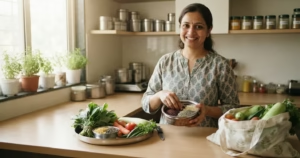
- Add fibre: Include a small bowl of salad to bring in fibre and roughage .
- Make protein non-negotiable: Add Greek yoghurt, paneer, or dal to your meal .
- Watch carb-heavy sabzis: Potatoes are carbohydrates too; portion control matters .
4. Get Creative with Leftovers
Indian kitchens have long practised resourcefulness. Leftover rice becomes lemon rice or tomato rice. Chapatis turn into upma or sandwiches. Dal is reused in parathas . These practices demonstrate how the creativity of Indian kitchens can help ensure that food is not wasted .
Technology Can Help
Odisha-based Centurion University has developed Saveful 2.0, an AI-integrated app that helps households repurpose kitchen leftovers . Users enter the ingredients they have available and discover which dishes they can prepare . The app has helped over 41,000 Australian users save 63% more food than average households and has now been localised for the Indian context .

5. Share Surplus Food
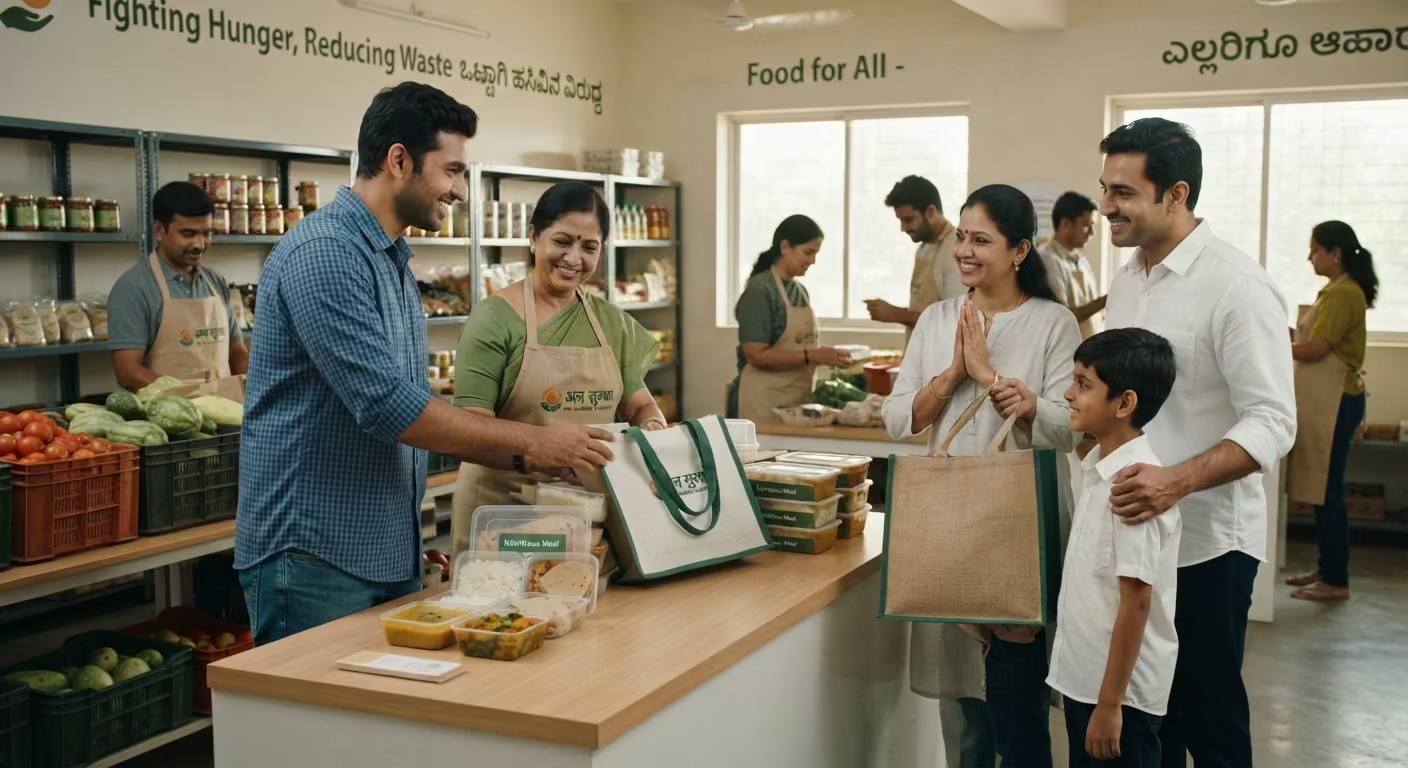
If you have big amounts of leftover food, such as from an event, look for a local donation programme that gets it to hungry people who cannot afford it . Organisations like No Food Waste rescue surplus food from hotels, marriage halls, and corporate cafeterias and redistribute it to those in need .
Real-World Inspiration
The Hyderabad chapter of No Food Waste feeds between 1,500 and 1,800 people daily . The organisation has mapped around 550 to 600 hunger spots in Hyderabad and Secunderabad—from hospitals and bus stations to railway platforms and old-age homes . Since its inception, the Hyderabad chapter has provided over 3.5 lakh meals .
Eating Smarter: Beyond Waste Reduction
Reducing dietary waste is part of a broader shift toward smarter eating. This involves making food choices that are good for both health and the environment.
Embrace Millets
Millets are one of India’s most sustainable superfoods. They are climate-resilient, require minimal water for cultivation, and have a significantly lower carbon footprint than rice and wheat . A school in Pune has run a millet initiative with month-wise activities, including Millet Awareness Assemblies and a Millet Tiffin Series, encouraging families to try dishes like ragi idli, millet pulao, and cookies .
Eat Local and Seasonal
Supporting local, seasonal foods reduces “food miles” and supports regional farmers . In 2026, there has been a return to seasonal, intuitive, and traditional food wisdom . People are rediscovering ingredients like sattu, raw mango, and kokum that work for the season and the body .
Make Healthier Breakfast Swaps
Simple swaps can make a big difference to health and reduce waste :
- Swap sugary cereals for plain rolled oats or savoury oats with vegetables.
- Swap white bread for multigrain or millet roti with protein toppings.
- Swap fruit juice for whole fruit to get the fibre that keeps you full.
- Swap sugary chai for a lighter version with less sugar or green tea.
- Swap butter-laden parathas for smarter stuffed ones with paneer or moong dal.
How Schools Are Leading the Way
Schools are playing a crucial role in teaching the next generation about reducing food waste and eating smarter. Delhi Public School, Pune, has adopted a “Zero Food Waste” policy and received the Good Food Award for its efforts .
Key Initiatives at the School
- Zero Waste Theme: The school adopted zero waste as its annual theme, shaping all food-related initiatives around it .
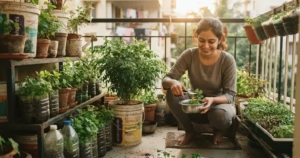
- Kitchen Gardens: Students grow vegetables in three well-maintained kitchen gardens, gaining hands-on exposure to sustainable food-growing practices .
- Farm-to-Table Activities: Vegetables grown in the kitchen garden are used by the cookery club, teaching students the journey of food from soil to plate .
- Composting: All garden and food waste is composted on campus, closing the loop from plate to soil .
- Millet Initiative: The school runs a focused millet initiative with activities like recipe book creation and poster-making on climate-smart crops .
These efforts are building healthier and more environmentally conscious school communities .
Frequently Asked Questions
What is dietary waste and why does it matter?
Dietary waste refers to food that is produced but not consumed. It matters because it wastes resources, contributes to climate change, and worsens food insecurity. Indian households generate 78.2 million tonnes of food waste each year.
How can I reduce food waste at home?
Start with meal planning and shopping with a list. Store food properly to extend shelf life. Practise portion control. Get creative with leftovers. Share surplus food through donation programmes.
What is the Food Recovery Hierarchy?
The Food Recovery Hierarchy is a framework that prioritises actions for handling food waste. Prevention is most effective, followed by recovery for human consumption, animal feed, composting/biogas, and finally landfill as a last resort.
How do millets help in eating smarter?
Millets are climate-resilient grains that require minimal water and have a lower carbon footprint than rice and wheat. They are nutritious and versatile, making them a smart choice for both health and the environment.
What are some simple swaps for a healthier breakfast?
Swap sugary cereals for oats, white bread for multigrain or millet roti, fruit juice for whole fruit, sugary chai for a lighter version, and butter-laden parathas for smarter stuffed ones.
How can I help reduce food waste in my community?
Volunteer with food rescue organisations like No Food Waste. Donate surplus food from events. Spread awareness about reducing food waste. Encourage schools and workplaces to adopt waste reduction policies.
Conclusion
Reducing dietary waste and eating smarter is not about perfection. It is about making small, consistent changes that add up over time. Plan your meals. Store food properly. Practise portion control. Get creative with leftovers. Share surplus food. Embrace local, seasonal ingredients.
Every action counts. Whether you are a household, a school, a business, or a community, you can make a difference. India’s traditional wisdom and modern innovations both offer pathways to a more sustainable food system. The choice is ours.
Let’s Talk About Reducing Dietary Waste
Have questions about eating smarter or reducing waste in your kitchen? We would love to hear from you.
Connect with us on WhatsApp for a friendly conversation about how you can make a difference. Our team is here to help.