

- How to Handle Expirations in Food Donations: A Complete Safety Guide
- Why Understanding Expiration Matters
- Date Labels Explained: The Critical Difference
- The FSSAI Surplus Food Regulations
- Food Inspection Checklist Before Donation
- Best Practices for Safe Food Donation
- Real-World Examples
- Frequently Asked Questions
- Can I donate food past its "Best Before" date?
- Can I donate food past its "Expiry" or "Use By" date?
- What is the difference between "Best Before" and "Expiry"?
- What packaged food can I not donate?
- What information must accompany donated food?
- What happens if I donate unsafe food?
- Do I need to register to donate food?
- Conclusion
How to Handle Expirations in Food Donations: A Complete Safety Guide
You want to donate food. You want to help fight hunger. But those dates on the package—best before, use by, expiry—create confusion. Should you donate food past its date? When should you throw it away? Handling expirations in food donations is one of the most critical aspects of food rescue. Donate unsafe food, and you risk harming people. Throw away safe food, and you waste resources. Striking the right balance requires understanding the rules and best practices.
This guide will clarify everything. You will learn the difference between date labels, what FSSAI regulations require, and how to inspect food safely before donating.
Why Understanding Expiration Matters
Food waste and food insecurity coexist in India. An estimated 40% of food produced is wasted annually, while 195 million people are undernourished. Many perfectly edible items are discarded simply because donors misunderstand date labels.
The Food Safety and Standards Authority of India (FSSAI) has taken a progressive step by framing the Food Safety and Standard (Recovery & Distribution of Surplus Food) Regulations, 2019. These rules promote food donation while ensuring safety, encourage a culture of donation, and align with India’s sustainable development goals .
For donors, understanding expirations is about balancing safety and impact. You want to ensure food reaches those in need while protecting recipients from harm. The right knowledge allows both.
Date Labels Explained: The Critical Difference
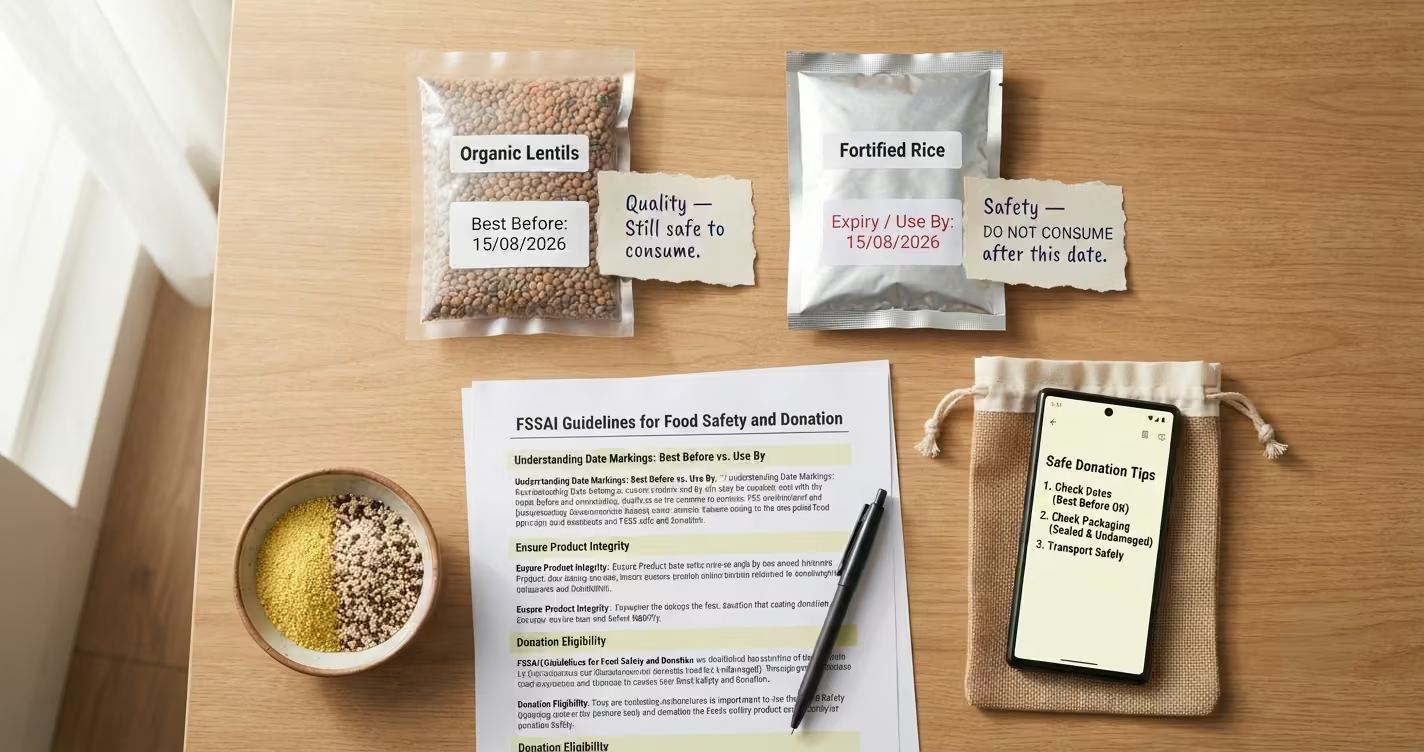
The FSSAI has clarified the distinction between date labels to reduce food waste. Understanding this difference is essential for safe food donation .
“Best Before” Date (Quality)
The “Best Before” date relates to food quality, not safety. It indicates when the food’s taste, aroma, texture, and nutritional value will be at their peak.
When the “Best Before” date passes, the food remains safe to eat, provided the package is unopened and stored correctly. FSSAI emphasizes that the food does not become hazardous or poisonous after this date—there may only be a minor change in taste or color .
Donation Rule: Food marked with “Best Before” can be donated after the date has passed, as long as it is not damaged, deteriorated, or perished. However, best practice is to donate well before the date to allow time for distribution .
“Use By” or “Expiry” Date (Safety)
The “Expiry Date” or “Use By” date relates to safety. It is typically found on perishable items like milk, bread, paneer, meat, baby food, and medicines .
After this date, the risk of bacterial growth increases. Consumption can be harmful to health, even if the food looks and smells normal.
Donation Rule: Food should never be donated or eaten after its “Use By” date because it may be unsafe . Charities that receive food that will pass its “Use By” date before distribution must discard it immediately .
Quick Reference Table: Date Labels
| Label Type | Meaning | Safety | Can It Be Donated Past Date? |
|---|---|---|---|
| Best Before | Quality (taste, texture) | Remains safe | Yes, if undamaged and suitable |
| Use By / Expiry | Safety | Unsafe after date | No, never donate |
| Date of Packing | Manufacturing date | N/A | N/A |
The FSSAI Surplus Food Regulations
The FSSAI Surplus Food Regulations, 2019, provide the legal framework for food donation in India .
Key Requirements for Donors
Under these regulations, food donors (Food Business Operators) must:
- Donate only safe food for human consumption. Unsafe food cannot be donated .
- Hand over surplus food to a distribution organization at a reasonable time before expiry, so it can be consumed within its shelf life .
- Maintain the food according to safety requirements specified in Schedule I of the regulations .
- Segregate food into perishable and non-perishable categories before handing over .
- Store food in hygienic conditions at optimum temperature to ensure safety .
- Keep detailed records of all donated surplus food, including donor name, recipient organization, donation date, product name, batch number, manufacturing and expiry dates, quantity, and food temperature .
Key Requirements for Food Distribution Organizations
- Surplus food shall not be distributed after the expiry of its shelf life .
- Organizations must maintain proper facilities for transport, storage, and reheating .
- A Monitoring Committee is formed at the State level to monitor operations and recommend improvements .
- Organizations must maintain proper records of all surplus food handled .
Labeling Requirements for Donated Food
The labeling requirements depend on whether the food is pre-packaged or prepared as a meal .
For Donated Pre-packaged Food:
- The complete original label must be intact, including product name, manufacturer information, list of ingredients, and expiry date .
For Donated Prepared Food (Meals):
- Must be labeled with: Name of the food, source of the food, date of preparation, last date of consumption, and whether vegetarian or non-vegetarian .
Liability Protection
While India does not currently offer comprehensive federal liability protection for food donors, the legal framework provides certain safeguards. If food causes harm after donation, criminal liability requires proof that the donor knew the food would cause harm, intended harm, or acted so recklessly that they failed to recognize a clear risk . The prosecution has a high burden of proof, making liability unlikely except in the most egregious cases .
Food Inspection Checklist Before Donation
Before donating any food, conduct a thorough inspection. This protects recipients and maintains your reputation.
For Packaged Food
| Check | What to Look For | Action |
|---|---|---|
| Date Labels | Check “Use By” and “Best Before” dates | Reject if past “Use By”. For “Best Before,” assess condition |
| Packaging | Tears, punctures, holes, spills | Reject damaged packages |
| Cans | Dents (sharp or deep enough to rest a finger), rust, bulging, leaking | Reject any damaged cans |
| Glass Jars | Cracks, chips, damaged tamper-resistant seal | Reject damaged jars |
For Prepared Food
| Check | What to Look For | Action |
|---|---|---|
| Temperature | Hot food: 60°C+; Cold food: 5°C- | Reject if temperature is unsafe |
| Appearance | Mold, discoloration, unusual texture | Reject if spoiled |
| Smell | Sour, rancid, or ammonia-like odors | Reject if off-smelling |
| Preparation Time | Time since preparation | Reject if too old |
What to Never Donate
- Expired food (past “Use By”)
- Home-canned or home-prepared foods (risk of botulism)
- Re-packaged food (not in original packaging with intact label)
- Food with damaged tamper-evident seals
- Unsafe food that shows signs of spoilage
Best Practices for Safe Food Donation
Following best practices ensures that your donations are safe and effective.
1. Donate Early
Donate food well before its “Best Before” or “Use By” dates. The food bank needs time to sort, store, and distribute the food. If a food item is already close to its expiration date, it may not reach recipients in time . Most food banks prefer food with at least 2-4 weeks of shelf life remaining.
2. Maintain Temperature Control
- Keep cold food below 5°C during transport.
- Keep hot food above 60°C.
- Cool large amounts quickly: transfer cooked food into smaller containers and place in the refrigerator as soon as it stops steaming .
3. Inform Recipients
When donating prepared food, provide recipients with important information:
- Any allergens present
- Time limits for safe consumption
- Storage requirements
4. Keep Records
Maintain records of all food donations, as required by the Surplus Food Regulations. This includes donor and recipient details, product information, dates, quantities, and temperatures .
5. Train Staff and Volunteers
Ensure all staff and volunteers know how to check date labels, inspect food, and maintain safety standards .
Real-World Examples
India Food Banking Network
The India Food Banking Network (IFBN) recovers surplus inventory of good-quality packaged food from the food industry and delivers it safely to non-profit organizations. Food safety and quality are at the core of their operations. All partner organizations adhere to safety guidelines to ensure the quality of food being distributed .
Goa’s Food Bank Fridges
In Goa, Street Providence has installed food bank fridges at police stations and other public locations. These fridges are available 24/7, allowing people to donate surplus food at any time. The organization’s motive is simple: save food from being thrown out .
Frequently Asked Questions
Can I donate food past its “Best Before” date?
Yes, food marked with “Best Before” can be donated after the date has passed, provided it is not damaged, deteriorated, or perished . However, best practice is to donate well before the date to allow time for distribution.
Can I donate food past its “Expiry” or “Use By” date?
No. Food should never be donated or eaten after its “Use By” date because it may be unsafe . Donating such food could harm recipients.
What is the difference between “Best Before” and “Expiry”?
“Best Before” relates to food quality (taste, texture) and does not indicate safety. After this date, food remains safe . “Expiry” or “Use By” relates to food safety. After this date, food can become unsafe.
What packaged food can I not donate?
Do not donate expired food (past “Use By”), food with damaged packaging, rusty or bulging cans, food without intact labels, or home-canned items.
What information must accompany donated food?
For pre-packaged food, the original label must be intact. For prepared food, include the name of the food, source, preparation date, last consumption date, and vegetarian/non-vegetarian status.
What happens if I donate unsafe food?
Under Indian law, if someone is harmed by unsafe donated food, liability requires proof that the donor knew the food would cause harm, intended harm, or acted recklessly. The burden of proof is very high . However, following safety guidelines is the best protection.
Do I need to register to donate food?
Food donors (Food Business Operators) do not need separate registration to donate food, but distribution organizations must follow the regulations and maintain proper facilities.
Conclusion
Handling expirations in food donations is a balance of safety and opportunity. Understanding the critical difference between “Best Before” (quality) and “Use By”/”Expiry” (safety) is essential for effective, safe food rescue.
The FSSAI Surplus Food Regulations provide a clear legal framework for donation. By following the inspection protocols, labeling requirements, and record-keeping practices, you can ensure that your donations reach those in need without causing harm.
Every safe donation fights hunger and reduces food waste. Donate wisely, and your contribution becomes a powerful act of compassion.
Let’s Talk About Safe Food Donation
Have questions about handling expirations in food donations or starting a donation program? We would love to hear from you.
Connect with us on WhatsApp for a friendly conversation about safe food donation practices. Our team is here to help.