
- How to Donate Ration Kits to Families in Need: A Complete Guide
- What is a Ration Kit and Why Does It Matter?
- What to Include in a Ration Kit
- Where to Donate Ration Kits
- How to Choose the Right Organization
- Legal and Tax Considerations
- How Much Does It Cost?
- How to Donate: Step-by-Step
- Frequently Asked Questions
- What is a ration kit donation?
- How much does it cost to donate one ration kit?
- Can I claim 80G tax exemption on ration kit donations?
- What should I include in a ration kit?
- How do I find a trustworthy organization to donate to?
- Can I donate ration kits to disaster-affected families?
- How are ration kits distributed?
- Conclusion
How to Donate Ration Kits to Families in Need: A Complete Guide
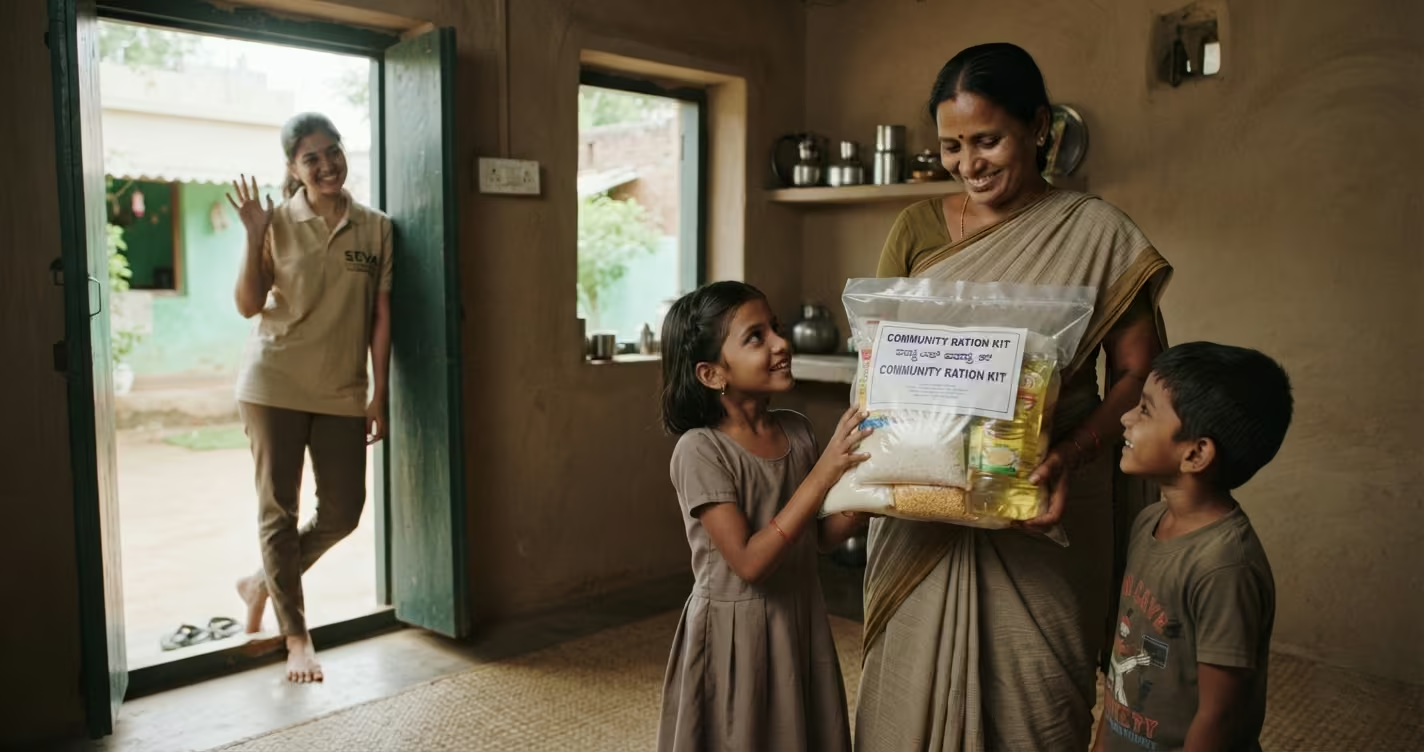
A ration kit is more than a bag of groceries. It is a lifeline for a family that does not know where their next meal will come from. It is dignity when everything else feels lost.
For families facing financial hardship, health crises, or sudden emergencies, a monthly ration kit can mean the difference between going hungry and having enough to eat. It is one of the most direct, impactful ways to fight food insecurity in India .
This guide will walk you through everything you need to know about ration kit donations. You will learn what to include, how to choose the right organization, where to donate, and how to ensure your contribution creates lasting impact.
What is a Ration Kit and Why Does It Matter?
A ration kit is a carefully curated package of essential food and household items designed to sustain a family for a specific period—typically one month. Unlike emergency food relief that provides immediate but short-term support, ration kits offer stability. They allow families to redirect their limited income toward other urgent needs like healthcare, education, and rent .
Why Ration Kits Are Essential
For vulnerable households—widows, daily wage earners, families affected by illness or disaster—food insecurity is a constant threat. Irregular income, health challenges, and sudden crises can push families to the brink. In such situations, a ration kit provides:
- Immediate relief: Families receive essential food supplies without spending their limited savings.
- Reduced financial stress: With food costs covered, families can focus on other pressing needs .
- Nutritional support: A well-balanced kit ensures families receive adequate nutrition, not just calories .
- Dignity: Receiving a kit through a respectful distribution process restores trust and morale .
Who Benefits from Ration Kits?
Ration kits are typically distributed to:
- Widows, abandoned women, and physically/mentally weak individuals
- Cancer patients and families facing medical hardship
- Families affected by floods, landslides, or other disasters
- Daily wage earners and homeless individuals
- Marginalized families identified through community surveys
What to Include in a Ration Kit
The contents of a ration kit vary by organization, region, and specific needs. However, most kits follow a similar pattern: they include staple grains, proteins, cooking essentials, and sometimes hygiene items.
Essential Components of a Ration Kit
Grains:
- Rice (2-5 kg)
- Wheat flour (atta) (2-5 kg)
Proteins:
- Pulses (dal) like moong, toor, or chana (250 g – 1 kg)
- Soybean nuggets (optional, for added protein)
Cooking Essentials:
- Cooking oil (1 litre)
- Salt (500 g – 1 kg)
- Sugar (250 g – 500 g)
- Spices (chilli powder, turmeric, coriander powder)
Other Items:
- Tea powder
- Jaggery
- Biscuits
- Soap and detergent (hygiene items)
Sample Ration Kits from Real Organizations
| Organization | Cost per Kit | Contents |
|---|---|---|
| Awaan Charitable Trust | ₹1,100 | Rice, wheat, pulses, oil, spices, salt, sugar, tea |
| Saath Charitable Trust | ₹1,500 | Rice, wheat flour, pulses, oil, sugar, salt, tea, jaggery, spices, besan, poha, soap |
| Ramakrishna Mission, Mumbai | Included in relief | Atta (2kg), rice (2kg), soybean nuggets, moong dal (1kg), oil (1L), salt (500g), spices, biscuits, soap, detergent |
| Rotary Sudama Ni Jholi | ₹700 | Wheat flour (5kg), rice (1kg), moong dal, toor dal, oil (1L), spices, salt, jaggery, tea, sugar, potato, onion |
Tips for Choosing Kit Contents
- Consider local tastes: People will only eat what they recognize. Choose foods common in the region .
- Balance nutrition: Include protein sources (dal, soybean) and essential micronutrients.
- Include hygiene items: Soap and detergent help families maintain dignity and health .
- Keep it simple: A kit with 10-14 essential items is easier to pack, transport, and distribute than one with dozens of items.
Where to Donate Ration Kits
Several types of organizations accept ration kit donations. Each has different strengths, costs, and focus areas.
1. Charitable Trusts and NGOs
Many NGOs run structured ration kit distribution programs. They conduct baseline surveys, identify the most vulnerable families, and ensure respectful distribution .
Examples:
- Saath Charitable Trust (Ahmedabad): Supports vulnerable families facing food insecurity due to financial hardship or sudden crises. Each kit costs ₹1,500 and supports a family of 3-4 members for one month .
- Awaan Charitable Trust: Distributes monthly ration kits to widows, orphans, and low-income households. Kit cost: ₹1,100 .
- Uday Foundation: Provides monthly dry ration kits to homeless individuals, destitute families, and struggling daily wage earners. Accepts donations through UPI and online payment gateways .
- Ramakrishna Mission, Mumbai: Under the Sarada Kripa Nidhi initiative, distributes ration kits to poor cancer patients and families facing medical hardship .
2. Disaster Response Organizations
During floods, landslides, or other emergencies, organizations like SEEDS provide ration and hygiene kits to affected families. The cost per kit varies by region and need. SEEDS reports a ration kit cost of approximately ₹2,500 during disaster response .
3. Community and Faith-Based Initiatives
During Ramadan, organizations like AMP Rajasthan and AAPKE SAATH FOUNDATION distribute ration kits to families in need. Kit costs typically range from ₹750 to ₹1,810 .
4. Rotary and Other Service Clubs
Rotary clubs often conduct monthly ration kit distributions. The Rotary Sudama Ni Jholi project distributes kits to 31 women (widows, abandoned, or physically/mentally weak) every month at ₹700 per kit .
Comparison Table: Ration Kit Donation Options
| Organization | Cost per Kit | Target Beneficiaries | Location |
|---|---|---|---|
| Awaan Charitable Trust | ₹1,100 | Widows, orphans, low-income families | Various |
| Saath Charitable Trust | ₹1,500 | Families facing hardship/health crises | Ahmedabad |
| Uday Foundation | Varies | Homeless, destitute, daily wage earners | Delhi & others |
| AMP Rajasthan | ₹1,810 | Needy families (Ramadan drive) | Rajasthan |
| Rotary Sudama Ni Jholi | ₹700 | Widows, abandoned, physically weak women | Various |
How to Choose the Right Organization
Not all organizations are equally effective. Before donating, do some research. A trustworthy organization will be transparent about its operations and impact.
What to Look For
1. Transparency and Reporting
- Does the organization publish impact reports?
- Can you see photos or testimonials from beneficiaries?
- Do they share clear metrics (e.g., “25 families reached in 3 months”)?
2. Legal Compliance
- Does the organization have 80G certification? This provides tax benefits for your donation .
- Is it registered under the Societies Registration Act or as a Trust?
3. Dignity-Centered Approach
- Does the organization treat beneficiaries with respect?
- Do they use respectful distribution processes?
4. Local Presence and Knowledge
- Does the organization operate in a community you care about?
- Do they understand local food preferences and needs?
Red Flags to Avoid
- Organizations that are vague about how funds are used.
- High-pressure or guilt-based fundraising tactics.
- No clear information about beneficiaries or impact.
- No 80G registration for tax benefits.
Legal and Tax Considerations
80G Tax Exemption
Under Section 80G of the Income Tax Act, monetary donations to registered NGOs are eligible for a 50% deduction . However, this deduction does not apply to in-kind donations like food items—only to cash contributions to qualified organizations .
Important:
- To claim the deduction, you must receive a valid 80G receipt with your PAN and address .
- Donations above ₹2,000 must be made through non-cash methods (digital, cheque) to qualify.
- Ensure the NGO’s 80G certificate is valid before donating.
Goods and Services Tax (GST)
The GST system in India can create complications for food donation. While many basic food items are exempt in bulk form, processed or packaged foods may attract GST . This can make it expensive for NGOs to procure and distribute certain items. When donating cash, let the NGO navigate these complexities.
Liability Protection
The FSSAI Surplus Food Regulations (2019) provide a framework for safe food donation. Donors who donate safe food in good faith are protected from liability . The burden of proof for any criminal liability is extremely high .
How Much Does It Cost?
Ration kit costs vary depending on location, contents, and distribution logistics.
Typical Cost Range:
- Basic kit (essential grains and staples): ₹700 – ₹1,100
- Comprehensive kit (including hygiene items and spices): ₹1,500 – ₹2,000
- Emergency/disaster kit: ₹2,500 or more
The cost per kit is not just the cost of food. It also covers transportation, packaging, staffing, and logistics. The Uday Foundation, for example, provides detailed breakdowns of how funds are used .
How to Donate: Step-by-Step
Step 1: Research and Choose an Organization
Identify organizations working in a region or with a cause that matters to you. Check their websites, read impact reports, and confirm their 80G status.
Step 2: Decide Your Contribution
- Sponsor a full kit: Many organizations allow you to sponsor one or more kits (e.g., ₹1,100 for one family for a month) .
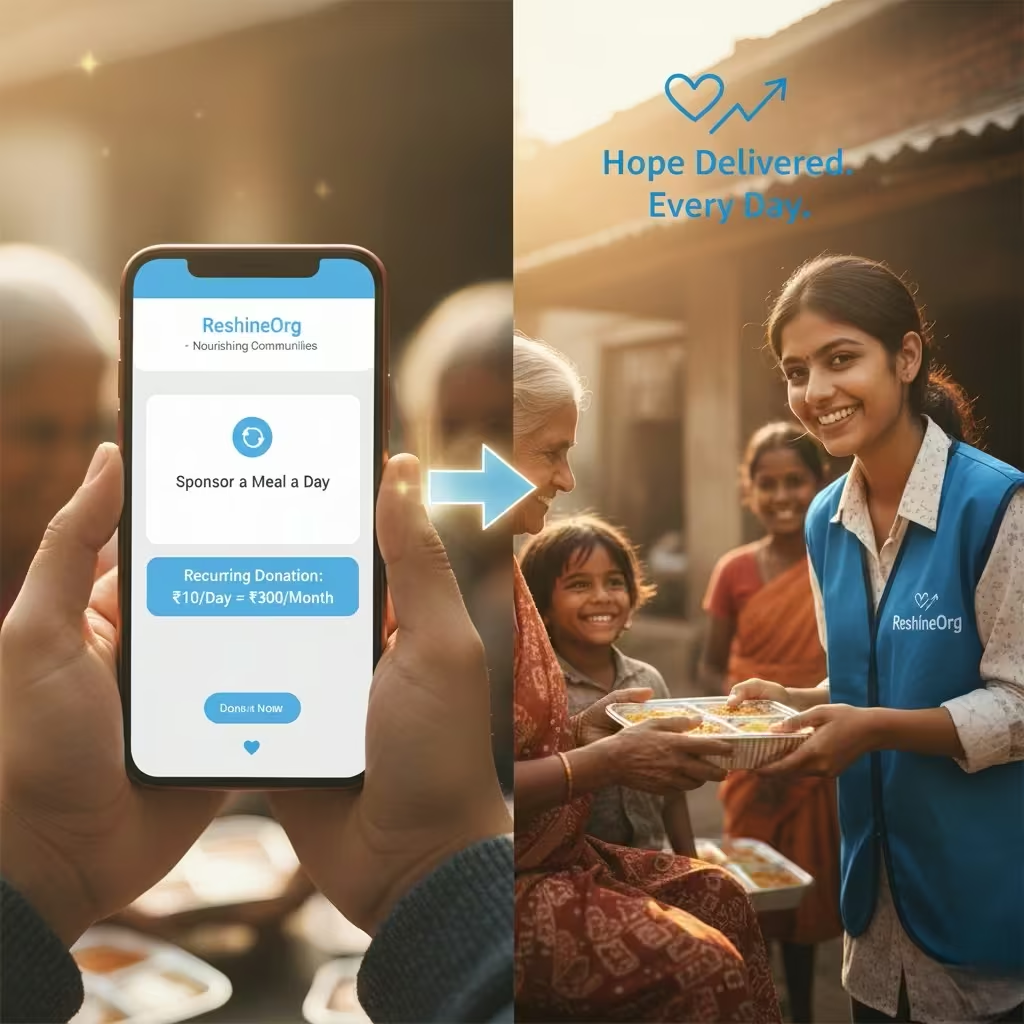
- Monthly recurring: Set up a recurring donation to provide sustained support .
- Any amount: Even small contributions, when pooled, create significant impact .
Step 3: Make the Donation
Most organizations accept donations through:
- UPI (Paytm, Google Pay, PhonePe)
- Credit/debit cards
- Net banking
- NEFT/RTGS/IMPS
Important: As per Indian Income Tax rules, you must provide your PAN and address to receive an 80G receipt .
Step 4: Save Your Receipt
Ensure you receive an 80G receipt with:
- Your name and PAN
- The organization’s name and 80G number
- Donation amount and date
- Mode of payment
Save this receipt for tax filing.
Step 5: Follow Up and Track Impact
Good organizations provide updates. Saath Charitable Trust, for example, conducts follow-up visits to gather feedback from beneficiaries . Look for these updates to see your contribution in action.
Frequently Asked Questions
What is a ration kit donation?
A ration kit donation is a contribution toward a pre-packaged bundle of essential food and household items (rice, wheat flour, pulses, oil, spices, etc.) designed to sustain a family for a month. This provides immediate food security and reduces financial stress for vulnerable families.
How much does it cost to donate one ration kit?
Costs vary. A basic kit can cost ₹700-₹1,100, while a comprehensive kit with hygiene items may cost ₹1,500-₹2,000 or more depending on location and contents.
Can I claim 80G tax exemption on ration kit donations?
Yes, if you donate cash to a registered NGO with valid 80G certification. In-kind donations (food items) do not qualify for deduction, but cash contributions to qualified organizations do.
What should I include in a ration kit?
Essential items include rice, wheat flour, pulses (dal), cooking oil, salt, sugar, spices, tea, and sometimes hygiene items like soap and detergent. Adjust contents based on local dietary preferences.
How do I find a trustworthy organization to donate to?
Look for organizations that publish clear impact reports, provide 80G receipts, share beneficiary stories, and operate respectfully. Check if they conduct baseline surveys to identify the most vulnerable families.
Can I donate ration kits to disaster-affected families?
Yes. Organizations like SEEDS distribute ration and hygiene kits to families affected by floods, landslides, and other emergencies. Costs typically range from ₹1,800 to ₹2,500 per kit depending on the need.
How are ration kits distributed?
NGOs often conduct door-to-door surveys to identify vulnerable families. Distribution is typically done systematically, with follow-up visits to assess impact . Some organizations distribute through community centers, hospitals, or during religious periods like Ramadan.
Conclusion
Donating ration kits is one of the most effective ways to combat hunger and support vulnerable families in India. It provides immediate relief, reduces financial stress, and restores dignity. Whether you sponsor one kit or support a sustained program, your contribution creates a tangible difference in someone’s life.
The need is urgent. Families facing financial hardship, medical emergencies, or disaster displacement are struggling to put food on the table. Your support can change that.
Let’s Talk Ration Kit Donations
Have questions about donating ration kits? Want to know how your contribution can reach families in need? We would love to hear from you.
Connect with us on WhatsApp for a friendly conversation about ration kit donations and how you can help. Our team is here to guide you.