
- How to Start Meal Preparation for Hunger Relief Programs: A Complete Guide
- Understanding the Need for Cooked Meal Programs
- Step 1: Define Your Program Model
- Step 2: Plan Your Menu and Nutrition
- Step 3: Set Up Your Kitchen Safely
- Step 4: Staffing and Training
- Step 5: Procure Ingredients Sustainably
- Step 6: Manage Waste Responsibly
- Step 7: Distribution and Logistics
- Step 8: Monitoring and Evaluation
- Real-World Examples to Inspire You
- Frequently Asked Questions
- Conclusion
How to Start Meal Preparation for Hunger Relief Programs: A Complete Guide
You see the need every day. People queuing up for meals. Families skipping food to pay for medicine. Children going to school hungry. The problem feels massive, but the solution starts simply: with a kitchen, some ingredients, and a plan. Starting meal preparation for hunger relief is one of the most direct ways to fight food insecurity.
Unlike dry ration distribution, cooked meals reach people who cannot cook for themselves—the homeless, daily wage workers, hospital attendants, and elderly individuals living alone.
This guide will walk you through everything you need. Safety protocols, staffing, kitchen setup, and real Indian examples. Let us begin.
Understanding the Need for Cooked Meal Programs
Cooked meal programs fill a gap that dry rations cannot cover. Many people lack access to cooking facilities. Others cannot afford fuel. Some are too ill or elderly to prepare food. For these individuals, a hot meal is not a luxury; it is a lifeline .
India’s experience with subsidised canteens proves this point. Tamil Nadu’s Amma canteens, which started as an emergency response, have become permanent urban infrastructure. The model has spread to Telangana, Odisha, Rajasthan, Karnataka, and Andhra Pradesh, each adapting it to local needs.
Key Benefits of Cooked Meal Programs
- Immediate relief for people without cooking facilities
- Ensures nutritional quality (unlike cash transfers which may be spent elsewhere)
- Builds community trust and engagement
- Can be scaled through government partnerships
Step 1: Define Your Program Model
Before you buy a single pot, decide what kind of program you will run. Your model affects everything—cost, logistics, staffing, and safety requirements.
Types of Meal Programs
- Community Kitchen: A fixed location where meals are cooked and served daily. This is the most common model for urban hunger relief .
- Centralized Kitchen with Distribution: Meals are cooked in one large kitchen and transported to multiple distribution points. This works well for school meal programs and hospital feeding.
- Emergency Hot Meals: Temporary setup for disaster response or during crises. Meals are often ready-to-eat or require minimal preparation .
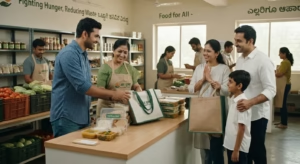
The Daan Foundation’s Community Kitchen in Amroha operates daily, serving the underprivileged, homeless, and daily wage workers. The kitchen coordinator checks expected footfall and budget each morning, procures ingredients, and ensures hygienic cooking and distribution.
Questions to Answer
- How many meals will you serve daily? Start small (50-100) and scale.
- Where will you cook? Own kitchen, rented space, or partner with an existing facility?
- Where will you distribute? Fixed location, mobile vans, or partner shelters?
- What will you serve? Simple, nutritious meals like dal-chawal or khichdi are cost-effective and widely accepted.
Step 2: Plan Your Menu and Nutrition
Hunger relief is not just about filling stomachs. It is about providing nourishment. Poorly planned meals can lead to malnutrition even when people eat regularly.
Nutritional Considerations
- Aim for balanced meals: carbohydrates (rice, roti), protein (dal, pulses, eggs), and vegetables.
- Include fortified foods where possible. The government allocates fortified rice and millets for nutrition programs through schemes like the Wheat Based Nutrition Programme.
- Consider local tastes. People will only eat what they recognize. Government officials note that the choice of ingredients depends on local preferences and locally available fruits and vegetables.
Sample Budget Menu for 100 Meals (Daily)
| Ingredient | Quantity | Approx. Cost |
|---|---|---|
| Rice | 10 kg | ₹400-500 |
| Dal (toor or moong) | 3 kg | ₹300-350 |
| Mixed Vegetables | 5 kg | ₹200-250 |
| Cooking Oil | 1 litre | ₹150-180 |
| Spices (turmeric, salt, chilli) | As needed | ₹100-150 |
| Total | ₹1,150-1,430 |
These costs vary by city and season. The Daan Foundation notes that ₹1,000 can sponsor meals for over 30 people daily.
Step 3: Set Up Your Kitchen Safely
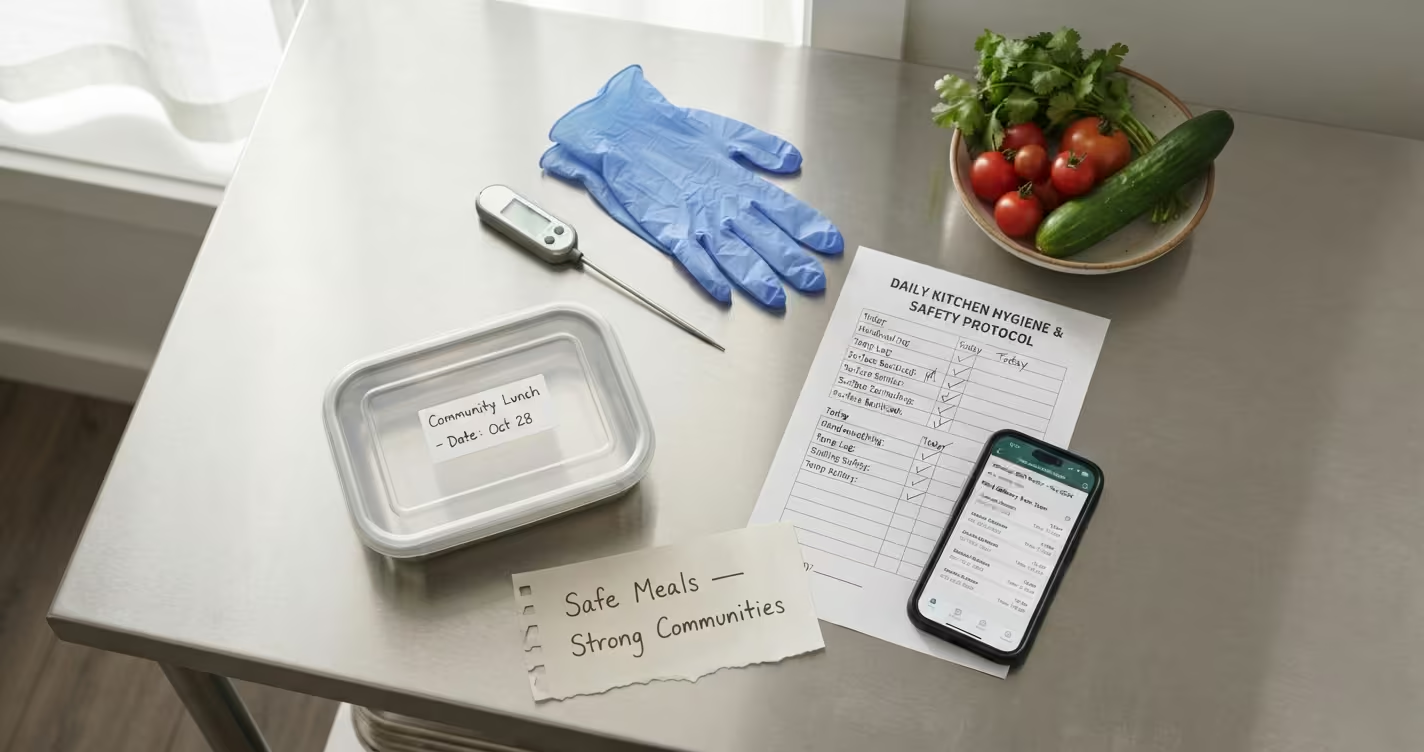
Mass food production is fundamentally different from cooking for a family. When you cook for hundreds or thousands, visual cues no longer work. Food may “look cooked” but remain unsafe inside.
Essential Kitchen Setup Requirements
- Adequate workspace to prevent cross-contamination .
- Proper ventilation and drainage.
- Dedicated areas for raw and cooked food.
- Cold storage for perishable ingredients (below 5°C).
- Hot holding equipment to maintain food at or above 60°C.
Temperature Safety Rules
The temperature danger zone is 4°C to 60°C. Within this range, bacteria double approximately every 20 minutes.
| Stage | Temperature Requirement |
|---|---|
| Cooking | Internal temperature must reach pathogen-killing thresholds |
| Hot holding | Keep food at or above 60°C |
| Cold storage | Keep food at or below 5°C |
| Cooling | Cool from 60°C to 21°C within 2 hours, then to 5°C within 4 hours |
Critical Safety Practice: Cooling
Batch cooking failures often happen during cooling. A large pot of dal or soup holds heat for a long time. To cool safely, divide food into shallow containers (no more than 2 inches deep). Spread them across refrigerator shelves rather than stacking them.
Key Takeaway: Invest in a calibrated food thermometer. A professor at IPB University warns that without measuring internal temperature, food may still contain harmful bacteria like Salmonella and E. coli.
Step 4: Staffing and Training
Your team determines your program’s success. Even with the best equipment, untrained staff can compromise safety.
Minimum Staffing Structure for a Small Program
| Role | Responsibilities | Suggested Number |
|---|---|---|
| Kitchen Coordinator | Planning, procurement, oversight | 1 |
| Cooks | Food preparation and cooking | 2-3 |
| Helpers | Cleaning, chopping, serving | 2-4 |
| Volunteers | Distribution, record-keeping | Variable |
Training Priorities
- Food safety and hygiene standards.
- Temperature monitoring and recording.
- Cross-contamination prevention.
- Waste management and composting.
For larger programs, consider dedicated roles. The CRS Emergency Field Operations Manual recommends a Food Security Program Manager, Project Officers, and Food Monitors for large-scale food distribution.
Step 5: Procure Ingredients Sustainably
Reliable ingredient supply is the backbone of meal preparation. Plan your procurement carefully.
Procurement Tips
- Buy in bulk to reduce costs.
- Partner with local farmers or wholesalers for fresh produce.
- Use fortified staples where possible. The government provides fortified rice and millets at subsidised rates for nutrition programs .
- Accept in-kind donations from businesses. However, ensure donated food meets your safety standards.
Step 6: Manage Waste Responsibly
Community kitchens generate significant organic waste. If not managed properly, this waste contributes to methane emissions and creates hygiene issues.
Waste Management Solutions
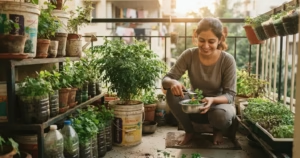
- Composting: A 25-litre plastic bin with starter material can compost 40-45 kg of kitchen waste over time. Chop waste to less than 5 cm before placing it in the bin, and mix every 3-4 days .
- Partnerships: Navjeevan, a sustainability initiative, installs small composting units in housing societies, schools, and community kitchens. They process waste into compost and redistribute it for chemical-free cultivation.
Step 7: Distribution and Logistics
How you distribute meals matters as much as how you cook them.
Distribution Models
- Fixed Location: Beneficiaries come to the kitchen at set times.
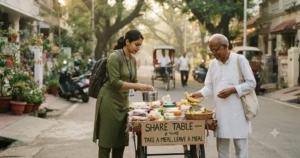
- Mobile Distribution: Use vans or rickshaws to reach multiple locations.
- Partner Distribution: Work with shelters, hospitals, or religious institutions.
Logistics Checklist
- Ensure food remains at safe temperatures during transport.
- Use insulated containers for hot food.
- Serve with dignity—clean plates, respectful staff, and orderly queues .
Step 8: Monitoring and Evaluation
You cannot improve what you do not measure. Tracking impact is essential for donor reporting and program improvement.
Key Indicators to Track
- Number of meals served daily/monthly.
- Number of people reached.
- Food Consumption Score (FCS) to assess dietary adequacy .
- Reduced Coping Strategies Index (rCSI) to measure how often beneficiaries resort to coping behaviours like skipping meals.
Simple Monitoring Tools
- Daily meal count log.
- Beneficiary feedback register.
- Post-distribution surveys every quarter.
Real-World Examples to Inspire You
Daan Foundation Community Kitchen (Amroha)
This kitchen runs daily, providing free meals to the underprivileged. The day begins with planning and procurement. Mid-morning, cooking begins with large pots of dal-chawal or pulao. Distribution happens by noon, with doorstep delivery for elderly and disabled individuals. Staff document every operation to ensure transparency for donors.
India’s ₹5 Canteen Network
Tamil Nadu’s Amma canteens, Odisha’s Aahaar Yojana (serving 1 lakh meals daily), and Karnataka’s Indira Canteens are state-run models that feed millions. Their success has made cooked meals an essential urban service.
Frequently Asked Questions
What is the minimum budget to start meal preparation for hunger relief?
Starting small is wise. With approximately ₹1,000-1,500, you can prepare a nutritious meal for 30-50 people. The Daan Foundation reports that ₹1,000 can sponsor meals for over 30 people daily.
How do I ensure food safety when cooking for large groups?
Use a calibrated thermometer to check internal food temperatures. Keep hot food above 60°C and cold food below 5°C. Cool food rapidly in shallow containers (under 2 inches deep). Train all volunteers on hygiene and sanitation.
What food should I serve?
Simple, nutritious options like dal-chawal, khichdi, or vegetable pulao are cost-effective and widely accepted. Include protein and vegetables. Use fortified rice or millets where available.
How do I handle leftovers?
Safe leftovers should be cooled rapidly, stored below 5°C, and consumed within 3-4 days. Reheat to at least 74°C before serving. Unserved, untouched food can be donated to other shelters if temperature history is documented.
How do I manage kitchen waste?
Start composting. A simple 25-litre bin with starter material can handle 40-45 kg of waste. Partner with local composting initiatives like Navjeevan to process waste into compost for gardens or farms.
How do I find volunteers?
Partner with colleges, corporate CSR programs, and local community groups. Provide clear roles, training, and recognition. Word-of-mouth through WhatsApp groups and social media also builds volunteer networks.
Conclusion
Starting meal preparation for hunger relief is challenging, but the need is urgent. Begin small. Focus on safety. Train your team thoroughly. Monitor your impact. And remember—every meal you serve is a step toward a hunger-free India.
Let’s Talk Meal Preparation
Have questions about setting up a community kitchen or meal program? We would love to hear from you.
Connect with us on WhatsApp for a friendly conversation about how you can start a meal preparation program for hunger relief. Our team is here to help.