
How to Improve Nutrition in Your Community: A Practical Guide
The scale of malnutrition in India is staggering. As per the National Family Health Survey 5 (2019–21), 35.5% of children under five are stunted, 19.3% are wasted, and 32.1% are underweight . India ranks 111th out of 121 countries on the Global Hunger Index 2023, that’s the reason why India needs to improve Nutrition. The COVID-19 pandemic, the Ukraine conflict, and climate change have further worsened this crisis .
Yet, solutions exist. You can make a real difference, whether you are an individual, a community leader, or part of a local organisation. This guide outlines practical, evidence-based ways to improve nutrition in your community.
Understanding the Nutrition Challenge in India
India faces a double burden of malnutrition. Undernutrition co-exists with rising rates of overweight and obesity . Child and maternal malnutrition alone accounts for 15% of the country’s total disease burden . The Comprehensive National Nutrition Survey reveals that one in ten school-aged children is pre-diabetic, and 5% have high cholesterol levels . In rural areas, 66% of women of reproductive age are anaemic .
Traditional approaches have focused on calorie sufficiency, often ignoring micronutrient content and dietary diversity . However, evidence suggests that diversifying diets and improving food quality is essential for addressing all forms of malnutrition .
Start with Kitchen Gardens
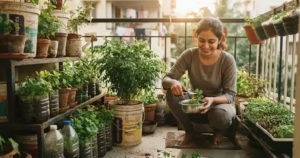
Kitchen gardens are a powerful, low-cost nutrition intervention . A study in Odisha found that women without a household kitchen garden had poor dietary outcomes, with a Dietary Diversity Score (DDS) below 5 . Women with kitchen gardens had significantly better dietary quality . These gardens provide a sustained source of fresh vegetables and fruits, reducing dependence on market purchases and ensuring access to nutrient-rich produce even during lean seasons.
How to start:
- Use available space—backyards, balconies, or community plots.
- Grow a variety of vegetables, fruits, and greens.
- Include nutrient-dense crops like moringa, spinach, and amaranth.
- Encourage Self-Help Groups (SHGs) to support kitchen garden initiatives.
Government schemes often provide seed distribution and technical support . A study in rural Rwanda showed that kitchen gardens combined with nutrition education significantly increased dietary diversity .
Promote Dietary Diversity
India’s food policy has traditionally focused on rice and wheat, leading to a “rice-wheat lock-in” . As a result, Indians under-consume nine of the thirteen food groups recommended for a balanced diet—including pulses, fruits, vegetables, and dairy . A study in Andhra Pradesh found that incorporating millets and nutrient-dense foods like milk, eggs, fruits, and green leafy vegetables can significantly improve dietary quality .
Action steps:
- Advocate for millet inclusion in local feeding programs.
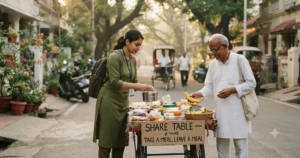
- Encourage consumption of seasonal, locally available foods.
- Promote colorful, diverse plates—foods of different colours provide different nutrients.
- Discourage ultra-processed foods high in sugar, salt, and unhealthy fats .
The UNICEF #MeriThaliSehatwali campaign promotes six simple tips: optimum breastfeeding practices, healthy breakfasts for adolescent girls and pregnant women, diverse colourful plates with local ingredients, avoiding junk food, and staying active .
Support Food Fortification Initiatives
Food fortification is a proven, cost-effective strategy to combat micronutrient deficiencies . Iron-fortified salt has succeeded in India, and fortified staples like wheat flour, rice, and edible oil can address widespread deficiencies . The Government of India has extended the universal supply of fortified rice until December 2028, with ₹17,082 crore in funding . Fortified rice contains iron, folic acid, and Vitamin B12, and is distributed under schemes like the Public Distribution System (PDS), ICDS, and PM POSHAN .
How you can help:
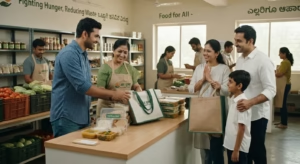
- Advocate for fortified foods in your local PDS and school meal programs.
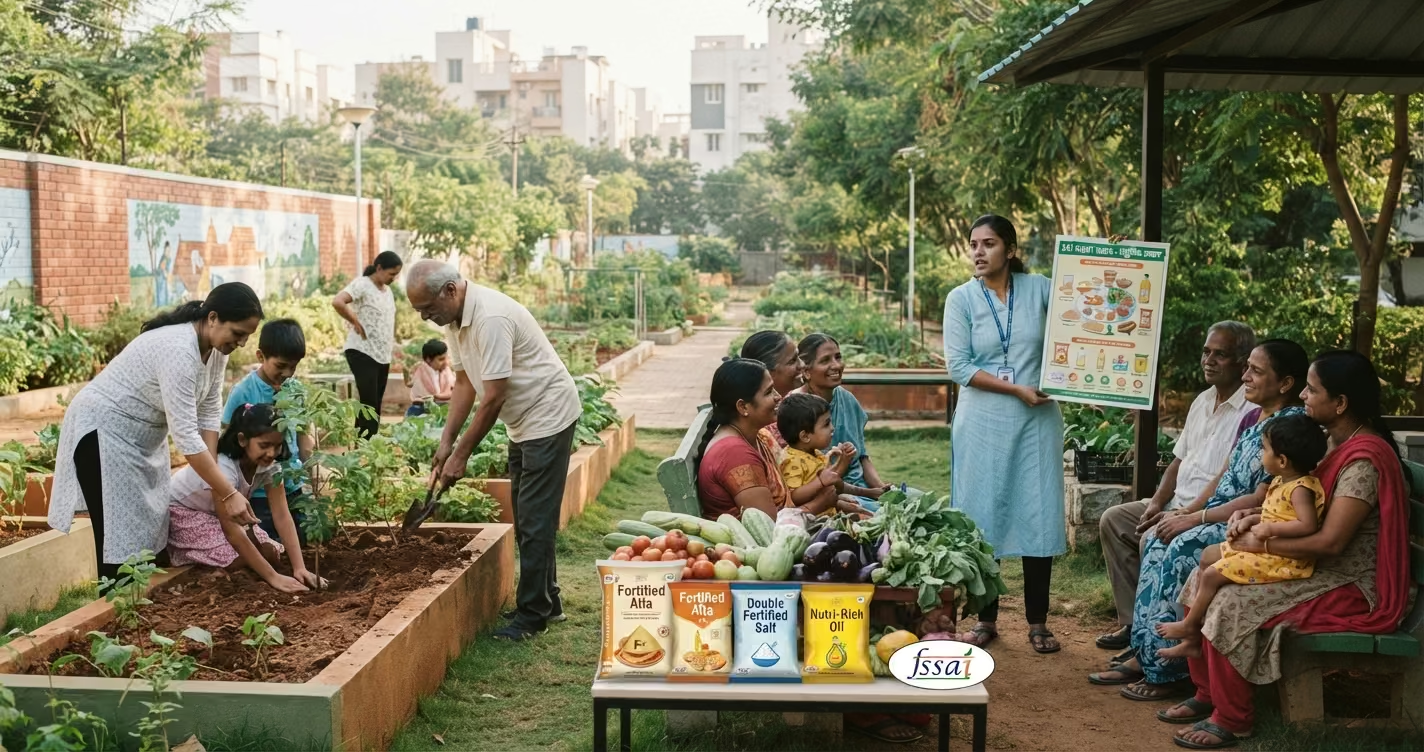
- Support Double Fortified Salt and fortified edible oil in community kitchens.
- Educate families on the benefits of fortified staples.
- Ensure compliance through monitoring and quality control .
Food fortification significantly reduces anaemia (34%), goiter (74%), and neural tube defects (41%) . The use of fortified rice and wheat flour helps combat iron, folic acid, and Vitamin B12 deficiencies, supporting mental and neurological health .
Engage with Government Nutrition Programs
India has robust nutrition programs that can amplify your efforts. Mission Poshan 2.0 (formerly POSHAN Abhiyaan) is a flagship program improving nutrition for children, adolescents, pregnant women, and lactating mothers . Over 2 lakh Anganwadi centres have been strengthened as “Saksham Anganwadis” with improved infrastructure and technology . The Poshan Tracker app enables real-time monitoring of nutrition services .
Ways to participate:
- Encourage community participation during Poshan Pakhwada and Poshan Maah campaigns .
- Share information about the Poshan Tracker app for self-registration .
- Participate in Community-Based Events (CBEs) organised by Anganwadi workers .
- Support the distribution of Take-Home Ration (THR) and Hot Cooked Meals (HCM) .
The Swasth Nari, Sashakt Parivar Abhiyaan (launched in September 2025) aims to strengthen health and nutrition services for women and children through over 1 lakh health camps nationwide, offering screening for anaemia, non-communicable diseases, cancer, TB, and sickle cell disease, along with nutrition counselling and immunisation .
Educate and Build Awareness
Raising awareness about nutrition is essential. Many people are unaware of what a balanced diet looks like for different life stages—infants, adolescents, pregnant women, and the elderly . Nutrition awareness campaigns can shift attitudes toward food choices and encourage healthier habits .
Strategies:
- Promote nutrition education in schools and community settings.
- Use local media, social media, and community gatherings to spread messages.
- Train ASHA and Anganwadi workers in nutrition counselling .
- Demonstrate healthy cooking and affordable nutritious recipes.
Community-Based Management of Acute Malnutrition (CMAM)
The CMAM protocol, launched in October 2023, empowers Anganwadi workers to detect, refer, and manage malnourished children in their communities . This structured approach turns every Anganwadi into a frontline nutrition clinic .
How to support CMAM:
- Ensure timely referrals of malnourished children.
- Support appetite tests and growth monitoring.
- Follow up with families to ensure treatment adherence.
Conclusion
Improving nutrition in your community is achievable. You can start with a small kitchen garden, advocate for fortified foods in local schemes, participate in government nutrition campaigns, or simply talk to your neighbours about healthy eating.
Every action counts. A well-nourished child is healthier, learns better, and has more opportunities in life . Together, we can build a healthier, stronger India.
Let’s Talk Nutrition
Have questions about improving nutrition in your community? Want to share your own initiatives? We would love to hear from you.
Connect with us on WhatsApp for a friendly conversation about how you can make a difference. Our team is here to help.