
- How to Achieve Zero Waste in Your Kitchen: A Practical Indian Guide
- Why Zero Waste in Your Kitchen Matters
- India Has Always Done This. We Just Forgot
- Simple Steps to Achieve Zero Waste in Your Kitchen
- Handle Seeds, Pulp, and Overripe Produce
- Composting: The Final Step in Zero Waste
- Advanced Zero-Waste Solutions: Biogas
- Using Technology to Reduce Kitchen Waste
- What the New Solid Waste Management Rules Mean for Your Kitchen
- Frequently Asked Questions About Zero Waste Kitchens
- Conclusion
How to Achieve Zero Waste in Your Kitchen: A Practical Indian Guide
Zero waste cooking is the idea that every part of a vegetable or fruit has a purpose. Far from being some new Western trend, this philosophy is something Indian grandmothers have quietly practised for generations . It is time to bring it back to your kitchen.
You peel a lauki and toss the skin. You snap the tough ends off your coriander and bin the stems. Then You squeeze a nimbu into your dal and throw the rind straight into the trash. Sound familiar? Most of us have been cooking this way our whole lives, and no one really questioned it .
But here is the thing: those peels, stems, cores, and roots you are casually discarding are not waste. They are ingredients. Good ones, in fact.
This guide will show you how to achieve zero waste in your kitchen, the Indian way. No guilt. No overwhelm. Just simple, practical steps that save money, reduce waste, and connect you to a tradition of mindful cooking.
Why Zero Waste in Your Kitchen Matters
India generates about 68.8 million tonnes of food waste annually, with much of it starting at home . We often discard nutritious parts like onion skins (rich in quercetin), watermelon rinds (with citrulline), and broccoli stems (with fibre and vitamin C) .
These scraps end up in landfills, releasing methane, a potent greenhouse gas. Beyond environmental concerns, wasting food wastes money, as fresh produce is costly . Zero-waste cooking extends your grocery budget and enhances creativity in the kitchen.
Many traditional Indian dishes—like chutney from bottle gourd peels or sabzi from cauliflower leaves—exemplify zero-waste cooking . As Chef Kunal Kapur suggests, sustainability begins with individual action in the kitchen .
Environmental Impact of Kitchen Waste
| Type of Waste | Environmental Impact | What Happens When Wasted |
|---|---|---|
| Vegetable Peels | Rich in nutrients and fibre | Release methane in landfills |
| Fruit Rinds | Contain vitamins and antioxidants | Contribute to greenhouse gas emissions |
| Food Leftovers | Biodegradable organic matter | Create leachate that contaminates soil |
| Stems and Stalks | High in fibre and flavour | Increase the volume of municipal waste |
India Has Always Done This. We Just Forgot
The Bengali kitchen exemplifies zero-waste cooking with ‘niramish’ dishes, using every part of a vegetable. Shorshe ilish uses mustard greens, while kochur saag incorporates taro stems and leaves. Banana flower curry and jackfruit seed dal are everyday meals .
In South India, rasam is made with tamarind seeds, and chutneys from coconut shells. Curry leaves form the dish’s base. In Maharashtra, pumpkin peel is fried, and in Gujarat, rice-washing water kneads roti dough .
Ironically, modern aesthetics led to the disappearance of these practices. Peeling and discarding stems became common. Zero-waste cooking revives these traditional methods .
Traditional Indian Zero-Waste Practices
| Region | Traditional Practice | What It Uses |
|---|---|---|
| Bengal | Niramish cooking | Every part of vegetables |
| South India | Tamarind seed rasam | Tamarind seeds |
| Maharashtra | Fried pumpkin peel | Pumpkin skin |
| Gujarat | Rice-washing water for roti | Rice water |
| Punjab | Cauliflower leaf sabzi | Cauliflower leaves and stems |
Simple Steps to Achieve Zero Waste in Your Kitchen
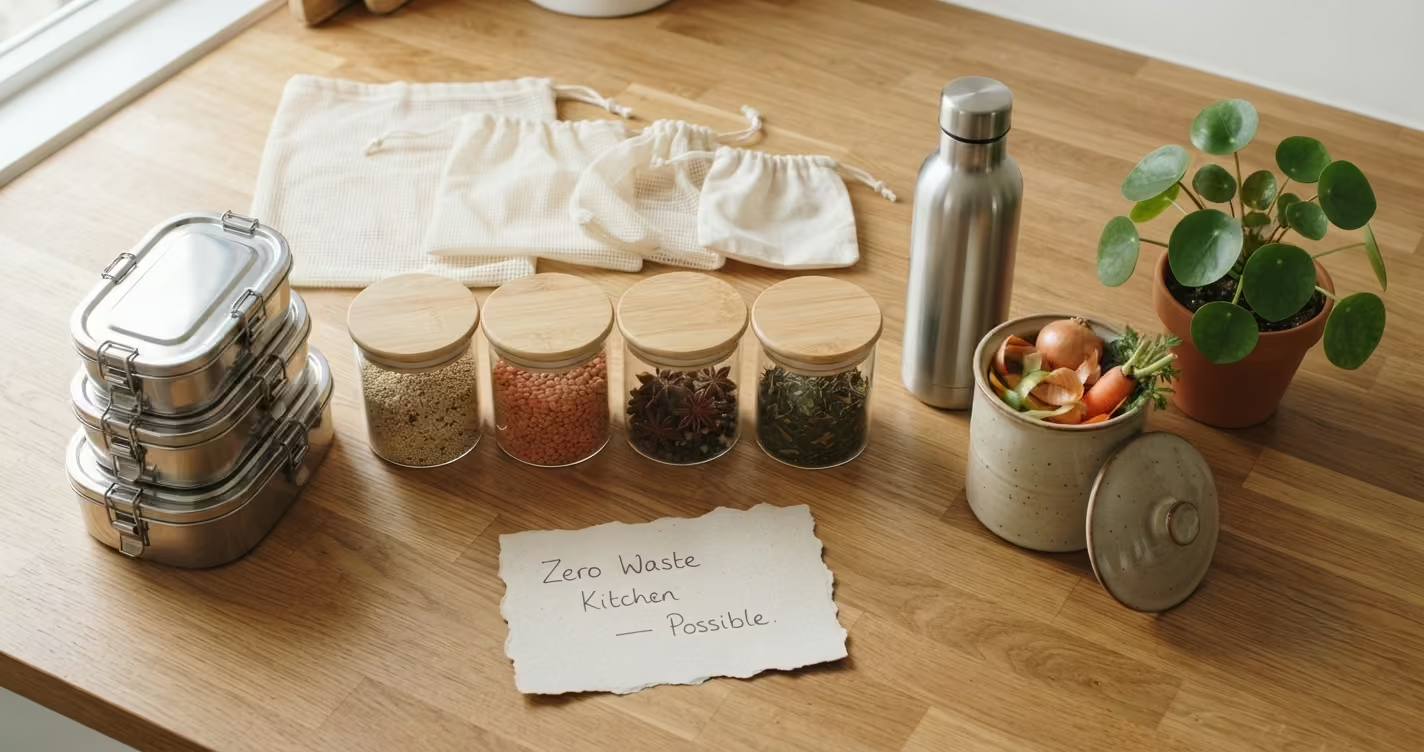
You do not need to overhaul your entire kitchen overnight. Start with one thing: save your coriander stems this week instead of tossing them. Next week, keep a scrap container in your fridge. The week after, try the peel chutney. Small steps build lasting habits .
1. Use Every Part of the Vegetable
Stalks and Stems
Don’t let the stalks of spinach or cauliflower fool you—they are far from inedible. They are loaded with flavour and fibre. Cauliflower stems can be peeled, chopped, and turned into a mild, spiced stir-fry with a sprinkle of gram flour for texture. Spinach stalks soften beautifully when cooked in dals or made into a tangy, garlicky saag .
Peels
Before you toss that mound of vegetable peels into the compost, pause. Bottle gourd peel can be sautéed with onions, mustard seeds, and chillies to make a quick sabzi. Pumpkin peel, cut into thin strips and cooked with a hint of jaggery and coconut, turns into a sweet-savoury side that pairs perfectly with rice .
Even potato peels, scrubbed well and crisped in a little oil with salt and turmeric, make a quick snack that disappears before it reaches the dining table .
Leaves
Think of the leaves you usually discard: radish, cauliflower, mustard, and beetroot leaves. Radish leaves, slightly peppery, can be made into a chutney with garlic and green chillies. Cauliflower leaves, when cooked with a little besan, make a rustic, homely dish popular in many North Indian kitchens .
2. Turn Scraps into Flavourful Staples
Coriander Stem and Green Chilli Paste
Most recipes call only for coriander leaves. The stems, however, are intensely flavourful—more so than the leaves in many cases. This paste is a fridge staple that will go into your curries, marinades, sandwiches, and curd .
What you need:
- 1 large bunch of coriander stems (and any leftover leaves)
- 2 to 3 green chillies
- 1 inch of ginger
- 4 garlic cloves
- Juice of 1 lemon
- Salt to taste
Blend everything with a splash of water until you get a smooth, thick paste. Store in a jar in the fridge. Use it as a marinade for paneer or chicken tikka, stir a spoonful into your dal, mix with hung curd for a dip, or spread it on your sandwich instead of store-bought green chutney. It lasts up to a week refrigerated .
Vegetable Scrap Stock
This is perhaps the single most useful habit you can build in your kitchen. Save your vegetable trimmings through the week—onion ends, tomato cores, carrot tops, cabbage ribs, cauliflower stems, and methi stalks—and make a stock that forms the base for your soups, dals, biryanis, and khichdi .
What you need:
- 2 cups mixed vegetable scraps
- 3 to 4 cups of water
- 1/2 tsp turmeric
- 4 to 5 garlic cloves, crushed
- 1 bay leaf
- Salt to taste
Collect scraps in a container in your fridge all week. When you have enough, simmer everything with the water, turmeric, garlic, and bay leaf for 20 to 25 minutes. Strain, press the solids to extract all the liquid, and you have a flavourful, nutritious stock. Use it wherever you would use water in cooking. It freezes well, too .
3. Transform Leftovers into New Dishes
Mixed Vegetable Peel Chutney
This is the original zero-waste recipe of the Indian kitchen, and it is shockingly good as a side with rice or rotis .
What you need:
- 1 cup mixed washed peels (bottle gourd, ridge gourd, raw banana, carrot, or potato)
- 2 dried red chillies
- 1 tsp urad dal
- 1 tsp chana dal
- A small piece of tamarind
- Salt to taste
- Oil, mustard seeds, and curry leaves for tempering
Heat a little oil and roast the dals until golden. Add the dried red chillies and then the peels. Sauté for 6 to 8 minutes until the peels soften. Cool slightly, then grind with the tamarind and salt into a coarse paste. Temper with mustard seeds and curry leaves, pour over the chutney, and serve .
Potato and Carrot Peel Crisps
Peel crisps are crunchy, seasoned, and completely addictive. They make a far better snack than most things you could buy .
What you need:
- Peels from 4 large potatoes or carrots (or a mix of both)
- 1 tsp oil
- 1/2 tsp chaat masala
- 1/4 tsp red chilli powder
- A pinch of salt
Wash your peels thoroughly and dry them completely—this is the key step. Moisture will make them chewy instead of crispy. Toss in a little oil and the spices. Spread on a baking tray or in your air fryer. Bake at 180 degrees Celsius for 15 to 20 minutes, tossing once in between, until golden and crisp. Alternatively, shallow-fry in a little oil in a flat pan on medium heat. Eat immediately with chai .
Cauliflower Stem and Leaf Sabzi
When you break down a cauliflower, the stems and leaves are typically tossed straight into the bin. That is a mistake. The stems have a slightly earthier, nuttier flavour than the florets, and the leaves taste remarkably like sarson ka saag when cooked down .
What you need:
- Stems and leaves from 1 cauliflower, chopped small
- 1 medium onion, sliced
- 2 tomatoes, chopped
- 1 tsp ginger-garlic paste
- 1/2 tsp turmeric
- 1 tsp cumin seeds
- 1 tsp coriander powder
- Salt and red chilli to taste
- Oil for cooking
Heat oil in a kadhai. Add cumin seeds and let them splutter. Now, add the sliced onion and cook until golden. Then, add ginger-garlic paste and cook for a minute. Add the chopped tomatoes and cook until the masala comes together. Later, add the cauliflower stems first (they take longer), and after 5 minutes, add the leaves as well. Add your spices, a splash of water, and cover and cook on low heat for 10 to 12 minutes until everything is tender. Finish with a squeeze of lemon. Serve with rotis .

Handle Seeds, Pulp, and Overripe Produce
Seeds and Pulp
When scooping out seeds and soft pulp from gourds or pumpkins, do not throw them away. Roasted pumpkin seeds are a healthy snack that can be seasoned with chaat masala or salt and pepper. The soft, spongy pulp of ridge gourd can be added to dals for thickness and flavour. Even cucumber seeds, blended into a smoothie or raita, lend a cool, refreshing taste while boosting nutrition .
Watermelon Rind Murabba (Preserve)
This is an old-school, almost forgotten preserve that turns the thick white rind of a watermelon into something spiced, slightly sweet, and absolutely delicious. It is eaten as an accompaniment with dal-chawal or as a digestive after meals .
What you need:
- 2 cups watermelon rind, white part only, cut into cubes (remove the green skin)
- 1 cup sugar
- 1 cup water
- 4 green cardamom pods
- 1/2 tsp ginger powder
- A few strands of saffron (optional)
- Juice of 1/2 lemon
Prick the rind pieces all over with a fork; this helps the syrup absorb. In a heavy-bottomed pan, dissolve the sugar in water and bring to a boil. Add the rind, cardamom, ginger powder, and saffron. Cook on medium-low heat, stirring occasionally, for 25 to 30 minutes until the rind becomes translucent and the syrup thickens slightly. Add the lemon juice in the last 5 minutes. Cool and store in a sterilised jar. It keeps for up to a month in the fridge .
Overripe and “Ugly” Veggies
That tomato starting to wrinkle or the brinjal with a blemish is not a lost cause. Overripe tomatoes are perfect for chutneys, soups, or purees for curries. Slightly wilted greens can go into pakoras or parathas where their texture matters less. Even the humble cabbage leaf that is a bit too tough for salad can be stuffed and steamed for a delicious side dish .
Composting: The Final Step in Zero Waste
Even after you have used every edible part, there will be some scraps left. Composting is the solution. Start a compost bin for your food scraps. Over time, these scraps break down and create nutrient-rich soil. This enriches your garden and reduces the amount of waste sent to landfills .
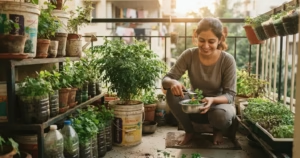
Sonika Bhasin’s Mumbai home demonstrates this beautifully. On her kitchen counter sits a container that collects the day’s vegetable scraps, destined for an earthen composter tucked away in her balcony. “It’s nature’s alchemy,” she says. “With time, microbes, and the right balance, these scraps turn into black gold—rich compost that feeds our home garden.” That very garden returns the favor with mint, basil, lemons, and tomatoes that nourish her family’s meals .
Home Composting Options
| Method | Space Required | Time to Compost | Best For |
|---|---|---|---|
| Earthen Composter | Balcony or small garden | 2-3 months | Apartments |
| Aerobic Compost Bin | Small garden | 1-2 months | Homes with outdoor space |
| Vermicomposting (Worms) | Indoor or balcony | 1-2 months | Apartments, small spaces |
| Biogas Digester | Community or large kitchen | Continuous | Housing societies, restaurants |
Advanced Zero-Waste Solutions: Biogas
What if your kitchen waste could cook your food? Priyadarshan Shahstrabuddhe in Pune made this a reality. He built a biodigester called Vaayu, which converts 11 kilos of food waste and vegetable peels from his neighbours’ kitchens into 800 litres of cooking gas .
Over the past seven years, he hasn’t used a single LPG cylinder. He has turned over 1,000 tonnes of organic waste into fuel .
How It Works
Just add your kitchen waste such as vegetable peels, leftovers, or other organic scraps into the Vaayu tank. Natural bacteria break down the waste and release methane gas. The gas is stored in a balloon that connects directly to the stove, providing clean, renewable cooking fuel .
Today, more than 350 homes use the system, saving around 2,500 LPG cylinders every year . A Pune restaurant has installed a Vaayu biogas plant, converting 60 to 70 kg of daily food waste, and sometimes up to 100 kg on weekends, into clean biogas. Staff meals and even some customer dishes are now cooked using this eco-friendly fuel .
Biogas vs. Composting: A Comparison
| Aspect | Biogas | Composting |
|---|---|---|
| Output | Cooking gas + liquid manure | Solid compost |
| Space Required | Moderate | Small to moderate |
| Time to Output | Continuous | 1-3 months |
| Best For | Housing societies, restaurants, canteens | Individual homes, small communities |
| Skill Required | Low (once installed) | Low |
Using Technology to Reduce Kitchen Waste
Technology is making zero-waste kitchens easier than ever. Odisha-based Centurion University has developed Saveful 2.0, an AI-integrated app that helps households repurpose kitchen leftovers, reduce unnecessary purchases and minimise food wastage .
By entering the ingredients already available in their kitchens, users can discover which dishes they can prepare or learn how to make a dish of their choice . The app has been found to have helped over 41,000 Australian users save 63% more food than average households, and has now been localised for the Indian context .
Users can also track their personal impact and financial savings through a personalised dashboard, creating transparent data for sustainability reporting .
What the New Solid Waste Management Rules Mean for Your Kitchen
India’s new Solid Waste Management (SWM) Rules, 2026, effective 1 April 2026, mark a shift from a compliance-light regime to one driven by enforcement, segregation, and financial penalties .
The rules make it compulsory to segregate waste at source into four categories: wet, dry, sanitary, and special care waste .
Four-Stream Segregation Under SWM Rules 2026
| Waste Category | What It Includes | How to Process |
|---|---|---|
| Wet Waste | Kitchen waste, vegetable and fruit peels, meat, flowers | Compost or bio-methanation at nearest facility |
| Dry Waste | Plastic, paper, metal, glass, wood, rubber | Send to Material Recovery Facilities for sorting and recycling |
| Sanitary Waste | Used diapers, sanitary napkins, tampons, condoms | Securely wrap and store separately |
| Special Care Waste | Paint containers, bulbs, mercury thermometers, medicines | Authorised agencies or designated collection centres |
Individuals are legally required to segregate waste, and local bodies can refuse collection or impose spot fines if waste is mixed, shifting responsibility to households . Adopting zero-waste kitchen practices is no longer just an ethical choice—it is becoming a legal requirement.
Frequently Asked Questions About Zero Waste Kitchens
What is the easiest way to start a zero-waste kitchen?
Start small. Save your coriander stems instead of tossing them. Keep a scrap container in your fridge. Try making peel chutney. Once these habits become routine, add more changes. Small steps build lasting habits
How do I store vegetable scraps for later use?
Collect scraps in a container or zip-lock bag in your fridge all week. When you have enough, make vegetable scrap stock or compost them
Are vegetable peels safe to eat?
Yes, but always wash your produce well before peeling, especially if using the skin. Peels from conventionally grown vegetables may carry pesticide residue, so a good scrub with water—and ideally a quick soak in water with a pinch of turmeric—is a good precaution. Avoid using peels from vegetables that are visibly spoiled or slimy
What kitchen scraps should I NOT compost?
Avoid composting meat, fish, dairy products, and oils as they attract pests and create odour. These are better suited for biogas systems if available
How can I involve my family in zero-waste cooking?
Make it fun. Turn peel crisps into a snack kids will love. Let children help with washing and sorting scraps. Many children enjoy the “science experiment” of watching compost transform waste into soil
What is the difference between composting and biogas?
Composting turns organic waste into nutrient-rich soil over 1-3 months. Biogas uses a digester to break down waste continuously, producing cooking gas and liquid manure. Biogas is better for larger households, communities, or restaurants
Conclusion
Zero-waste cooking is not a sacrifice. It is not about eating second-rate food or settling for less. It is about cooking with the same common sense and resourcefulness that every Indian household used to operate by default .
The peels, stems, cores, and roots you have been throwing away are not leftovers; they are the next recipe waiting to happen. Once you start seeing your kitchen waste as an ingredient, you will find that your cooking becomes more layered, your grocery bill quietly shrinks, and the odd satisfaction of wasting absolutely nothing makes every meal feel a little more earned .
Your nani always knew this. She just called it cooking .
Let’s Talk Zero Waste
Have questions about achieving zero waste in your kitchen? Want to share your own tips? We would love to hear from you.
Connect with us on WhatsApp for a friendly conversation about sustainable cooking. Our team is here to help.