
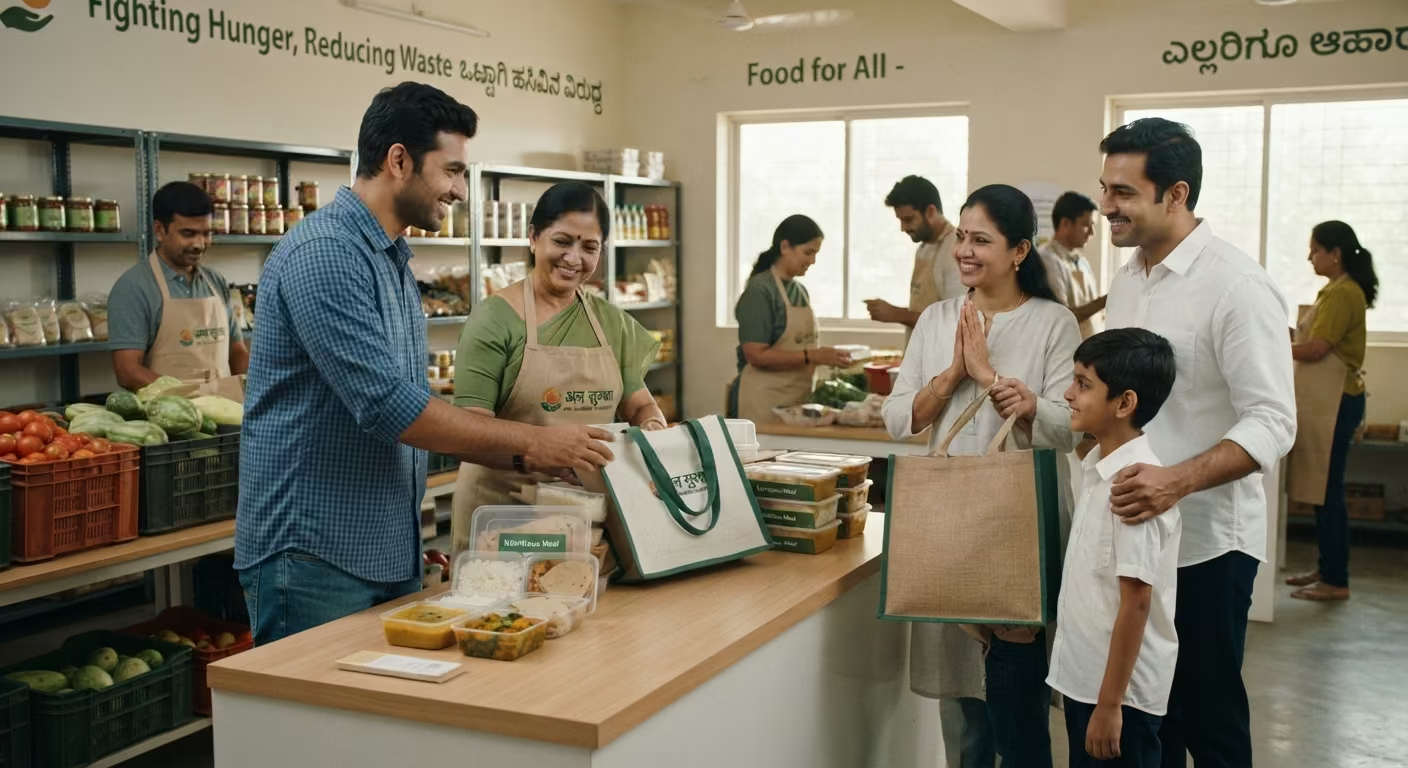

- Food Bank Guide: How Donors Can Fight Hunger and Waste
Food Bank Guide: How Donors Can Fight Hunger and Waste
You want your donation to count. You want to fight hunger and protect the planet. Supporting a food bank lets you do both at once.
Food banks rescue surplus food that would otherwise go to waste. They redistribute it to people who need it most. This simple model creates enormous impact.
At Reshine Org, we operate as a food bank in Bidar, Karnataka. Our work connects businesses with surplus food to families facing hunger. This guide will help you understand how food banks work and how you can support them effectively.
What Is a Food Bank?
A food bank collects and redistributes surplus food to those in need. It acts as a bridge between food waste and hunger . Businesses, hotels, and events donate food they cannot sell. Food banks sort, store, and deliver this food to shelters, hospitals, and communities.
Food banks address two urgent problems simultaneously. First, they reduce food waste. Globally, one-third of all food produced goes to waste each year . This waste contributes significantly to greenhouse gas emissions. Food banks prevent this waste from ending up in landfills.
Second, they fight hunger. In India, close to 40% of the population is undernourished . Yet 40% of all food produced in India is wasted . Food banks redirect this surplus to people who need it most.
How Food Banks Create Impact
Food banks do more than distribute meals. They create measurable environmental and social change.
Environmental Impact
Rescuing food prevents harmful methane emissions. When food decomposes in landfills, it releases methane, a potent greenhouse gas. Studies show that food bank donations significantly reduce carbon emissions .
Fresh food donations alone can reduce emissions by thousands of tons of CO2-equivalent . Processed food donations create even greater savings. Every kilogram of food rescued means less waste and lower emissions.
Social Impact
Food banks provide nutritious meals to vulnerable populations. At Reshine, our hunger alleviation program serves over 600 meals daily . We distribute food to government hospitals, slum communities, and shelters .
These meals save families substantial money. A patient in a government hospital saves approximately Rs 100 per day on food expenses . This allows families to focus on recovery rather than worrying about their next meal.
The Food Bank Model in India
Food banks in India face unique opportunities and challenges. Understanding these helps you support them effectively.
Current Policy Landscape
India has made progress in food donation policy. The Surplus Food Regulations of 2019 clarify that food donation is legal and encouraged . Standard date labeling distinguishes between safety dates and quality dates .
However, significant gaps remain. India lacks Good Samaritan laws to protect food donors from liability . This fear prevents many businesses from donating food. There are also no tax incentives for food donations . Donors cannot claim deductions for food, only cash .
Operational Challenges
Food banks must maintain rigorous safety standards. They handle perishable items that require proper storage and transport . Without adequate infrastructure, food spoils before reaching beneficiaries.
The Goods and Services Tax (GST) also creates confusion. Businesses are unclear whether GST applies to donated food . This uncertainty discourages potential donors.
How Reshine Org Operates as a Food Bank
Reshine follows a structured, safe process to collect and distribute surplus food .
Collection Process
We partner with local restaurants, hotels, supermarkets, and event organizers . These businesses donate unsold but fresh food. Our trained volunteers collect the food and transport it to our distribution centers.
Every step follows strict safety protocols . Food is checked for freshness. Expired or unsafe items are discarded immediately. Perishable items are stored in cold storage to maintain quality.
Distribution Network
We distribute food through multiple channels :
- Government hospitals
- Community kitchens
- Shelters and orphanages
- Mobile food stations for street outreach
This network ensures food reaches the most vulnerable populations quickly and efficiently.
Three Key Programs at Reshine
Our food bank operates through three interconnected initiatives .
Annadasoha: Feeding Hospital Patients
Since 2017, we provide daily meals to patients and families at Brims Government Hospital in Bidar . We serve 300 meals in the morning and 300 in the evening. This saves each family roughly Rs 100 per day, a significant amount for families facing medical expenses.
Parivartan: Transforming Lives in Slums
We provide food support to families living in slum areas . Many of these families face economic hardship and limited access to basic necessities. Our support helps them save money for education, healthcare, and housing.
Food Wastage Awareness
We educate people about food waste and how to reduce it . Through workshops and campaigns, we teach portion control, smart meal planning, and proper storage techniques. We also encourage people to donate surplus food rather than throw it away.
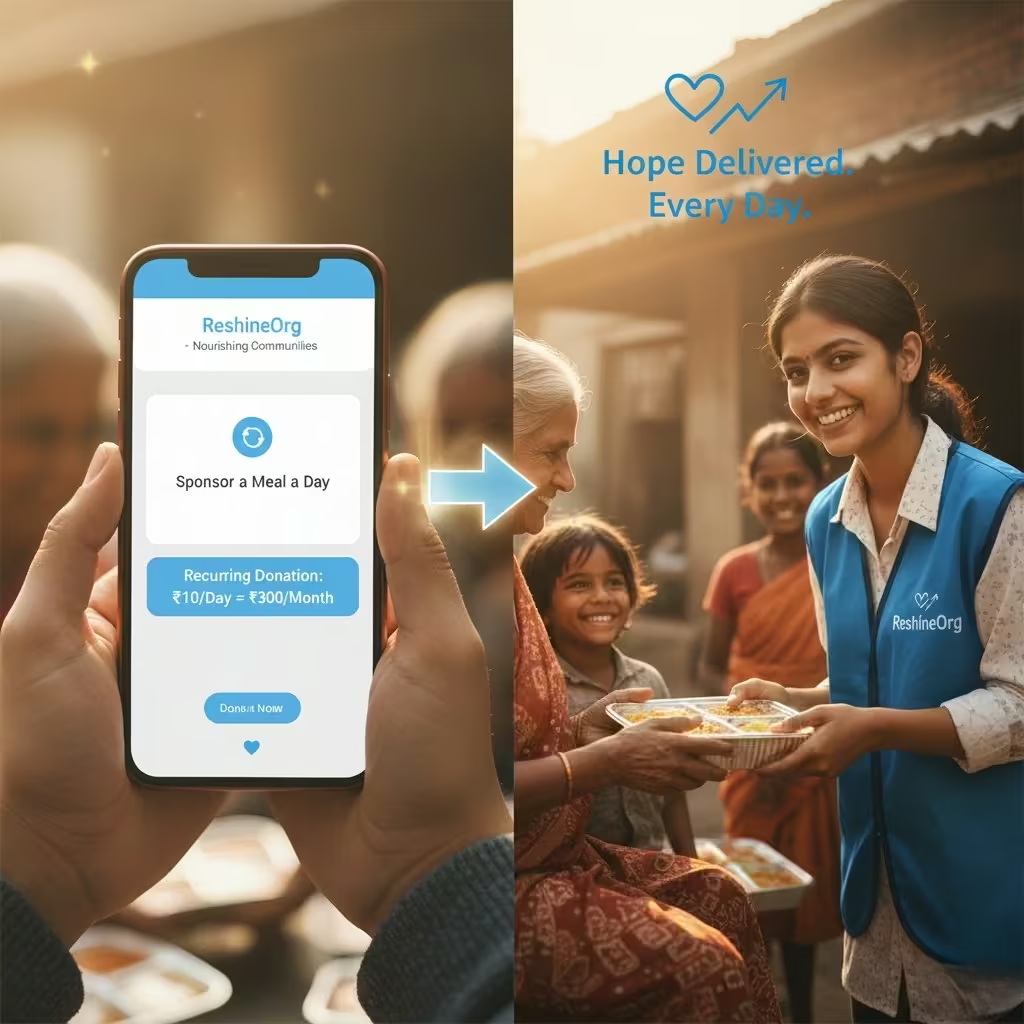
How to Support Food Bank
You can make a difference in several ways.
Donate Financially
Money is the most flexible form of support. It allows food banks to:
- Purchase fresh produce when donations are low
- Maintain cold storage and transport vehicles
- Train volunteers in food safety
- Scale operations to reach more communities
Your donation creates impact far beyond its face value. Research shows every $1 invested in food banking generates $4 to $7 in long-term social benefits .
Donate Food
You can also donate food directly. Here are simple steps to get started :
- Choose items that are unopened, unexpired, and in original packaging
- Avoid canned goods with dents or rust
- Separate dry and wet items
- Label boxes with the type of food and expiry date
- Call ahead to confirm what the food banks needs
Volunteer
Food banks depend on volunteers. You can help with :
- Food collection and packaging
- Meal preparation and service
- Awareness campaigns and food drives
Volunteering also builds community connections and raises awareness about food waste.
Food Donation Best Practices
Safety is paramount in food banking. Follow these best practices when donating.
What to Donate
Food banks typically accept :
- Dry staples: rice, wheat flour, lentils, pulses
- Packaged goods: cooking oil, sugar, spices
- Fresh produce: vegetables and fruits (check expiry)
- Bakery items: bread and other goods
What to Avoid
Food banks generally cannot accept :
- Expired or opened food
- Canned goods with dents or rust
- Perishable items without proper storage
- Food with unclear expiration dates
How to Pack
Proper packing ensures food arrives safely :
- Use sturdy boxes or crates
- Secure packages with tape
- Label clearly with contents and expiry dates
- Separate wet and dry items
Environmental Impact You Can Support
When you support a food bank, you help reduce greenhouse gas emissions. Food waste is a major source of methane, a potent greenhouse gas. Studies show food banks donations can significantly reduce carbon emissions .
Food banks also help businesses meet their ESG goals. Food donation activities contribute to both social and environmental dimensions of ESG . This dual impact makes food banking a smart investment for companies and individuals alike.
Conclusion: Your Support Creates Real Change
Food banks are a proven solution to hunger and food waste. They rescue surplus food and deliver it to people in need. Your support amplifies this impact.
At Reshine Org, we see the difference every day. A meal provided to a patient in the hospital. A family in the slum receiving nutritious food. A business prevented from sending food to the landfill.
Your Next Step: Support a Food Bank Today
Ready to fight hunger and waste? Partner with Reshine Org.
Donate to Reshine and Support Our Food Bank. Start Your Impact Gift Now
Download Our “Food Bank Donor Guide“ for more tips on supporting food banks.
Give wisely. Fight hunger. Protect the planet.