


- Why You Need a Personal Giving Program
- Step One: Define Your Philanthropic Vision
- Step Two: Set Your Giving Budget
- Step Three: Research and Select Your Partners
- Step Four: Choose Your Giving Structure
- Step Five: Make Your First Contribution
- Step Six: Track and Celebrate Your Impact
- Step Seven: Review and Refine Annually
- Common Mistakes to Avoid in Your Giving Program
- The Reshine Model: Designed for Programmatic Donors
- Beyond Money: Deepening Your Engagement
- Teaching the Next Generation Through Your Program
- Conclusion: Your Giving Program, Your Legacy
You work hard for your income. Each month, a portion of your salary goes toward bills, savings, and perhaps some personal joys. But you also feel a deep desire to give back. You want your generosity to create real, measurable change in the world. This is where a structured Giving Program becomes your most powerful tool.
A Giving Program is simply a plan for your philanthropy. Instead of giving impulsively whenever an appeal touches your heart, you give strategically. You decide in advance how much to give, to whom, and for what purpose. This approach transforms your generosity from a series of random acts into a focused force for good.
Many salaried professionals and business owners feel overwhelmed by the number of causes asking for support. A personal Giving Program brings clarity and purpose to your donations. It ensures every rupee you give aligns with your values and creates the maximum possible impact.
At Reshine Org, we witness the incredible power of planned giving every single day. Our most effective partners are not necessarily those who give the largest one-time gifts. Rather, they are the individuals who have built a thoughtful Giving Program into their monthly budget. Their consistency allows us to plan our food rescue operations, expand our reach, and serve more communities with dignity and reliability.
This guide will walk you through creating your own personal Giving Program. We will cover everything from defining your philanthropic goals to choosing the right partners and measuring your impact. By the end, you will have a clear roadmap to make your giving as strategic and effective as your professional life.
Why You Need a Personal Giving Program
Let us first explore why a structured approach matters. Without a plan, your giving often becomes reactive. A friend shares a fundraiser. An emotional video appears on your social media. A disaster makes headlines. You give, and you feel good momentarily. But do you know what that donation actually achieved?
A personal Giving Program changes this dynamic entirely. It puts you in the driver’s seat. You become an active investor in change rather than a passive responder to appeals.
Consider the difference between random giving and programmatic giving. Random giving feels good but lacks direction. Programmatic giving feels good and creates cumulative, measurable impact. Your donations build upon each other over time.
There are other compelling benefits too. A structured Giving Program helps you budget effectively. You decide an annual amount, divide it monthly or quarterly, and plan accordingly. This prevents the year-end scramble or the guilt of turning away worthy causes.
It also deepens your connection to the causes you support. When you give consistently to one or two organizations, you follow their journey. You celebrate their victories and understand their challenges. This relationship transforms you from a donor into a true partner.
Finally, a personal Giving Program models intentionality for your family, friends, and colleagues. It demonstrates that generosity is not an afterthought but a core value you live by.
Step One: Define Your Philanthropic Vision
Every effective Giving Program begins with clarity. Before you decide where to give, you must understand what you want to achieve. This is your philanthropic vision.
Start by asking yourself some fundamental questions. What social or environmental issues move you most deeply? Is it hunger in your local community? Is it education for underprivileged children? Perhaps it is environmental sustainability or healthcare access. There are no wrong answers here. Your passions are uniquely yours.
Next, consider the scale of change you wish to see. Do you want to provide immediate relief to those in need today? Or do you prefer investing in long-term systemic solutions? Both approaches are valuable, and many donors choose a blend of both.
Also reflect on your personal values. Perhaps your family has a history of community service. Maybe your professional skills relate to a particular cause. A tech professional might feel drawn to digital literacy programs. Someone in healthcare might prioritize medical access initiatives.
Write down your thoughts. Create a simple statement like: “Through my Giving Program, I want to provide nutritious meals to children in my city while supporting sustainable solutions to food waste.”
This vision becomes your compass. Every donation decision you face should align with this statement. If an appeal does not fit your vision, you can politely decline without guilt. Your focus protects your impact.
Step Two: Set Your Giving Budget
Money conversations can feel uncomfortable, especially when discussing charity. Yet an honest assessment of your finances is essential for a sustainable Giving Program. You cannot give effectively if you are not giving sustainably.
Begin by reviewing your monthly income and expenses. Look at your salary, your essential costs, and your discretionary spending. What remains after all obligations are met? From this surplus, what portion feels right to dedicate to giving?
Many financial advisors suggest starting with one percent of your annual income and gradually increasing as your capacity grows. Others recommend the “tithing” model of ten percent. The right amount is deeply personal. It should feel significant enough to create impact but not so burdensome that it causes stress or resentment.
Remember that consistency matters more than size. A monthly donation of Rs. 1,000 from a salaried professional can provide tremendous value to an NGO over a year. That same Rs. 12,000 annual gift allows for planning and scaling of programs.
Once you decide your annual giving amount, break it down into manageable pieces. Perhaps you allocate monthly through recurring donations. Maybe you set aside funds quarterly for specific campaigns. The key is making your Giving Program fit naturally into your financial life.
Be sure to account for Indian tax benefits too. Donations to organizations with 80G certification qualify for deductions under Section 80G of the Income Tax Act. This effectively reduces your cost of giving while maximizing the value to your chosen NGO.
Step Three: Research and Select Your Partners
Now comes the exciting work of finding organizations worthy of your Giving Program. This step requires careful research, but the effort pays enormous dividends in impact and satisfaction.
Start by creating a shortlist of NGOs working in your chosen area. For hunger and food waste, organizations like Reshine Org should be on your radar. For education, you might consider groups like Pratham or Akshaya Patra. For healthcare, groups like HelpAge India or your local hospital trust.
Once you have a list, dig deeper into each organization’s credibility and effectiveness. Look for key indicators of a trustworthy NGO. Do they have valid 80G and 12A registrations? Are their financial statements audited and publicly available? Do they publish annual impact reports with clear metrics?
Request their latest reports. A reputable organization will happily share this information. Read about their programs, their reach, and their challenges. Look for evidence that they measure outcomes, not just activities. For a food rescue organization, this means tracking meals served and CO2 emissions prevented. It means sharing beneficiary stories alongside quantitative data.
Also consider the organization’s efficiency. What percentage of donations goes directly to programs versus administrative costs? While all NGOs need overhead to function effectively, excessive administrative spending may signal poor stewardship.
Finally, evaluate their communication. Do they send regular updates to donors? Do they acknowledge your gifts promptly? Do they make you feel like a valued partner? These factors matter for your long-term engagement.
Step Four: Choose Your Giving Structure
With your partners selected, you now decide how your Giving Program will operate operationally. There are several models to consider, and many donors combine multiple approaches.
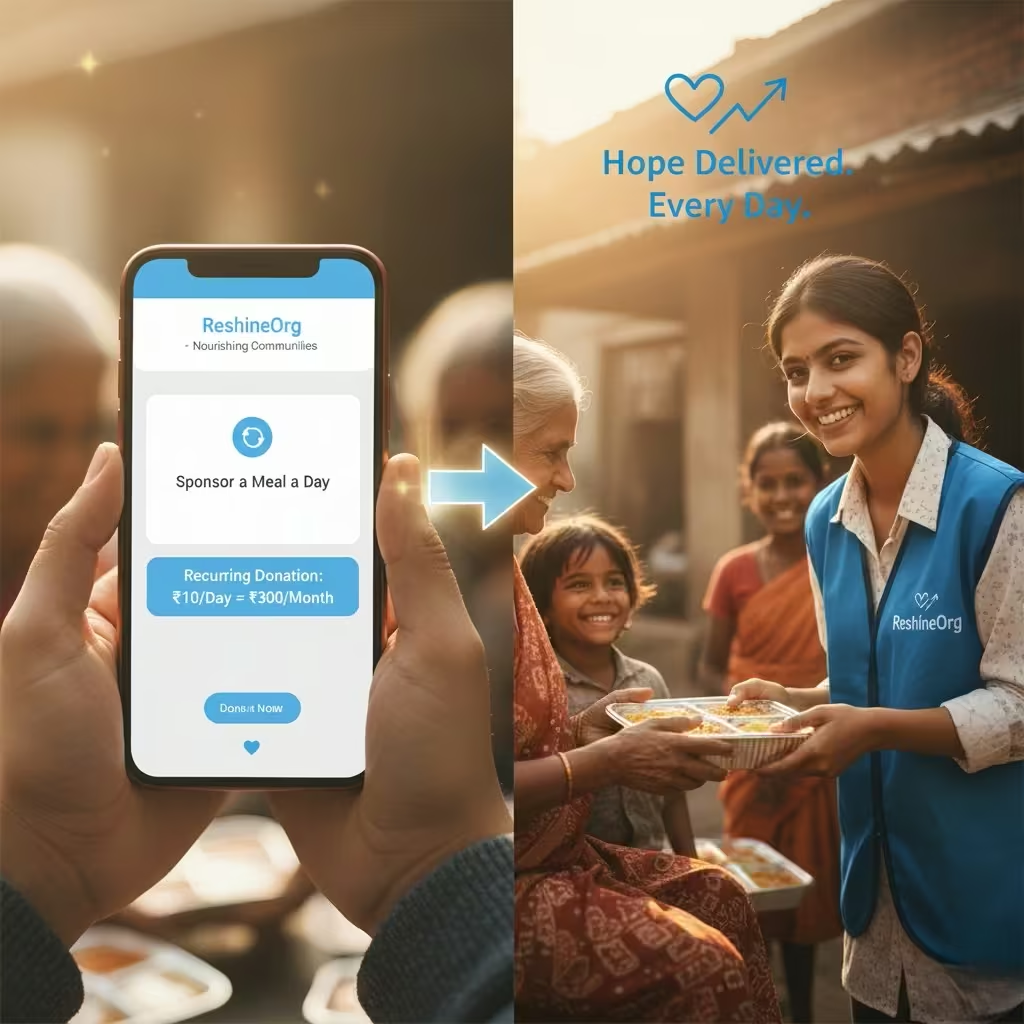
Monthly recurring donations form the backbone of sustainable nonprofit funding. When you commit to a fixed monthly amount, you provide an NGO with predictable income. This allows them to budget confidently, hire staff, and scale programs. For Reshine Org, monthly donors enable us to maintain our fleet, train our team, and respond quickly to food surplus opportunities.
Quarterly or annual lump sum gifts work well for donors who prefer fewer transactions. Some professionals receive bonuses or have variable income. You might choose to make your major Giving Program contribution at year-end while maintaining a smaller monthly commitment.
Project-specific funding allows you to support particular initiatives within an NGO. Perhaps you want to fund a specific food distribution drive or sponsor a community kitchen for a month. This approach creates a tangible connection to your donation’s direct outcome.
Employer matching gifts can double your impact instantly. Many companies in India offer matching gift programs for employee donations. Check with your HR department. If your employer matches, your Rs. 5,000 donation becomes Rs. 10,000 for your chosen cause with no extra cost to you.
Document your chosen structure clearly. You might create a simple spreadsheet tracking your commitments, payment dates, and receipt status. This organization ensures nothing falls through the cracks.
Step Five: Make Your First Contribution
The planning phase now transitions into action. Making your first contribution under your new Giving Program feels profoundly satisfying. You are not just giving; you are implementing a strategy.
Visit the donation page of your chosen NGO. For Reshine Org, you can visit reshineorg.com/donate. Look for the security indicators we discussed in previous guides. Ensure the page uses HTTPS and displays trust badges.
Select your donation amount and frequency. If you have chosen monthly giving, set up the recurring option. This automation ensures consistency without requiring you to remember each month.
Complete your payment using your preferred method. UPI works wonderfully for Indian donors, offering instant confirmation. Cards and net banking are also secure options. After successful payment, you should receive an immediate confirmation email.
Save this email and watch for the official 80G receipt. Legitimate NGOs will send this receipt separately, typically within a few days. This document is essential for your tax filing and serves as official proof of your contribution.
Take a moment to appreciate this step. You have moved from intention to action. Your Giving Program is now live and creating impact.
Step Six: Track and Celebrate Your Impact
A well-designed Giving Program includes a feedback loop. You need to see the results of your generosity. This connection fuels your continued commitment.
Most reputable NGOs provide regular updates to their donors. These may come as quarterly newsletters, annual impact reports, or email stories from the field. Read these communications attentively. They tell the story of your donations at work.
For Reshine Org donors, we share metrics like total meals served, food rescued in kilograms, and CO2 emissions prevented. We also share photographs and beneficiary stories (with consent and dignity). These updates transform abstract numbers into human reality.
Consider creating a simple “impact journal” for your Giving Program. Each time you receive an update, note the key achievements. Over months and years, this journal becomes a powerful testament to your cumulative generosity.
Share your impact with family and friends too. Your example may inspire others to create their own giving plans. You become an ambassador for strategic philanthropy, multiplying your influence beyond your direct donations.
Celebrate milestones in your giving journey. After one year of consistent donations, reflect on what your contributions have achieved. Perhaps your Rs. 500 monthly gift provided 600 meals annually. That is 600 human beings fed because of your commitment. That deserves recognition.
Step Seven: Review and Refine Annually
No Giving Program should remain static forever. Your circumstances change. The world changes. Your philanthropic priorities may evolve. An annual review ensures your program stays relevant and effective.
Set aside time each year, perhaps around your birthday or the new year, to evaluate your giving. Pull together your donation records, impact reports, and any notes you have kept.
Ask yourself some honest questions. Did my donations create the impact I hoped for? Did I feel connected to the organizations I supported? Has my passion for certain causes shifted? Do I want to add new partners or increase support for existing ones?
Also review the NGOs themselves. Have they maintained their transparency and effectiveness? Have their programs evolved in ways that still align with your vision? Are they communicating well with you as a donor?
Based on this reflection, adjust your Giving Program accordingly. You might increase your monthly amount if your income has grown. You might add a new cause area that has become meaningful to you. You might redirect funds if your priorities have shifted.
Document your updated plan and share it with your family. This transparency models thoughtful giving and may spark valuable conversations about shared values.
Common Mistakes to Avoid in Your Giving Program
Even well-intentioned donors can fall into traps that reduce their impact. Awareness of these pitfalls helps you protect your Giving Program from common errors.
Giving without research remains the most frequent mistake. An emotional appeal triggers an immediate donation, but you never verify the organization’s legitimacy or effectiveness. Always apply your research framework, even for urgent appeals.
Spreading donations too thin dilutes your impact. Supporting twenty organizations with small gifts may feel inclusive, but no single NGO receives meaningful support. Concentrating your Giving Program on one to three partners creates deeper relationships and greater cumulative effect.
Ignoring recurring donation setup leads to missed months. Life gets busy, and remembering to donate each month becomes difficult. Automate your giving through the NGO’s website. Set it and forget it, knowing your impact continues uninterrupted.
Neglecting to claim tax benefits leaves money on the table. Your 80G receipts provide legitimate tax deductions. File them properly and reinvest any tax savings into your Giving Program for even greater impact next year.
Failing to communicate with your NGO misses opportunities for deeper engagement. NGOs welcome donor questions and feedback. Reach out occasionally. Express appreciation. Ask about specific programs. This dialogue enriches your experience and strengthens your partnership.
The Reshine Model: Designed for Programmatic Donors
At Reshine Org, we have built our operations specifically to serve donors with structured giving plans. Understanding our model helps you see how your Giving Program translates into action.
Our work focuses on rescuing surplus food from weddings, hotels, corporate cafeterias, and events. This food would otherwise go to waste, emitting harmful methane in landfills. Instead, we collect it safely, transport it in refrigerated vehicles, and deliver it to communities experiencing hunger.
This model creates dual impact. Socially, we nourish people who lack reliable access to food. Environmentally, we prevent waste and reduce carbon emissions. Your donation addresses two urgent problems simultaneously.
Monthly donors provide the foundation for this work. Their consistent support covers our operational costs, from fuel to staff salaries to safety equipment. This predictability allows us to respond quickly whenever food becomes available. We do not have to wait for funds before acting.
When you include Reshine in your Giving Program, you join a community of strategic donors who understand that consistency creates change. You receive regular updates on meals served and waste diverted. You see exactly how your monthly contribution compounds over time.
Beyond Money: Deepening Your Engagement
A comprehensive Giving Program can extend beyond financial contributions. Your time, skills, and network also hold tremendous value for nonprofit partners.
Consider volunteering with the organizations you support. For Reshine, volunteers help with food sorting, packing, and even awareness campaigns. This hands-on involvement deepens your understanding of the work and connects you directly to beneficiaries.
Offer your professional skills pro bono. Are you an accountant? Offer to review financial processes. A marketing professional? Help craft compelling campaign messaging. A lawyer? Assist with compliance or contract review. These skills-based contributions complement your financial Giving Program and address critical organizational needs.
Use your voice to amplify your partners’ work. Share their stories on social media. Mention them in conversations with colleagues. Introduce them to potential corporate partners or other donors. Your advocacy expands their reach far beyond your personal donation.
When your employer offers matching gifts or CSR partnerships, advocate for including your chosen NGOs. Many companies seek employee input on their giving strategies. Your recommendation could unlock significant institutional support.
These non-financial contributions enrich your giving experience and multiply your overall impact.
Teaching the Next Generation Through Your Program
Your personal Giving Program offers powerful lessons for children and younger family members. Involving them in your philanthropy cultivates lifelong values of generosity and social responsibility.
Share age-appropriate information about the causes you support. Explain why hunger matters and how food rescue helps. Show them pictures of rescued food being distributed (with dignity and appropriate context). Let them see the joy on beneficiaries’ faces.
Consider allocating a small portion of your Giving Program for family decisions. Give each child a small budget to research and select a cause to support. Guide their research but let them choose. This ownership builds excitement and investment.
Volunteer together when opportunities arise. Many NGOs, including Reshine, offer family-friendly volunteering options. Working side by side to pack food or assist at distribution creates lasting memories and embeds generosity as a family value.
Celebrate your family’s collective impact annually. Calculate the total meals provided or children educated through your combined efforts. This tangible result reinforces that families working together can change the world.
Conclusion: Your Giving Program, Your Legacy
Creating a personal Giving Program represents one of the most meaningful financial decisions you can make. It transforms your generosity from occasional impulse into intentional, measurable impact. It aligns your resources with your values and builds lasting partnerships with organizations doing vital work.
For salaried professionals and business owners, this structured approach brings clarity to giving. It fits naturally into your budget, your schedule, and your life. It ensures that every rupee you donate works as hard as you do.
The world faces enormous challenges. Hunger persists despite abundant food. Waste continues to harm our planet. But within these challenges lie opportunities for change. Your Giving Program becomes part of the solution.
We invite you to begin this journey today. Define your vision. Set your budget. Research your partners. Then take that first step into strategic, impactful giving. Your future self, and the communities you support, will thank you.
Your Next Step: Launch Your Giving Program With Reshine
Then, take the next step by including Reshine in your giving plan. Visit our secure donation page to set up your monthly contribution and start creating measurable impact on hunger and food waste.
Start Your Giving Program With Reshine
Together, we can build a world where no meal goes to waste and no one goes hungry. Your Giving Program makes this vision possible.
FAQs
What exactly is a Giving Program for individual donors?
A Giving Program is simply a structured plan for your charitable donations. Instead of giving randomly whenever asked, you decide in advance how much to give, to which organizations, and on what schedule. This strategic approach maximizes your impact and ensures your donations align with your personal values.
How much should I allocate to my personal Giving Program?
The right amount varies for everyone based on income and expenses. Many salaried professionals start with 1% of their annual income and gradually increase. The key is choosing an amount that feels significant but sustainable. Monthly donations of even Rs. 500 can create meaningful impact when given consistently.
How do I choose which NGOs to include in my Giving Program?
Start by defining the causes most important to you. Then research NGOs working in those areas. Look for valid 80G certification, audited financials, transparent impact reporting, and clear communication. Request their annual reports and read about their programs. Choose organizations whose values and methods align with your vision.
Can I get tax benefits for donations through my Giving Program?
Absolutely. Donations to Indian NGOs with valid 80G certification qualify for tax deductions under Section 80G of the Income Tax Act. Always ensure you receive the official 80G receipt from the NGO. Save these receipts for your annual tax filing to claim the deduction.
Should I give monthly or make one large annual gift?
Both approaches have merit, but monthly giving offers unique advantages for you and the NGO. Monthly donations provide nonprofits with predictable, reliable income for planning. For you, smaller monthly amounts often feel more manageable than one large gift. Many donors combine approaches, making monthly contributions plus occasional larger gifts for special campaigns.
How do I know if my Giving Program is actually creating impact?
Reputable NGOs provide regular updates to donors through newsletters, annual impact reports, and email stories. Look for clear metrics like meals served, children educated, or waste diverted. Also seek qualitative stories that put a human face to the numbers. If an organization never shares impact information, consider redirecting your support.
What if I want to change my Giving Program later?
Your Giving Program should evolve with your life circumstances and priorities. Review it annually and make adjustments as needed. You can increase or decrease amounts, add new partners, or shift focus to different causes. Communicate any changes to the NGOs you support so they can adjust their records accordingly.