

Table of Content
Food Rescue vs Food Banks: What’s the Better Way to Feed People?
For anyone committed to fighting hunger in India, the scale of the challenge can feel overwhelming. While India is a leading global food producer, it also has one of the world’s largest populations facing hunger, with an estimated 194.4 million people undernourished. At the same time, nearly 40% of all food produced in the country is wasted. This stark paradox—surplus alongside scarcity—demands effective solutions. Two primary models have emerged: the traditional Food Rescue vs Food Banks organization. But which approach creates more immediate, efficient, and sustainable impact for donors and communities alike?
This isn’t about choosing one over the other in absolute terms, but understanding their distinct roles in a broader ecosystem. In India’s complex landscape, food rescue organizations like Reshine often fill critical gaps that larger systems cannot, providing a hyper-local, immediate, and waste-focused solution. By exploring the nuances of Food Rescue vs Food Banks, compassionate individuals and professionals can ensure their support and donations drive the greatest possible change.
Understanding the Core Models
To make informed decisions, it’s essential to understand what each model entails, how they operate, and the unique value they bring to the fight against hunger and waste.
What is a Food Bank?
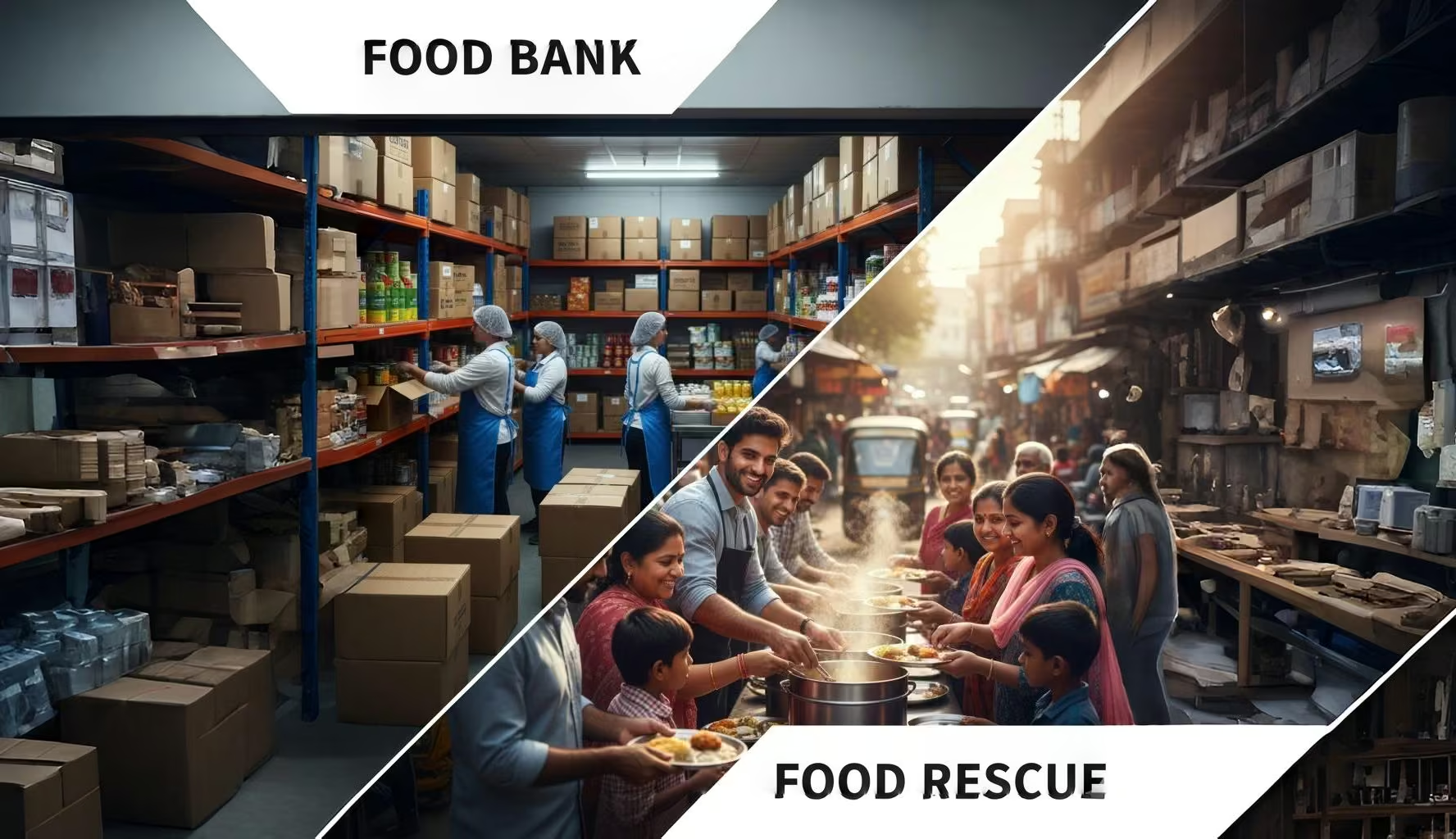
A food bank operates primarily as a centralized warehouse and distribution hub. Its core function is to collect, store, and distribute large volumes of food—often packaged, non-perishable goods, or bulk grains—to a network of partner agencies like shelters, community kitchens, and pantries. These partner agencies then distribute the food directly to individuals and families in need.
In India, food banking is a growing but nascent phenomenon, with organizations working to create structured national networks. The model is powerful for handling steady, predictable supplies from manufacturers and large-scale donors. However, studies on food banks in India highlight significant barriers to their growth, including financial constraints, infrastructure limitations, and complex coordination challenges. Their strength lies in systematic distribution, but they can be less equipped to handle the urgent, perishable, and unpredictable surplus from restaurants, weddings, and corporate events.
What is Food Rescue?
Food rescue (or food recovery) takes a fundamentally different approach. It is a direct, logistics-focused response to imminent food waste. Instead of relying on a central warehouse, food rescue organizations act as a dynamic bridge, directly collecting surplus, prepared, and perishable food from donors like hotels, caterers, restaurants, and events, and delivering it swiftly to people in need—often within hours.
The primary goal is dual: to feed people and to prevent quality food from reaching landfills, where it emits harmful greenhouse gases. This model is inherently flexible, responding to real-time surplus. It excels at recovering food that traditional food banks might not handle due to its perishable nature or irregular availability. Organizations like Reshine exemplify this model, using local volunteer networks and real-time coordination to ensure that food saved today is eaten today.
Food Rescue vs Food Banks: A Detailed Comparison
While both models aim to alleviate hunger, their operational realities, impacts, and challenges differ significantly. The following table breaks down these key distinctions to provide clarity.
| Feature | Food Rescue Model (e.g., Reshine) | Traditional Food Bank Model |
|---|---|---|
| Primary Focus | Preventing food waste & providing immediate hunger relief. | Distributing food to partner agencies for ongoing hunger relief. |
| Food Type Handled | Perishable, cooked, ready-to-eat food from events, hotels, restaurants. | Non-perishable, packaged, bulk dry goods from manufacturers & large donors. |
| Operational Model | Direct, point-to-point logistics. Rapid collection and delivery, often same-day. | Hub-and-spoke warehousing. Stores food for distribution to a network of partners. |
| Typical Donors | Hotels, Caterers, Wedding Halls, Corporate Canteens, Events. | Food Manufacturers, Wholesalers, Large-scale Agricultural Producers. |
| Speed & Flexibility | High. Responds to unpredictable surplus in real-time. | Lower. Relies on planned inventory and scheduled distributions. |
| Key Strength | Saves food from landfill instantly, provides nutritious fresh meals. | Provides stable, predictable supply to communities through an organized network. |
| Major Challenge in India | Requires dense local volunteer/driver networks and hyper-local coordination. | Faces barriers like lack of cold storage, funding, and complex coordination. |
Why Food Rescue is Critical in the Indian Context
India’s hunger and waste crisis requires solutions that match its unique scale and nature. The food rescue model addresses several acute challenges that are particularly pronounced across the country.
- Tackling Perishable Waste Where It Happens: A vast amount of India’s food waste is fresh, prepared, or perishable—coming from weddings, festivals, restaurants, and retail. This food cannot wait for warehouse processing. Food rescue’s immediate, direct-transfer model is uniquely suited to salvage this nutrition and get it to people before it spoils.
- Operating with Agility Amidst Infrastructure Gaps: The growth of traditional food banks in India is hampered by a lack of large-scale refrigerated storage and high operational costs. Food rescue minimizes the need for such infrastructure by moving food quickly from donor to recipient, making it a more adaptable and scalable model in many urban and semi-urban settings.
- Creating Hyper-Local Impact: Food rescue builds community-based networks of care. It connects surplus within a neighborhood to need within that same neighborhood. This not only reduces logistical carbon footprints but also fosters local accountability and engagement, turning businesses and residents into direct hunger heroes in their own communities.
- Delivering Measurable Environmental Benefits: When edible food rots in a landfill, it produces methane, a potent greenhouse gas. By preventing this waste, food rescue delivers a direct and quantifiable climate action. For businesses and environmentally conscious donors, supporting food rescue translates into verifiable carbon emission reductions, aligning with ESG (Environmental, Social, and Governance) goals.
Reshine’s Food Rescue Model: Efficiency in Action
At Reshine, we have built our operations around the core principles of effective food rescue, creating a model designed for maximum impact and transparency in the Indian context.
Our process is a continuous cycle of efficiency:
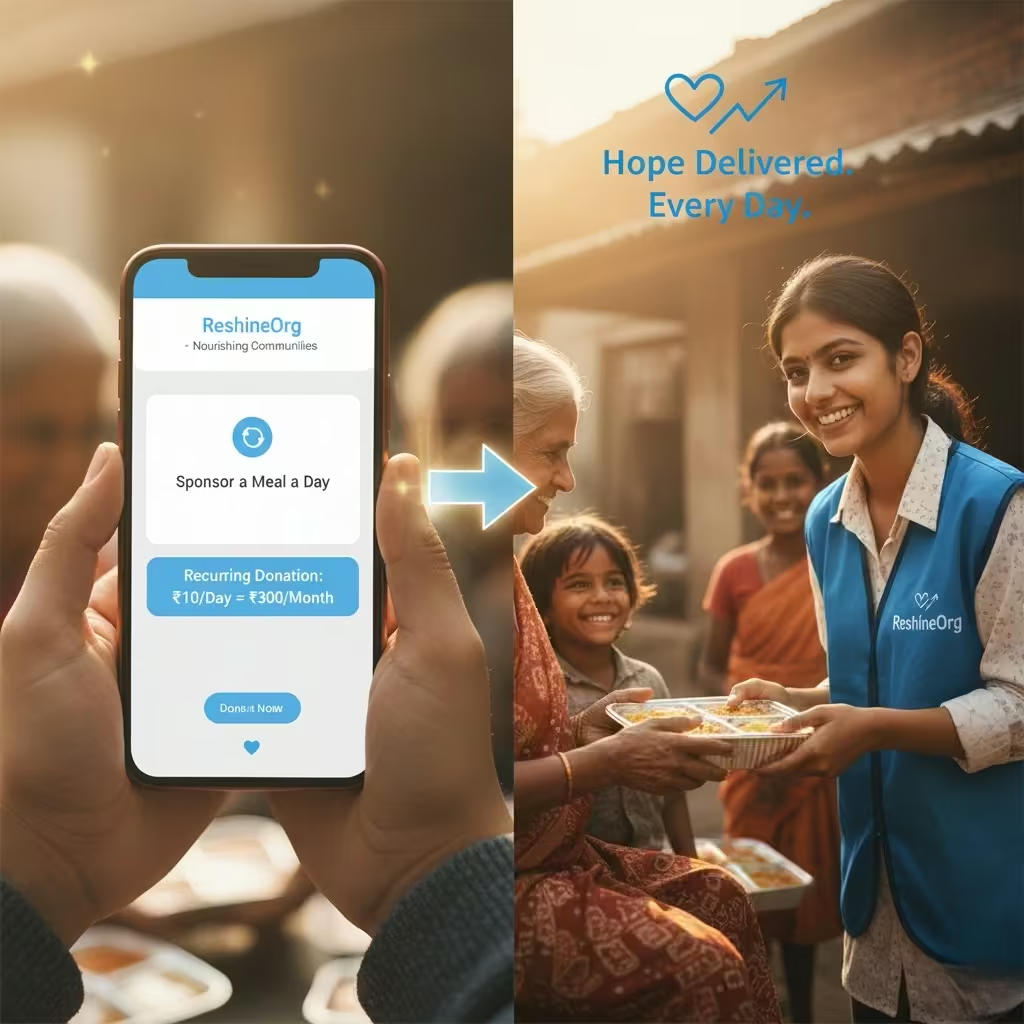
1. Alert & Match: Donors (hotels, caterers, event planners) notify us of surplus food via a simple call or message. Our team immediately matches this donation with a verified recipient—a night shelter, hospital, orphanage, or community in need.
2. Swift, Safe Collection & Delivery: Our network of dedicated volunteers and logistics partners collects the food, following strict FSSAI-compliant safety protocols for handling. The food is then transported directly to the recipient partner, often reaching them within a few hours.
3. Nourishment & Reporting: The fresh, nutritious meal reaches those who need it most. We then provide our donors with a detailed impact report, showing the number of meals created and the equivalent carbon emissions saved, turning their act of kindness into tangible data.
This model isn’t theoretical. Since our founding, we’ve facilitated the distribution of food worth crores of rupees. Our daily meal service at the BRIMS Government Hospital in Bidar, for instance, has provided over 600 patients per day with nourishment, saving vulnerable families critical resources while ensuring no food is wasted.
Partnering for a Hunger-Free Future
The question of Food Rescue vs Food Banks is not about finding a single winner. A holistic approach to ending hunger requires both: the stable, systematic distribution of food banks and the agile, immediate intervention of food rescue. They are complementary forces in a larger battle.
However, if your goal is to create immediate impact, prevent specific instances of waste, and see your contribution in action swiftly, partnering with a food rescue organization is a profoundly effective choice. It ensures that the nutritious food from your event, kitchen, or business directly sustains a human being in your city that very day.
You Can Be the Bridge Between Surplus and Scarcity
Your organization’s excess food is not waste—it’s potential nourishment for hundreds. By choosing to partner with Reshine, you choose a model of direct, transparent, and efficient impact.
Become a Hunger Hero Today.
Visit our website at reshineorg.com to start a conversation about how we can tailor a food rescue partnership for your business or event. Download our detailed Impact Report to see the data behind our work and understand how your support can feed communities and protect our planet, one rescued meal at a time.
Disclaimer: The information and statistics presented in this blog post are based on the latest available research and Reshine Organisation’s operational data. The landscape of hunger relief is dynamic, and we encourage readers to conduct their own research for the most current understanding.